

Table of Contents
- Why Protecting Outdoor Appliances Matters
- Step 1: Clean and Prepare Your Appliances Before Covering
- Step 2: Choose the Right Outdoor Grill Cover for Your Equipment
- Step 3: Install Overhead Shelter and Weatherproofing
- How to Winterize an Outdoor Kitchen for Seasonal Protection
- Protecting an Outdoor Refrigerator From Weather and Extreme Heat
- How to Protect a Grill From Wind and Storm Damage
- Maintenance and Inspection Checklist
- Frequently Asked Questions
Last Updated: October 19, 2026
Why Protecting Outdoor Appliances Matters
Outdoor appliances are a significant investment. Without protection, rain, snow, UV rays, and temperature swings damage stainless steel finishes, corrode internal components, and shorten the lifespan of even premium equipment.
Replacing an outdoor grill, refrigerator, or built-in kitchen setup runs into thousands of dollars. Protecting outdoor appliances from weather prevents rust, mildew, and mechanical failures. A grill left uncovered for one season can develop internal corrosion that affects ignition and gas flow, and a refrigerator exposed to sun and humidity struggles to maintain temperature and consumes far more energy.
At Urban Man Caves, we've seen customers who invested $15,000 to $20,000 in complete outdoor kitchen setups lose that value within two to three years simply because they didn't implement basic weather protection. The difference between a kitchen that lasts a decade and one that fails in three years often comes down to covers, shelter, and seasonal maintenance.
Weatherproofing requires three core strategies: fitted covers, overhead shelter, and seasonal maintenance. This guide walks you through each step.
Step 1: Clean and Prepare Your Appliances Before Covering
Never cover a dirty appliance. Debris, grease, and moisture trapped under a cover create an environment where rust and mildew thrive. Let your appliance cool completely, then wipe exterior surfaces with a damp cloth to remove dust and pollen.
For grills, brush the grates with a grill brush to remove food residue. Wipe the interior with a dry cloth. Check the burners and ignition system for any standing water or debris. Dry everything thoroughly before covering.
For stainless steel, use a stainless steel cleaner to remove fingerprints, water spots, and oxidation. This prevents water from pooling in microscopic imperfections where corrosion starts and lets trapped moisture dry faster.
Pay special attention to crevices, hinges, and control knobs, where water collects. Dry them thoroughly. For outdoor refrigerators, clean the exterior and check that door seals close completely; debris in the seal lets warm air inside.
Allow all surfaces to dry completely before covering. Covering a wet appliance traps moisture and accelerates corrosion, so wait at least 30 minutes after cleaning.
Step 2: Choose the Right Outdoor Grill Cover for Your Equipment
A quality cover is your first line of defense. The right choice depends on your appliance, climate, and how often you grill.
Fitted versus universal covers: Fitted covers are engineered for specific grill models, drape smoothly, resist wind-induced flapping, and direct water away from control knobs and seams.
Urban Man Caves offers precision-engineered covers designed for Fire Magic and American Outdoor Grill models. The CVR E1060I BUILT-IN cover, for example, is contoured specifically for Fire Magic grills and built-in setups.

For a 36-inch American Outdoor Grill, the CVR AOG 36 BUILT-IN provides a precision fit at just 1.65 pounds. The high-density vinyl resists tearing and color fading while conforming exactly to your grill's dimensions.
For built-in island setups, the CVR DELUXE SLIDE-IN cover slides behind front trim rather than hanging over the sides. This prevents fabric flapping, keeps control knobs accessible, and maintains a clean appearance.
Material matters. Choose ripstop polyester bonded to polyurethane or high-density vinyl. These block water while allowing air circulation to prevent mildew. Avoid thin vinyl or canvas covers that absorb water or trap condensation.
Installation matters. A well-fitted cover should sit snugly with no excess fabric bunching. Secure it with straps or ties if included, and never use bungee cords that can slip and leave gaps.
Step 3: Install Overhead Shelter and Weatherproofing
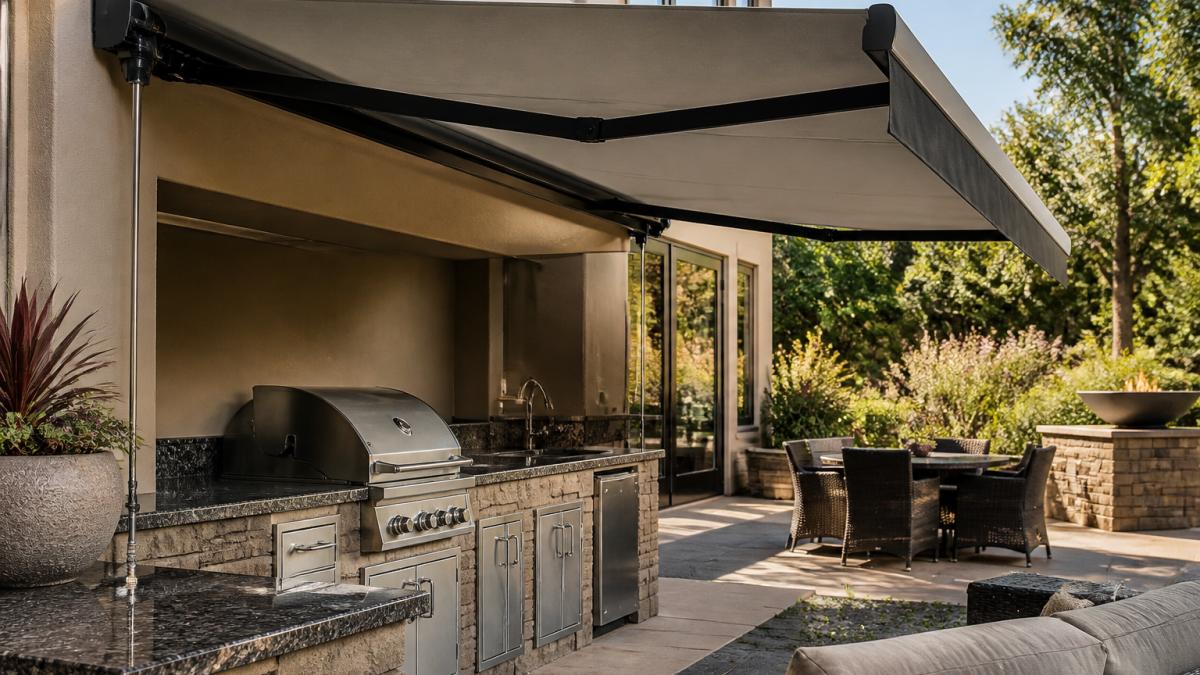
A cover protects when your appliances sit unused. Overhead shelter protects while you're cooking. Permanent or semi-permanent structures keep rain off your grill and countertops during use and when equipment sits idle.
Permanent roof structures provide the best protection. A solid roof eliminates rain exposure entirely, and grills under permanent cover rarely develop rust or corrosion. The investment pays for itself through extended appliance lifespan and reduced maintenance. Proper shelter also simplifies the process of verifying appliance warranty coverage by ensuring that environmental damage remains excluded from manufacturer claims.
Retractable awnings offer flexible protection: extend them when weather threatens, retract them for full sun. Motorized systems make this effortless. A quality retractable awning protects your entire outdoor kitchen in seconds.
Canopies and pop-up shelters work for seasonal use. A 10-by-10-foot canopy costs $200 to $500 and provides temporary protection during gatherings.
Pergolas with shade cloth offer a middle ground: partial shade and some rain deflection, with flexible coverage and no full roof. Installation typically runs $1,500 to $3,000.
Choose based on climate and use patterns: frequent rain justifies a permanent roof, while dry climates with occasional storms suit a retractable awning or canopy.
How to Winterize an Outdoor Kitchen for Seasonal Protection
Winter poses unique threats: freezing temperatures crack components, ice adds weight and stress, and snow covers vents that need to breathe. Winterizing prevents freeze damage and keeps equipment ready for spring.
Drain all water lines. Water in supply lines freezes and expands, cracking connections and valves.
Shut off gas at the source. For propane grills, turn off the propane tank valve completely. For natural gas lines, shut off the supply valve.
Clean thoroughly before storage. Remove grates and soak them in warm soapy water, wipe the interior with a dry cloth, and clean exteriors with appropriate cleaners: stainless steel cleaner for steel, sealers for stone countertops.
Install heavy-duty covers. Winter covers must withstand snow load and wind. In heavy snow climates, double-layer covers or upgrade to a winter-specific cover designed to handle weight.
Protect stone and concrete surfaces. Apply a weather-resistant sealer to granite, marble, or concrete countertops. Freezing water expands in pores and can crack stone; reapply sealers annually before winter.
Clear snow promptly. Snow weight stresses structures and covers. Clear it within 24 hours of a storm using a soft brush or plastic shovel to avoid tearing covers.
Inspect before spring use. Before firing up your grill, inspect all connections, hoses, and seals. Replace hoses showing cracks or brittleness from cold exposure, and test gas flow before cooking.
Protecting an Outdoor Refrigerator From Weather and Extreme Heat
Outdoor refrigerators face different challenges than grills: heat and humidity are their primary enemies. A refrigerator in direct sun works harder to maintain temperature, consuming more energy and wearing out compressors faster.
Provide shade. Never position an outdoor refrigerator in direct afternoon sun. If your layout requires sun exposure, install a shade structure above it. An awning, pergola, or even a large umbrella reduces heat load significantly.
Ensure proper ventilation. Refrigerators need airflow around the compressor to dissipate heat. Never enclose a fridge completely or block vents. Leave at least 6 inches of clearance on all sides.
Keep the coils clean. Dust and debris accumulate on the condenser coils, reducing cooling efficiency. Clean the coils monthly during warm months. Use a soft brush or vacuum with a brush attachment.
Protect from standing water. Position your refrigerator on a slight slope or raised surface so water drains away rather than pooling underneath. Standing water promotes rust and mildew. For built-in units, ensure the cabinet has drainage holes.
Use a fitted cover during off-season. If you close your outdoor kitchen for winter, cover the refrigerator with a breathable cover that prevents dust and debris from entering while allowing moisture to escape.
Check door seals regularly. A damaged door seal forces the compressor to work harder. Inspect seals quarterly. Replace any showing cracks or loss of flexibility.
How to Protect a Grill From Wind and Storm Damage
High winds and severe storms present acute threats to outdoor appliances. A grill can tip, covers can tear, and debris can damage surfaces and components.
Secure covers properly. Use straps or ties designed for your cover. Don't rely on tucking alone. Wind will find gaps and lift loose fabric. Secure covers at multiple points, front, back, and sides. Some covers include tie-down loops.
Anchor freestanding grills. If your grill isn't built into an island, secure it to the deck or patio. Use lag bolts or anchors appropriate for your surface. This prevents tipping in high winds.
Remove propane tanks before major storms. High winds can knock over tanks or damage connections. If a hurricane or severe storm approaches, disconnect and store propane tanks indoors. This eliminates fire and explosion risk.
Inspect covers after storms. Even secured covers can tear or shift during severe weather. After any significant wind event, check your covers for damage. Small tears can be repaired with patch kits. Larger damage requires replacement.
Use storm-rated covers in high-wind areas. If you live in a coastal region or area prone to high winds, invest in covers rated for storm conditions.
Clear debris regularly. Leaves, branches, and pollen accumulate on covers. This debris holds moisture and adds weight. Clear it weekly during fall and after storms. This keeps covers dry and prevents mildew.
Maintenance and Inspection Checklist
Protecting outdoor appliances from weather is ongoing, not one-time. A simple maintenance schedule keeps your equipment in top condition.
| Task | Frequency | Why It Matters |
|---|---|---|
| Clean exterior surfaces | Monthly | Prevents dirt from trapping moisture |
| Inspect covers for damage | Quarterly | Catches tears before they spread |
| Clean refrigerator coils | Monthly (warm season) | Maintains cooling efficiency |
| Check grill burners and ignition | Before each use | Ensures safe, reliable operation |
| Inspect water connections | Seasonally | Prevents freeze damage and leaks |
| Apply sealant to stone surfaces | Annually | Protects from water penetration |
| Deep clean all appliances | Seasonally | Removes buildup that causes corrosion |
| Check cover straps and ties | After storms | Ensures covers stay secure |
Monthly inspection routine: Walk around your outdoor kitchen. Look for standing water, debris accumulation, or visible damage to covers. Check that covers are secure and not flapping. Look for rust spots or staining on stainless steel surfaces. Address issues immediately rather than waiting for them to worsen.
Seasonal deep clean: Before summer entertaining season and before winter, perform a thorough cleaning. Remove covers. Clean all surfaces. Inspect all connections. Replace covers and secure them. This takes a few hours but prevents most problems.
Annual professional inspection: Consider having a professional inspect your outdoor kitchen annually. They can identify issues you might miss and perform specialized maintenance like gas line inspection or refrigerant checks. This costs $200 to $400 but catches problems early.
Outdoor appliances protect your investment and keep your kitchen functional through every season. At Urban Man Caves, we provide precision-engineered covers like the CVR E1060I BUILT-IN and CVR AOG 36 BUILT-IN, along with expert guidance to help you choose the right protection for your specific setup. Your outdoor kitchen will stay beautiful and functional for decades. Shop all products and talk with our team about the best protection strategy for your space.

Frequently Asked Questions
How often should I cover my outdoor grill and appliances?
Cover outdoor appliances after each use once they cool completely. This prevents moisture, debris, and pest accumulation. For seasonal storage, ensure your outdoor grill cover and other appliance covers are secured before extended periods of rain, snow, or high winds. Daily covering protects your investment and extends equipment life by preventing rust, corrosion, and mold growth on stainless steel surfaces and internal components.
What's the best way to winterize an outdoor kitchen?
To winterize an outdoor kitchen, drain all water lines completely to prevent freeze damage, shut off the water supply at the source, clean and cover all appliances with weatherproof covers, and inspect gas connections for leaks. Remove or secure any removable items. If your setup includes an outdoor refrigerator, ensure it's rated for cold climates or move it indoors. Install additional overhead shelter if possible, and inspect seals around built-in units to prevent water intrusion during winter months.
Can outdoor appliances stay outside year-round without covers?
Outdoor appliances can technically remain outside, but covers are essential for long-term durability. Without protection, stainless steel surfaces develop rust and corrosion, internal components corrode, and moisture causes electrical failures. Rain, snow, UV exposure, and temperature fluctuations accelerate wear. A quality waterproof cover blocks moisture, debris, and sun damage, dramatically extending your appliance lifespan. Covered appliances remain sanitary and ready for immediate use, whereas uncovered equipment requires extensive cleaning before each use.
How do I know if an outdoor refrigerator can handle extreme heat?
Check the manufacturer's specifications for the maximum ambient temperature rating. Protecting an outdoor refrigerator from weather includes providing shade through overhead shelter, ensuring adequate airflow around the unit, and using a weatherproof cover during off-season storage. Avoid placing refrigerators in direct sunlight, and verify your model includes UV-resistant materials and sealed gaskets to maintain cooling efficiency in extreme conditions.


