

Table of Contents
- What Makes an Outdoor Fridge Professional: Core Differences
- Stainless Steel and Corrosion Resistance
- High-Temperature Cooling Performance in Outdoor Conditions
- Built-In Versus Freestanding Outdoor Refrigerators
- Ventilation, Clearance, and Installation Requirements
- Choosing the Right Outdoor-Rated Refrigerator for Your Kitchen
- Outdoor Refrigerator Maintenance and Long-Term Care
- Building Your Outdoor Refrigerator Buying Guide
- Frequently Asked Questions
Last Updated: October 9, 2026
What Makes an Outdoor Fridge Professional: Core Differences
Understanding what makes an outdoor fridge professional starts with the gap between standard indoor refrigerators and equipment built to survive harsh outdoor conditions. A professional-grade outdoor refrigerator isn't an indoor fridge moved to the patio, it's engineered to handle temperature swings, humidity, salt air, and intense UV exposure that would destroy a conventional appliance in months.

At Urban Man Caves, we've helped hundreds of homeowners invest in outdoor kitchen equipment, and the difference between a fridge that lasts five years and one that lasts fifteen comes down to weather resistance: materials, sealing, and cooling technology built for extreme heat and wet environments.
What separates a true outdoor-rated model from a pretender? Three things: exterior materials that resist corrosion from salt air, rain, and UV radiation; a cooling system that maintains food-safe temperatures above 90 degrees; and construction that seals out moisture and prevents hidden internal rust.
The real cost of choosing wrong isn't just replacing the unit after one brutal summer, it's the realization that you spent thousands on a kitchen setup that can't reliably keep food cold when you need it most.
Stainless Steel and Corrosion Resistance
The material you choose determines whether your outdoor fridge becomes a permanent fixture or a short-term investment that rusts from the inside out. Professional outdoor refrigerators use marine-grade or 304-grade stainless steel, which resists corrosion far better than standard steel or painted finishes.

Here's why the grade matters: 304-grade stainless steel contains chromium and nickel that form a protective oxide layer. This layer heals itself when scratched, making the material self-healing against rust. The American Society for Testing and Materials stainless steel standards define these grades specifically for durability in harsh environments.
Interior construction matters equally. Professional models use stainless steel or aluminum inside the cabinet, not painted steel that peels and rusts when moisture seeps past the seals. The door gasket must shed water rather than trap it, because a poor seal lets moisture condense inside the walls where rust forms unseen.
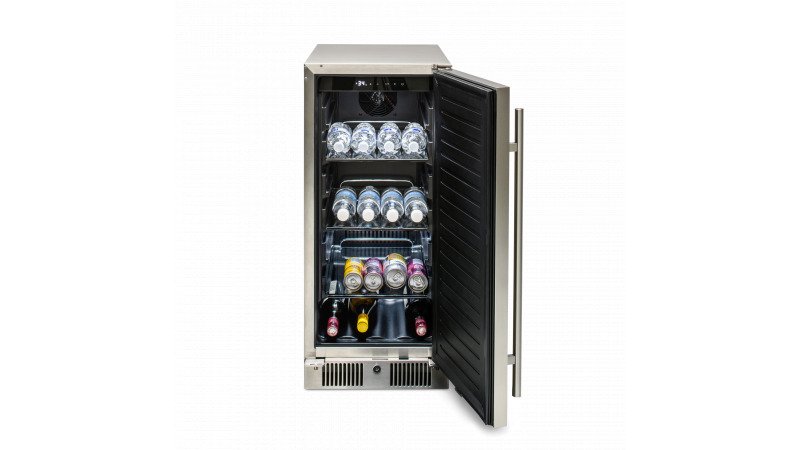
Consider the Blaze 15-Inch Outdoor Refrigerator, which features 304-grade stainless steel construction throughout. This grade handles coastal salt spray and high humidity without degrading, and the sealed cabinet prevents moisture from entering the insulation layer.
Paint or powder-coat finishes on cheaper outdoor fridges fail within two to three seasons in humid climates. Professional models skip the paint entirely and rely on the stainless steel itself for weather resistance.
High-Temperature Cooling Performance in Outdoor Conditions
A refrigerator that keeps food cold indoors at 72 degrees faces an entirely different challenge when outdoor ambient temperatures hit 95 degrees. Professional outdoor-rated refrigerators use compressors engineered for sustained high-temperature operation without losing cooling capacity.
A standard indoor fridge assumes a stable ambient temperature, an assumption outdoor conditions violate constantly. A professional compressor runs harder and longer without overheating, and its cooling capacity exceeds indoor needs, creating a safety margin that maintains food-safe temperatures even during peak afternoon heat.
Front-venting design is critical here. Professional outdoor refrigerators use internal and external fans to move air away from the compressor and condenser coils, preventing heat buildup that causes constant cycling and eventual failure. The Premium Outdoor Rated 4.9 cu. ft.

Temperature stability is where professional models prove their worth. Cheap outdoor fridges swing 10-15 degrees throughout the day because the cooling system can't keep pace with outdoor heat. Professional units maintain tighter control without overworking the compressor.
The compressor itself is the heart of the cooling system. Professional models use heavy-duty compressors rated for continuous operation in hot climates, oversized relative to cabinet volume so the unit reaches target temperature faster and maintains it with less cycling, longer compressor life and lower energy costs.
Built-In Versus Freestanding Outdoor Refrigerators
Choosing between built-in and freestanding installation shapes how your outdoor fridge integrates into your kitchen. Professional outdoor-rated refrigerators come in both styles, each with distinct advantages.
Built-in models are recessed into cabinetry or custom outdoor kitchen islands, creating a seamless look that makes your outdoor space feel like an extension of your indoor kitchen. They require precise measurement and professional installation, cost more, and are harder to replace, but look intentional, not tacked on.
Freestanding models sit freely on your patio or deck and are easier to install, move, or replace without major renovation. They're more flexible if you're still experimenting with your layout or plan to move soon, and cost less upfront.
The Contemporary Refrigerator 4.5 cu. ft. features a space-saving flush-back design that works well for built-in installation while maintaining professional outdoor-rated durability. Its reversible door lets you choose left or right swing based on your kitchen layout.
Professional outdoor-rated models in both categories share the same core durability features: marine-grade stainless steel, sealed construction, and high-temperature cooling systems. The choice between built-in and freestanding is about lifestyle and kitchen design, not durability.
Ventilation, Clearance, and Installation Requirements
Professional outdoor refrigerators have specific ventilation and clearance requirements that directly affect cooling performance and compressor longevity. Ignoring them is a common homeowner mistake, and it often voids the warranty.
Most professional outdoor-rated models require front ventilation, meaning air must flow freely around the front of the unit. This isn't optional, it's how the cooling system expels heat.
Rear-venting models exist but are less common in professional outdoor equipment. Front-venting is the standard because it works reliably where rear access is difficult, with the external fan pulling air across the hot condenser coils and pushing it forward.
Check the installation manual for your specific model, clearance requirements vary. The Premium Outdoor Rated 4.9 cu. ft. Stainless Steel Fridge Series II requires adequate front ventilation to function properly. Undersized clearance reduces cooling capacity and can shorten the compressor's life by years.
Electrical safety matters too. Professional outdoor refrigerators should be installed on a dedicated circuit with proper grounding. Many models require a 15-amp circuit at minimum. Outdoor electrical installations must comply with local codes and National Electrical Code requirements for wet locations.
Leveling is another detail that affects performance. A refrigerator that tilts slightly will have uneven cooling and condensation problems, so use a level during installation and adjust the feet on uneven surfaces.
Choosing the Right Outdoor-Rated Refrigerator for Your Kitchen
Selecting a professional outdoor-rated refrigerator means matching capacity, style, and features to your entertaining habits and kitchen layout. Start by assessing how much cold storage you actually need.
Premium Outdoor Rated 4.9 cu. ft. Stainless Steel Fridge Series II →
A compact 15-inch unit like the Blaze holds roughly 74 beverage cans and works well for couples or small gatherings. It's ideal for tight spaces and costs less, but you'll restock frequently if you entertain large groups.
Mid-size models like the Contemporary Refrigerator 4.5 cu. ft. or the Premium Outdoor Rated 4.9 cu. ft. Stainless Steel Fridge Series II offer 130-160 beverage can capacity. These are the sweet spot for most homeowners because they handle weekend entertaining without constant restocking, fit standard outdoor kitchen island cutouts, and look proportional to most patio spaces.
Consider your climate. In a hot region with sustained high temperatures, choose a model with proven high-temperature cooling performance. In a humid coastal area, prioritize marine-grade stainless steel construction.
Reversible doors are a practical feature worth considering. They let you choose left or right swing based on how your kitchen layout flows, ensuring the fridge opens toward your prep area, not away from it.
Digital temperature controls with LED displays let you monitor and adjust cooling without opening the door, preventing temperature swings and helping you dial in the exact temperature your food requires.
| Feature | Blaze 15-Inch | Contemporary 4.5 cu. ft. | Premium Series II 4.9 cu. ft. |
|---|---|---|---|
| Capacity | 74 cans | 130+ cans | 160+ cans |
| Material | 304-grade stainless steel | Stainless steel exterior | Stainless steel with improved insulation |
| Cooling System | Digital thermostat | Full temperature control | Front-venting with dual fans |
| Door Style | Solid | Reversible | Reversible with glass option |
| Best For | Small spaces, couples | Standard entertaining | Large gatherings, high heat |
| Price | $899 | $729 | $2,449 |
Outdoor Refrigerator Maintenance and Long-Term Care
Professional outdoor-rated refrigerators demand more maintenance than indoor models because they're exposed to harsh conditions constantly. Regular care extends service life and prevents costly repairs.
Clean the exterior monthly with a soft cloth and mild soap. Stainless steel can develop water spots and mineral deposits from rain and sprinklers, and a quick wipe prevents buildup that can pit the surface.
The door gasket should be cleaned every few months. Dirt and debris prevent the seal from closing properly, allowing cold air to escape and warm air to enter.
Interior shelves and surfaces should be cleaned regularly to prevent mold and mildew growth, especially in wet climates. Wipe shelves monthly and ensure air circulates inside the cabinet.
Check the condenser coils (usually on the back or sides) for debris. Leaves, dust, and pollen can block airflow and reduce cooling efficiency; a soft brush or compressed air clears buildup.
Warranty coverage matters. Professional outdoor-rated models typically offer 2-5 year warranties on parts and labor. Understand what your warranty covers and what voids it. Most warranties require proper installation, adequate ventilation, and regular maintenance.
Monitor performance seasonally.
Building Your Outdoor Refrigerator Buying Guide
Creating your own buying guide means identifying which features matter most for your situation, then comparing options against those criteria. Start with non-negotiable requirements.
Climate is the first filter. If summer temperatures regularly exceed 95 degrees, you need a compressor rated for high-ambient operation.
Next, define capacity. If you host gatherings weekly, you need more capacity than someone who entertains monthly. Undersized capacity means constant restocking; oversized capacity wastes money and energy.
Installation type matters operationally. Built-in units require precise measurements and professional installation but look intentional. Freestanding models are easier to install and move. Neither is better, it depends on your kitchen design and plans.
Budget sets a realistic range. Professional outdoor-rated refrigerators range from $729 to $2,449 depending on capacity and features.
Create a simple comparison:
- List your must-haves: stainless steel, high-temperature cooling, specific capacity
- List your nice-to-haves: digital controls, reversible door, glass door
- Score each candidate model against these criteria
- Choose the model that checks the most boxes within your budget
Don't get distracted by features you won't use. A glass door looks impressive but adds cost and complexity.
Read reviews from people in your climate. A five-star review from Arizona means more than one from a mild climate. Look for mentions of high-temperature performance, corrosion resistance, and long-term durability.
Urban Man Caves curates professional outdoor-rated refrigerators selected for durability and reliable performance in demanding conditions.
Investing in a professional outdoor-rated refrigerator is investing in a gathering space that works reliably for years.
Frequently Asked Questions
What makes an outdoor refrigerator professional-grade?
Professional outdoor fridges combine marine-grade or 304-grade stainless steel construction, compressors rated for high ambient temperatures, front-venting systems with sealed insulation, and temperature stability even when outdoor heat exceeds 90 degrees. They include digital controls, improved door seals, and ETL/DOE certifications. Models like the Premium Outdoor Rated 4.9 cu. ft. Stainless Steel Fridge Series II feature all these elements, distinguishing them from standard indoor units repurposed for outdoor use.
Can you use a regular refrigerator outdoors?
No. Standard indoor refrigerators lack weather-resistant construction and use compressors designed for controlled indoor temperatures. Outdoor exposure causes rapid corrosion, compressor failure when ambient temperatures exceed design limits, and sealed door failures. Professional outdoor fridges have reinforced insulation, external fans for heat dissipation, and corrosion-resistant materials that standard models don't provide. Attempting to use an indoor fridge outdoors typically results in failure within one season.
What's the difference between built-in and freestanding outdoor refrigerators?
Built-in outdoor refrigerators integrate flush with cabinetry, require precise cutout dimensions and front ventilation access, and are permanent installations. Freestanding models sit independently and can be relocated. Built-in units maximize kitchen flow and aesthetics but demand professional installation planning. Freestanding units offer flexibility. Both types must meet ventilation clearance requirements, typically 6 inches on sides and back for airflow. Choose built-in for integrated outdoor kitchen design; choose freestanding for flexibility or smaller spaces.
How do you maintain an outdoor refrigerator to extend its lifespan?
Clean the stainless steel exterior monthly with appropriate cleaners to prevent salt and mineral buildup. Ensure front ventilation fans are free of debris quarterly. Check door seals for gaps and clean them annually. Verify that rear venting clearance remains unobstructed. During off-season storage, leave the door slightly ajar and clean interior shelves. Service the compressor according to manufacturer specs. Protect from direct salt spray if near coastal areas. Proper maintenance extends service life significantly and prevents corrosion that shortens durability.


