

Table of Contents
- Teak vs Metal Outdoor Furniture: What You Need to Know
- Overall Durability Comparison: Teak and Metal Side by Side
- Teak vs Aluminum Outdoor Furniture: Rot, Insects, and Weather Resistance
- Teak vs Wrought Iron Patio Furniture: Rust, Corrosion, and Long-Term Performance
- Outdoor Furniture Material Lifespan: Expected Years of Service by Type
- How to Maintain Teak Outdoor Furniture for Maximum Durability
- Cost, Value, and Which Material Wins for Your Space
- Conclusion
- Frequently Asked Questions
Last Updated: October 10, 2026
Teak vs Metal Outdoor Furniture: What You Need to Know
When you're investing in outdoor furniture, durability isn't just a nice feature, it's the foundation of whether your investment pays off or falls apart in two seasons. The choice in teak vs metal outdoor furniture comes down to how each material handles the elements, how much maintenance you're willing to do, and what kind of performance you actually need from your patio.
At Urban Man Caves, we help homeowners understand which materials hold up best because we've seen too many beautiful outdoor spaces destroyed by the wrong material choice. Teak and metal are the two most popular options for serious outdoor furniture, but they win in completely different ways. One resists rot and insects through natural oils. The other resists rust through finishes and construction. Neither is universally better, it depends on your climate, your maintenance tolerance, and how long you want your furniture to last.
Here's what matters most: teak costs more upfront but requires minimal maintenance. Metal costs less initially but demands consistent care in harsh climates. Both can last decades if you understand their real weaknesses and how to address them.
Overall Durability Comparison: Teak and Metal Side by Side
Teak wins on rot and insect resistance. Metal wins on rust resistance and initial cost. But durability isn't just about material, it's about construction, fasteners, joints, and how well the piece is designed to shed water.
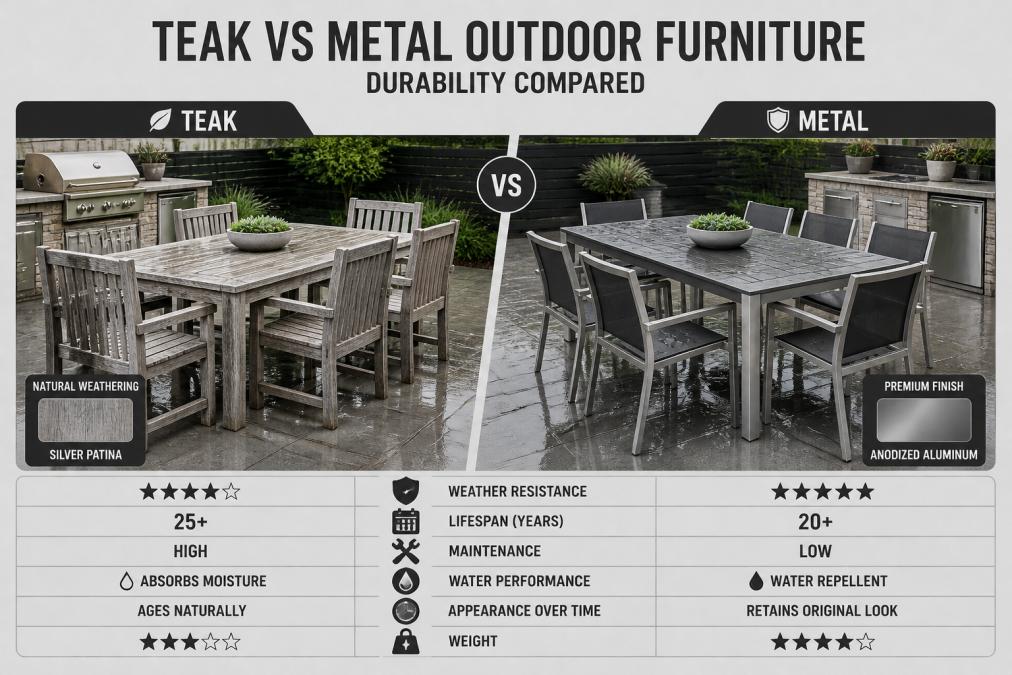
Teak's natural oils act as a built-in preservative. The wood contains compounds that actively resist decay, rot, and insects without any chemical treatment. This is why teak is used in boat building and has been trusted for centuries in tropical climates.
The real difference emerges over time. A teak chair left outside for five years develops a silver-grey patina but remains structurally sound. A metal chair with a compromised finish develops rust spots that spread and weaken the material. Teak can be refinished by sanding and oiling.
| Material | Rot Resistance | Insect Resistance | Rust/Corrosion Risk | Weather Tolerance | Maintenance Frequency |
|---|---|---|---|---|---|
| Teak | Excellent (natural oils) | Excellent (natural oils) | Not applicable | Excellent | 1-2 times yearly |
| Aluminum | Not applicable | Not applicable | Low (with proper finish) | Very good | Minimal if sealed |
| Wrought Iron | Not applicable | Not applicable | High (requires paint) | Good | Frequent (annually) |
The table shows why material selection matters: teak handles organic threats naturally, while metal handles environmental threats through engineering. Neither is perfect everywhere.
Teak vs Aluminum Outdoor Furniture: Rot, Insects, and Weather Resistance
Aluminum is lightweight, doesn't rust easily, and costs significantly less than teak. But aluminum's durability depends entirely on its protective finish. Once that finish cracks or peels, oxidation begins and the metal degrades.
Teak, by contrast, resists rot and insects because the wood itself is hostile to them. The natural oils in teak, particularly tectoquinone and other compounds, actively repel wood-boring insects and fungi that cause decay. This isn't a surface treatment.
Aluminum performs well in moderate climates and coastal environments if the finish is maintained. Anodized aluminum resists corrosion better than painted aluminum. Powder-coated aluminum looks good but can chip, exposing bare metal underneath.
Teak thrives in these exact conditions. The wood's density and natural oils make it ideal for salt spray, humidity, and intense UV exposure. Teak furniture left poolside for years develops a patina but remains sound.
Weight matters too. Aluminum is lighter, making it easier to move and store. Teak is heavier, which means more stability in wind but more difficulty repositioning. For a permanent installation, teak's weight is an advantage. For furniture you move seasonally, aluminum's lightness appeals.
Teak vs Wrought Iron Patio Furniture: Rust, Corrosion, and Long-Term Performance
Wrought iron is beautiful, strong, and heavy. It's also the most maintenance-intensive metal option. Wrought iron rusts if the protective paint or powder coat gets scratched or worn. In humid climates, rust develops aggressively.
Teak doesn't rust because it's wood, not metal. It doesn't corrode. It doesn't require paint maintenance. The trade-off is that teak can eventually check (develop surface cracks) and can be damaged by extreme neglect, but it won't deteriorate the way rusted iron does.
Wrought iron's advantage is aesthetic and structural. It can be forged into ornate designs that teak can't match. It's incredibly strong and can support heavy loads without flex or movement. For decorative pieces or applications where design matters more than maintenance, wrought iron works.
But here's the reality: wrought iron furniture left outside year-round in humid conditions will show rust within months unless repainted annually. Teak furniture in the same conditions develops patina but remains fully functional.
The fasteners matter too. Our teak dining chairs, like the CHELSEA DINING CHAIR ($550), use mortise and tenon joinery with Grade-A teak, eliminating fastener corrosion concerns.

Outdoor Furniture Material Lifespan: Expected Years of Service by Type
Teak furniture typically lasts 25 to 50 years or longer with minimal maintenance. Some teak pieces remain functional for a century.
Aluminum furniture lasts 10 to 20 years if the finish is maintained. Once the anodized or powder-coated layer fails, oxidation accelerates. Replacement of corroded sections becomes necessary. In harsh climates, lifespan drops to 5 to 10 years.
Wrought iron lasts 15 to 30 years with regular maintenance. Without it, rust compromises structural integrity within 5 to 10 years. The actual lifespan depends entirely on how often you repaint and how aggressively rust develops in your climate.
Climate is the biggest variable. Teak in a dry, temperate climate lasts as long as teak in a humid tropical climate, the material itself doesn't care.
Construction quality determines whether you get the lower or upper end of the range. Mortise and tenon joinery (found in quality teak pieces) outlasts dowel or screw joinery. Stainless steel fasteners outlast galvanized or painted steel.
Our SONOMA DINING CHAIR ($500) uses Grade-A teak with mortise and tenon construction, designed to last generations. That construction quality is why lifespan estimates matter, you're not just buying material, you're buying how it's put together.

How to Maintain Teak Outdoor Furniture for Maximum Durability
Teak requires minimal maintenance but benefits from occasional care. The goal is to keep the wood clean and optionally maintain its original color or allow it to weather naturally.
Cleaning is straightforward. Use a soft brush and mild soap with water twice yearly. For stubborn dirt or mildew, a teak cleaner designed for outdoor furniture works well. Rinse thoroughly and let dry. That's it. No sealers or special coatings needed.
If you want to preserve the honey-golden color, apply teak oil annually or semi-annually. This isn't necessary for durability, teak will last just as long unfinished. Oiling is purely aesthetic.
For stubborn stains or to refresh weathered teak, light sanding followed by oiling restores appearance. This is a once-every-several-years task, not a seasonal requirement.
Store teak furniture indoors during extreme weather if possible, but it's not required. Teak tolerates being left outside year-round. Covering it during winter protects the finish but isn't mandatory for survival.
Metal furniture requires different care. Painted or powder-coated metal needs inspection for chips or cracks that expose bare metal. Touch up immediately to prevent rust spread. Anodized aluminum needs occasional cleaning but minimal touch-up if the anodize layer remains intact.
Cost, Value, and Which Material Wins for Your Space
Teak costs more initially. A quality teak dining chair runs $500 to $650. The CLASSIC DINING CHAIR ($550) and CHICAGO DINING ARMCHAIR ($650) represent the investment level for Grade-A teak with proper joinery.
Aluminum and wrought iron furniture typically cost less upfront, $200 to $400 for comparable pieces. But that's just the purchase price. Factor in maintenance costs over time.
If you keep teak for 30 years with minimal maintenance, your annual cost per year is roughly $18 to $22 per piece (amortized).
Teak wins on total cost of ownership if you keep furniture for 15 years or longer. Metal wins on cash outlay if you're replacing furniture every 5 to 10 years anyway.
The value question depends on your timeline and tolerance for maintenance. If you're building a permanent outdoor living space and want to minimize upkeep, teak is the better investment.
According to the National Association of Home Builders, outdoor living spaces add measurable resale value to homes, with quality permanent installations commanding higher premiums.
For serious outdoor entertaining spaces, the kind Urban Man Caves helps you build, teak's longevity and low maintenance make it the premium choice. You're not just buying furniture; you're building infrastructure that lasts.
Conclusion
The choice between teak and metal outdoor furniture durability comes down to three factors: your climate, your maintenance tolerance, and how long you plan to keep the furniture. Teak resists rot and insects naturally, requires minimal maintenance, and lasts decades. Metal costs less upfront but demands consistent care and replaces faster in harsh environments.
If you're serious about creating a permanent outdoor gathering space, teak is the foundation. Urban Man Caves offers premium Grade-A teak furniture like the SMYRNA DINING CHAIR ($650) and CHELSEA DINING CHAIR ($550), all built with mortise and tenon joinery, kiln-dried to prevent cracking, and sourced from sustainably managed forests. These pieces are designed to outlast trends and weather years of entertaining.

Get started with Urban Man Caves and build outdoor furniture that actually lasts.
Frequently Asked Questions
Is teak or metal outdoor furniture more durable?
Teak and metal each excel in different ways. Teak resists rot, decay, and insects naturally due to its dense grain and natural oils, making it ideal for wet climates and humidity. Metal, especially aluminum and cast aluminum, resists rust and corrosion when properly finished, and requires less maintenance overall. Teak typically lasts decades with minimal care; quality aluminum can also last a long time. Your choice depends on climate: teak thrives in warm, humid regions; metal performs well in coastal and variable climates.
Does teak outdoor furniture need to be sealed?
No. Grade-A teak, like our dining chairs, is naturally resistant to rot and insects thanks to its high natural oil content and dense wood structure. You don't need to seal it. However, you can apply a protective finish to slow the silvering process and maintain the honey-golden color longer. Many homeowners prefer to let teak weather naturally into a soft grey patina. If you want to keep the original color, light cleaning with soap and water, followed by an optional teak oil, is all that's needed.
How long does teak outdoor furniture last?
Premium Grade-A teak furniture is built to last for generations with basic care, occasional cleaning and light maintenance. Lifespan depends on climate exposure, fastener quality, and construction. Mortise-and-tenon joinery, like that used in our Sonoma and Chelsea dining chairs, extends durability by preventing joint failure. In harsh coastal or high-humidity environments, teak may show weathering sooner, but the wood itself remains structurally sound and resistant to rot and insect damage.
Which outdoor furniture material needs the least maintenance?
Metal furniture, especially aluminum and cast aluminum, can be low maintenance. Aluminum doesn't rust and needs only occasional rinsing to remove dirt. Wrought iron requires more care, regular inspection for rust spots and touch-ups with protective coatings. Teak is low-maintenance but not zero-maintenance: it benefits from periodic cleaning and occasional oiling if you want to preserve color. If minimal upkeep is your priority, metal can be a good choice. If you prefer a natural material that ages gracefully with little intervention, teak is a strong option.
Can you leave wrought iron furniture outside year-round?
Yes, but with caveats. Wrought iron can be left outside year-round if it has a protective finish (powder coat, paint, or lacquer). Without protection, it will rust, especially in wet, humid, or coastal climates. Even coated wrought iron benefits from periodic inspection and touch-ups where the finish is chipped or worn. In harsh winter conditions or high-salt environments, covering it during off-season or applying additional protective coatings extends its life. Teak, by contrast, requires no such protection and naturally withstands year-round outdoor exposure.


