

Table of Contents
- Why Outdoor Refrigerators Struggle in Extreme Heat
- Understanding Outdoor Refrigerator Operating Temperature Range
- Outdoor Refrigerator Ventilation Requirements and Clearance Standards
- Adjusting Outdoor Refrigerator Temperature Settings for Summer
- Troubleshooting When Your Outdoor Fridge Not Cooling in Hot Weather
- Active and Passive Cooling Strategies for Extreme Heat
- Preventative Care and Regular Maintenance
- Annually (fall or spring):
- Choosing the Right Outdoor Refrigerator for Your Climate
- Frequently Asked Questions
Last Updated: October 5, 2026
Why Outdoor Refrigerators Struggle in Extreme Heat
When temperatures soar above 90 degrees, your outdoor refrigerator faces a serious challenge with outdoor refrigerator cooling extreme heat.

The core issue is simple physics. A refrigerator moves heat from inside to outside using a refrigeration cycle. When the outdoor ambient temperature climbs, that heat transfer becomes less efficient.
Most people think the solution is turning the thermostat colder, but that makes things worse by asking the compressor to work even harder when it's already maxed out.
The real fix involves three strategies: proper ventilation around the unit, maintaining adequate clearance for airflow, and sometimes adding passive or active cooling to reduce the ambient temperature around the refrigerator itself.
Understanding Outdoor Refrigerator Operating Temperature Range
Your outdoor refrigerator has a safe operating temperature range, and extreme heat pushes it beyond those limits.
Inside that range, the compressor handles the thermal load and maintains your target interior temperature. Step outside it, and the system struggles.
Here's what happens in extreme heat:
- Above 110°F: Compressor efficiency drops sharply. The unit may cycle on and off constantly.
- Above 115°F: Many outdoor fridges begin to fail. Interior temperatures climb even with the thermostat set to maximum cold.
- Above 120°F: Standard cooling often becomes impossible. The compressor cannot remove heat faster than it's entering the cabinet.
The FireMagic Outdoor Rated Refrigerator handles harsh conditions better than typical models, with 304 stainless steel construction that resists thermal stress and a sealed compressor base designed for continuous duty in high-ambient situations.

Check your unit's specifications. The manufacturer lists the maximum ambient temperature it can handle. That's your hard ceiling, not a suggestion.
Outdoor Refrigerator Ventilation Requirements and Clearance Standards
Proper ventilation is the single most important factor for outdoor refrigerator cooling in extreme heat. Without adequate airflow around the condenser coils, heat builds up and the compressor overheats.
Most manufacturers require specific clearance around outdoor refrigerators:
- Top clearance: 12 inches minimum for air circulation above the unit
- Side clearance: 4-6 inches on each side (check your manual for exact specs)
- Back clearance: 6-12 inches behind the unit where the condenser coils are located
- Bottom clearance: The unit must sit on a level, rigid surface with air access underneath
These numbers aren't arbitrary; they're based on how air must flow around the condenser coils to dissipate heat effectively.
Measuring and Creating Proper Airflow
Measure the space around your outdoor refrigerator now, checking clearance on all sides with a tape measure.
Air circulation requires space and movement: space lets hot air escape, while movement (natural convection or forced air) carries that heat away from the unit.
For natural airflow, orient your refrigerator so prevailing breezes pass across the rear condenser coils, positioning it where afternoon shade and air movement intersect. Avoid corners where air gets trapped.
If your outdoor kitchen is enclosed or has limited airflow, consider adding a small fan to push air across the condenser area.
Heat Dissipation and Condenser Coil Protection
The condenser coils are where the magic happens: hot refrigerant flows through them, and air passing over them carries that heat away. In extreme ambient temperatures, these coils work overtime.
Dust and debris accumulate on condenser coils over time, and that layer acts as insulation, trapping heat against the coils.
Look at the back and bottom of your refrigerator: those thin metal fins are the condenser coil assembly. If they're covered in dust or leaves, cleaning them is your first troubleshooting step.
Adjusting Outdoor Refrigerator Temperature Settings for Summer
Many homeowners make a critical mistake: turning the thermostat to maximum cold when temperatures rise.
The correct approach is counterintuitive: set your outdoor refrigerator to a moderate interior temperature around 37-40°F.
In summer heat, aim for the middle of the cold range on your dial or digital display, not the extreme end.
Monitor interior temperature for the first few hours after adjusting. If beverages aren't cold enough, increase the setting slightly; small adjustments work better than large ones.
On extreme heat days above 105°F, accept that your fridge will run nearly constantly. That's normal; chasing super-cold temperatures will cause the compressor to overheat and fail.
Troubleshooting When Your Outdoor Fridge Not Cooling in Hot Weather
If your outdoor refrigerator isn't cooling properly during extreme heat, follow this troubleshooting sequence.
Step 1: Check the thermostat setting. Is it turned all the way to maximum cold?
Step 2: Listen to the compressor. Does it sound like it's running?
Step 3: Feel the condenser coils. Reach behind the unit (carefully, they may be hot). Are the coils hot to the touch? That's normal.
Step 4: Clean the condenser coils. This is the most common fix. Dust buildup blocks airflow and traps heat.
Step 5: Check clearance around the unit. Is there adequate space on all sides? Move the unit away from walls or obstructions if needed.
FireMagic Outdoor Rated Refrigerator →
Identifying Compressor and Thermal Load Issues
The compressor is the heart of your cooling system. In extreme outdoor ambient temperatures, it handles a massive thermal load, pushing heat out against a temperature gradient working against it.
Compressor failure in extreme heat usually follows this pattern:
- Unit runs constantly but doesn't cool effectively
- Compressor becomes very hot (you can feel the heat radiating from the back)
- Compressor cycles on and off every few minutes
- Unit stops cooling entirely
This signals thermal overload: the compressor is protecting itself by shutting down.
Cleaning Condenser Coils and Maintenance Procedures
Cleaning condenser coils is the single most effective maintenance task for outdoor refrigerator cooling extreme heat.
What you need:
- Soft brush or old toothbrush
- Compressed air (optional but helpful)
- Vacuum with hose attachment
- Warm water and mild soap
Steps:
- Unplug the refrigerator or turn off its power
- Wait 5 minutes for the compressor to cool
- Locate the condenser coils (usually on the back or bottom of the unit)
- Gently brush away loose dust and debris
- Use the vacuum hose to pull away remaining dust
- If coils are heavily soiled, spray with warm soapy water and a soft brush
- Rinse with clean water and allow to dry
- Plug the unit back in and check cooling performance
Do this monthly during summer months if you live in a dusty climate. In normal conditions, quarterly cleaning is sufficient.
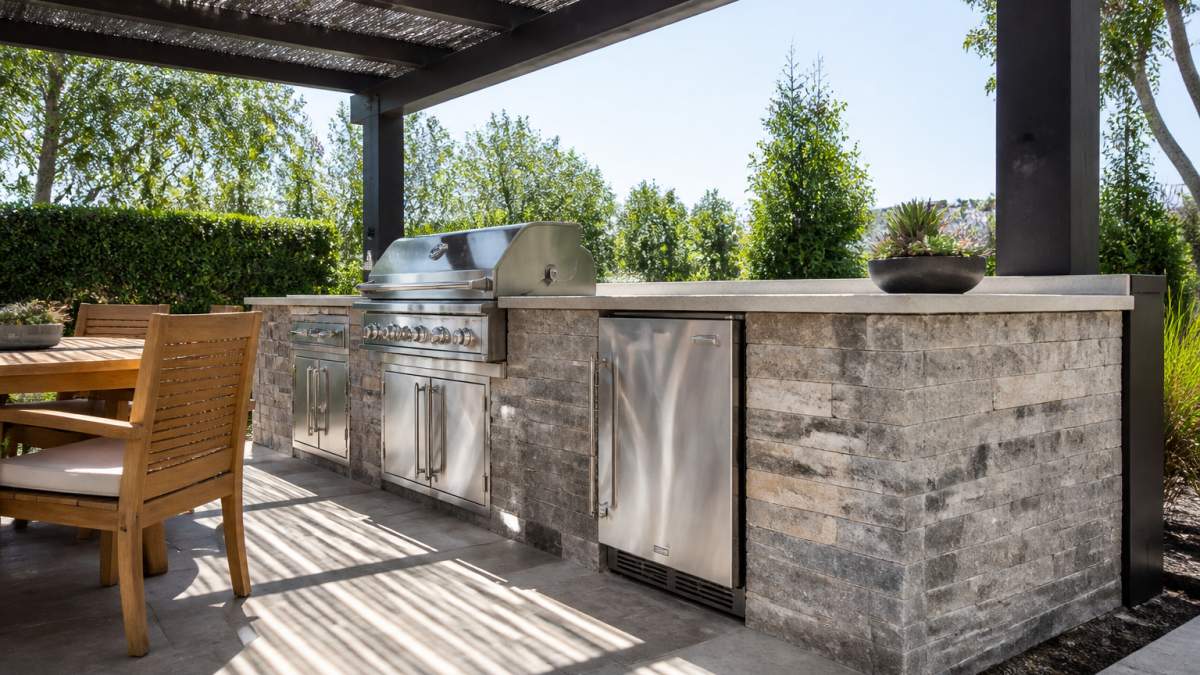
Active and Passive Cooling Strategies for Extreme Heat
When ambient temperatures consistently exceed 105°F, your outdoor refrigerator needs help beyond basic maintenance. Two strategies work: passive cooling (reducing the temperature around the unit) and active cooling (fans or ventilation to improve heat dissipation).
Shading and Ventilation Techniques
Shade is your first line of defense.
The key is airflow: shade that traps hot air underneath is worse than no shade, so choose shade that lets air circulate.
Here's what works:
- Shade cloth (30-50% density): Blocks direct sun while allowing air movement
- Pergola with climbing vines: Provides dappled shade and some air circulation
- Umbrella or market shade: Portable and adjustable; works well for seasonal heat
- Building overhang: If your outdoor kitchen is under a roofline, you're already ahead
Position the shade so afternoon sun (when heat is most intense) doesn't hit the unit directly. Morning sun is less of a problem.
Ventilation works alongside shade. Ensure air flows freely beneath and behind the unit, and don't block the back with walls or cabinetry; leave the clearance discussed earlier.
Insulation Retrofitting for Better Thermal Efficiency
If your outdoor refrigerator sits in an exposed island or cabinet, you can improve thermal efficiency by insulating the surrounding structure.
This works especially well for built-in cabinetry, since the cabinet itself absorbs and radiates heat. Insulating the cabinet exterior reduces that thermal load on the refrigerator.
Insulation retrofitting steps:
- Measure the cabinet exterior (top, sides, back, not the front where you access beverages)
- Purchase foam board insulation (R-value 5-7 per inch)
- Cut pieces to fit the cabinet surfaces
- Attach with construction adhesive or foam-safe fasteners
- Seal gaps with weatherproof caulk
- Paint or cover the insulation with weather-resistant material
Preventative Care and Regular Maintenance
Preventative maintenance keeps your outdoor refrigerator cooling reliably year-round by catching small problems before they become failures.
Monthly during summer:
- Clean condenser coils
- Check that clearance around the unit is unobstructed
- Verify the thermostat is set to a moderate temperature (not maximum cold)
- Listen for unusual compressor sounds
Quarterly:
- Inspect door seals for cracks or deterioration
- Check that the unit is level (use a level tool; adjust feet if needed)
- Wipe down the exterior with a soft cloth
- Verify that shade structures aren't blocking airflow
Annually (fall or spring):
Regular maintenance extends your outdoor refrigerator's life and prevents costly failures during peak entertaining season.
Choosing the Right Outdoor Refrigerator for Your Climate
If you're shopping for a new outdoor refrigerator in a hot climate, specifications matter more than brand name alone.
Look for these features:
- Maximum ambient temperature rating of 110°F or higher: This tells you the unit is designed for extreme heat
- Heavy-duty compressor: Premium models use industrial-grade compressors rated for continuous duty
- 304 stainless steel construction: Resists thermal stress and corrosion better than lower grades
- Sealed refrigeration system: Reduces the need for maintenance and refrigerant refills
- Adequate condenser coil area: Larger coil surface dissipates heat more effectively
- Ventilation clearance specifications in the manual: Shows the manufacturer understands thermal design
The FireMagic Outdoor Rated Refrigerator checks every box: 304 stainless steel cabinet, industrial compressor, and sealed refrigeration system engineered for harsh outdoor conditions, plus a double-tap digital thermometer that monitors interior temperature without venting cold air. At $5,999, it's a premium investment.
For a budget-conscious option, the Black Diamond Outdoor Refrigerator series offers solid performance at $1,237.
Whichever unit you choose, remember that outdoor refrigerator cooling in extreme heat depends on installation and maintenance. Proper ventilation, regular cleaning, and thoughtful placement matter.
Keeping your outdoor fridge cold when temperatures soar is achievable with the right approach. If you're building a new outdoor kitchen or upgrading your current setup, the FireMagic Outdoor Rated Refrigerator and Black Diamond models from Urban Man Caves are engineered to handle extreme heat, with sealed refrigeration systems, stainless steel construction, and the thermal design needed for reliable summer cooling.

Frequently Asked Questions
What temperature is too hot for an outdoor refrigerator?
Most outdoor refrigerators are engineered to operate safely in ambient temperatures up to 110°F. When the ambient temperature exceeds the refrigerator's rated maximum, the compressor works continuously without reaching your target interior temperature. Check your unit's specifications; models like the FireMagic Outdoor Rated Refrigerator are built with heavy-duty components to handle sustained high heat.
Why is my outdoor fridge not cooling in hot weather?
When your outdoor fridge not cooling in hot weather, the issue usually stems from restricted airflow around the condenser coils, a blocked ventilation path, or the compressor hitting thermal limits. High ambient temperatures force the compressor to run constantly while the condenser struggles to dissipate heat, especially if dust or debris clogs the coils. First, check that clearance around your unit meets manufacturer specs (typically 6 inches minimum on sides and back). Clean the condenser coils with a soft brush, verify the thermostat isn't set too high, and confirm shade cloth or a pergola isn't trapping heat directly above the unit.
How much clearance does an outdoor refrigerator need for proper ventilation?
Outdoor refrigerator ventilation requirements typically call for a minimum of 6 inches of clear space on the sides and back of the unit, and at least 12 inches above the condenser coils. This airflow allows heat to escape from the compressor and condenser coils without recirculating warm air back into the unit. Poor ventilation forces the compressor to work harder, reducing cooling capacity and shortening equipment life. When installing units like the Black Diamond Outdoor Refrigerator, ensure your cabinetry or island design doesn't trap heat, and avoid placing the unit directly against walls or in tight alcoves.
Should I adjust my outdoor refrigerator temperature settings in summer?
Yes, you may need to adjust your outdoor refrigerator temperature settings in summer, but the adjustment depends on ambient heat and your unit's duty cycle. Start by monitoring interior temperatures with your unit's digital thermometer over a week; if beverages stay properly chilled, your current setting is working. If temperatures creep above 40°F, lower the setting incrementally and reassess in 24 hours.


