

Last Updated: October 26, 2026
Quick Summary
An outdoor freezer is worth it if you live in a climate with temperature swings and use it regularly for entertaining or storage. An outdoor-rated freezer is engineered to handle ambient temperatures between 32°F and 110°F, while standard freezers only operate safely between 50°F and 85°F, making an outdoor freezer essential in extreme climates or for year-round use.
- Outdoor freezers use 20-40% less energy than standard freezers in outdoor conditions, though they still consume 800-1,200+ kWh annually versus 400-600 kWh indoors.
- Chest freezers are more durable and efficient outdoors than upright models due to simpler mechanics and superior cold-air retention.
- Proper placement under shade with good drainage and ventilation can extend freezer lifespan from 5 years to 12+ years.
- You must monitor outdoor freezers weekly and have a plan for food safety if the unit fails during power outages.
Table of Contents
- What Makes an Outdoor Freezer Different from a Standard Model
- Can a Chest Freezer Be Left Outside Year-Round
- Chest Freezer vs. Upright Freezer for Outdoor Use
- Temperature Range and Climate Suitability
- Freezer Energy Use and Operating Costs Over Time
- Real-World Trade-Offs: Convenience, Maintenance, and Durability
- Choosing Your Outdoor Freezer Setup
- Frequently Asked Questions
What Makes an Outdoor Freezer Different from a Standard Model
An outdoor freezer is engineered to handle temperature swings and weather exposure that would damage a standard kitchen model. The key difference lies in the compressor, thermostat, and insulation design, components built to function reliably when ambient temperatures fluctuate between freezing and hot.
Standard freezers assume a controlled indoor environment, typically between 50°F and 85°F. They're optimized for consistent operation in that narrow range. An outdoor-rated freezer, by contrast, uses a more strong compressor that can start and stop across a wider temperature spectrum. The thermostat responds differently to external heat or cold, and the cabinet insulation is often thicker to resist direct sun exposure and moisture penetration.
Why this matters: A standard freezer placed outside will either fail to maintain proper food temperature or burn out its compressor trying. You'll lose your investment, and potentially your food, within a season or two.
The construction details also differ. Outdoor models typically feature reinforced door seals, stainless steel or powder-coated exteriors designed to resist rust, and ventilation systems that account for outdoor air circulation. Indoor freezers use thinner materials and assume protection from the elements.
Can a Chest Freezer Be Left Outside Year-Round
A standard chest freezer should not be left outside year-round. Most manufacturers explicitly void warranties if the unit operates outside the recommended ambient temperature range, typically 50°F to 85°F.
Here's what happens in practice: In winter, when temperatures drop below 50°F, the thermostat may not cycle the compressor on properly. Food stays frozen, but the compressor doesn't run enough to maintain consistent internal temperatures. In summer heat above 85°F, the compressor works overtime, consuming far more electricity and wearing out faster than designed.
Cold climates present a specific problem. When outdoor temperatures fall significantly below freezing, the refrigerant can become too thick to circulate efficiently. The compressor may struggle to start or may not start at all. You're left with a useless box in the middle of winter, exactly when you might want frozen food most.
Hot climates create the opposite stress. The compressor runs constantly, never reaching the setpoint temperature. Energy consumption skyrockets, and the component life shortens dramatically. Many compressors fail after 3-5 years of continuous high-temperature operation instead of the typical 10-15 year lifespan.
A chest freezer can survive occasional outdoor exposure, say, in an unheated garage during mild seasons. Year-round outdoor placement is a different calculation. If you're committed to outdoor freezing in a variable climate, an outdoor-rated model isn't optional; it's essential.
Chest Freezer vs. Upright Freezer for Outdoor Use
Both chest and upright freezers can work outdoors if they're rated for it, but they present different trade-offs.
A chest freezer sits low to the ground and opens from the top. It's inherently more efficient at holding cold air because warm air doesn't spill out when you open it. The design is simpler mechanically, fewer moving parts mean fewer failure points. Chest freezers also tend to be more affordable upfront.
An upright freezer stands at eye level with a front-opening door, like a refrigerator. It's easier to access and organize. You can see what you have without moving things around. For an outdoor freezer that gets regular use during entertaining season, this convenience matters. The trade-off is efficiency, every time you open that door, cold air pours out.
For outdoor use specifically, a chest freezer is the more durable choice if you're willing to trade convenience for reliability. The simpler design handles temperature swings better, and the efficiency advantage means lower operating costs over time.
Climate matters too. In consistently cold climates, the efficiency difference between chest and upright becomes less critical. In hot climates, the chest freezer's superior insulation performance becomes a real advantage.
Temperature Range and Climate Suitability
Operating temperature range is the single most important specification when choosing an outdoor freezer. This range defines the ambient temperatures at which the unit will maintain proper food storage temperatures.
Most outdoor-rated freezers operate safely between 32°F and 110°F ambient temperature. Some premium models extend this to 0°F on the low end for colder regions.
Your climate determines whether an outdoor freezer makes practical sense. In a temperate zone with moderate seasonal swings, a standard freezer with basic weather protection might limp along.
Cold climates create specific challenges. When outdoor temperatures drop below the freezer's minimum operating range, the thermostat struggles to regulate properly.
Hot climates demand different considerations. Direct sunlight raises the exterior temperature significantly above the ambient air temperature.
Humidity also affects performance. Coastal areas and humid regions can cause rust on unprotected metal components and corrosion inside the compressor. Stainless steel or powder-coated exteriors resist this better than painted finishes.
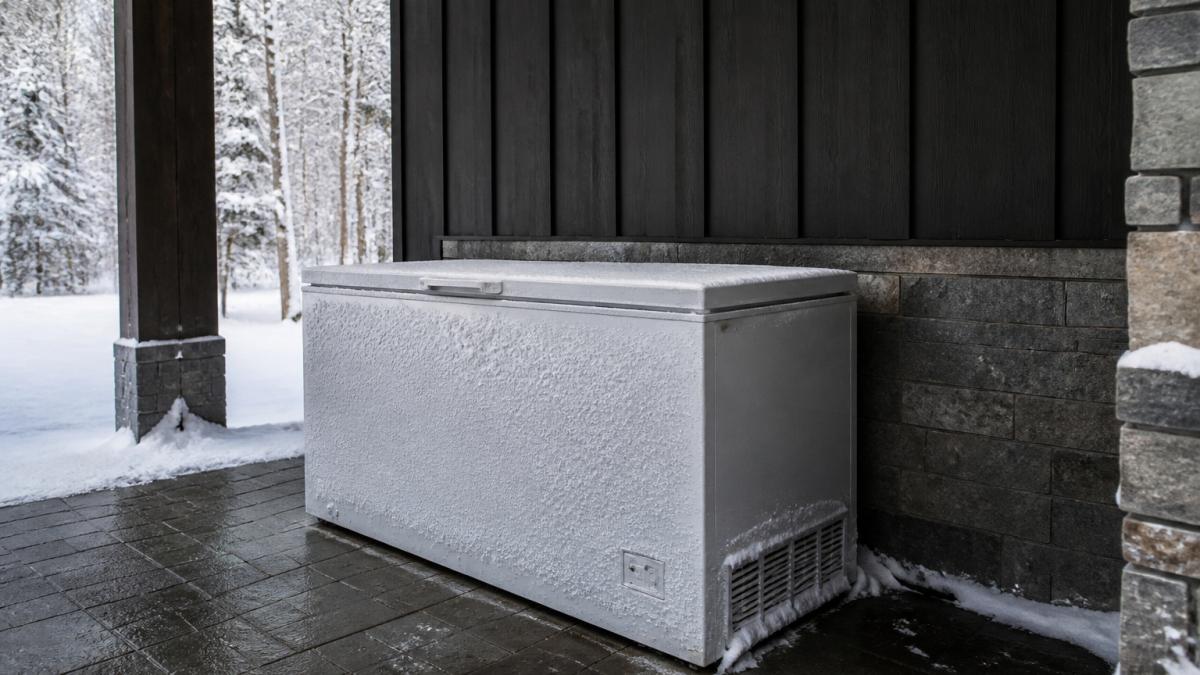
Outdoor freezers operate across a wider temperature range than standard models, making them suitable for different climates.
| Freezer Type | Operating Range | Best For | Note |
|---|---|---|---|
| Standard freezer | 50°F to 85°F | Indoor use only | Narrow range; warranty voided if used outside |
| Outdoor-rated freezer | 32°F to 110°F | Most climates | Handles temperature swings reliably |
| Premium outdoor model | 0°F to 110°F | Cold regions | Extended low-end range for hard winters |
Freezer Energy Use and Operating Costs Over Time
Energy consumption is where outdoor freezer decisions get real. An outdoor freezer works harder than an indoor one because it's fighting temperature extremes.
A standard freezer in a climate-controlled kitchen might use 400-600 kilowatt-hours annually. That same freezer placed outdoors could use 800-1,200+ kWh annually, depending on climate severity. The difference comes from the compressor running longer and more frequently to overcome external temperature stress.
Operating costs compound over time. If you're paying an average electricity rate, that extra energy consumption translates directly to higher bills every month. Over a 10-year lifespan, the cumulative cost difference between an efficient outdoor-rated model and an inefficient standard freezer can be substantial.
An outdoor-rated freezer is designed to minimize this penalty. Better insulation means the compressor doesn't have to run as hard. A more capable thermostat and compressor system maintains temperature with fewer cycles.
The payoff depends on your usage pattern. If you're running the freezer year-round, energy costs matter significantly. If you're using it seasonally, say, May through September for entertaining, the annual impact is smaller. Many homeowners run outdoor freezers only during warm months, which reduces annual energy consumption considerably.
Maintenance also affects long-term costs. A standard freezer working outside will require more frequent repairs. Compressor failure, thermostat malfunction, and seal degradation happen faster. Each repair costs money and downtime.
Real-World Trade-Offs: Convenience, Maintenance, and Durability
Outdoor freezers aren't magic. They're a practical solution with genuine trade-offs you need to accept before buying.
Convenience is the first trade-off. An outdoor freezer is farther from your kitchen than an indoor one. If you're entertaining and need something from the freezer, you're walking outside in any weather. This is fine during summer hosting season.
Maintenance is ongoing. An outdoor freezer needs regular attention. You'll defrost it more frequently than an indoor unit because temperature swings cause more frost buildup. You'll clean the exterior more often to prevent rust and mold growth.
Durability depends entirely on your setup. A freezer exposed to direct sun, rain, and temperature swings will deteriorate faster than one in a protected environment.
Weatherproofing matters more than most people realize. A concrete pad with proper drainage prevents water from pooling beneath the unit. An awning or covered patio shields it from direct rain and reduces sun exposure.
Food safety is your responsibility. An outdoor freezer that fails during a power outage or compressor breakdown will thaw your food. If you don't notice quickly, you've lost both the food and money.
USDA guidance on food safety and temperature monitoring provides clear guidelines on safe thawing and refreezing. If your outdoor freezer fails and the food reaches 40°F, you're in the danger zone for bacterial growth.
Choosing Your Outdoor Freezer Setup
Start with your climate and intended use. If you're in a mild climate and using the freezer seasonally, a standard freezer with good weather protection might work. If you're in an extreme climate or running the freezer year-round, an outdoor-rated model is the only practical choice.
Next, decide on chest versus upright. Chest freezers are more efficient and durable outdoors. Upright freezers offer better access and organization. Your entertaining style should guide this choice. If you're pulling frozen items frequently during parties, upright convenience wins. If you're mostly storing bulk items and checking occasionally, chest efficiency wins.
Capacity should match your actual needs, not your aspirations. A 15-cubic-foot freezer handles most entertaining situations. A 20-cubic-foot unit is overkill for most homes and wastes energy. Think about what you'll actually store: frozen appetizers, ice, bulk meat, frozen vegetables. Estimate the volume honestly, then add 20%. That's your target size.
Location is critical. Choose a spot with:
- Solid, level ground with drainage (not a low spot where water pools)
- Shade during the hottest part of the day (an awning, patio roof, or tree cover)
- Adequate clearance on all sides for ventilation
- Protection from direct wind exposure if possible
- Proximity to an outdoor electrical outlet (GFCI-protected)
- Easy access for maintenance and regular use
Protection from the elements matters more than the freezer model. A standard freezer under a solid roof might outlast an outdoor-rated freezer sitting in full sun and rain. Weatherproofing is your insurance policy.
You can explore outdoor refrigeration options that Urban Man Caves carries, designed specifically for the demands of outdoor entertaining spaces. We also stock outdoor beverage coolers for complementary cooling solutions. If you're building a complete outdoor kitchen, understanding how a freezer fits into your broader outdoor kitchen renovation helps ensure everything works together seamlessly.
Is an outdoor freezer worth it? The answer depends on your climate, entertaining frequency, and willingness to maintain the setup. In moderate climates with seasonal use, the convenience and food storage capacity often justify the investment.
Frequently Asked Questions
Is an outdoor freezer worth the extra cost?
An outdoor freezer is worth it if you entertain frequently, live in a stable climate, and plan to keep it for 5+ years. The real value comes from convenience during gatherings and extra food storage, not resale value. However, if your climate swings between extreme heat and cold, or if you rarely use additional freezer space, a standard garage freezer may deliver better returns. Calculate your total cost of ownership: purchase price plus installation, weatherproofing, and annual energy consumption.
Can a chest freezer be left outside in winter?
Standard chest freezers should not be left outside in winter below 50°F. Cold temperatures can damage the thermostat and compressor, preventing the freezer from cycling properly and leaving food unsafe. Outdoor-rated freezers are engineered with cold-weather components and can operate safely in freezing conditions. If you're in a cold climate, verify the freezer's minimum operating temperature range before purchase, most outdoor-rated models handle 0°F to 110°F.
What's the difference between an outdoor-rated freezer and a garage-ready freezer?
An outdoor-rated freezer is built to withstand direct sun, rain, humidity, and temperature swings from freezing to over 100°F. It includes reinforced weatherproofing, enhanced insulation, and cold-weather compressors. A garage-ready freezer handles temperature fluctuations in a controlled space but isn't sealed against moisture or UV exposure. Outdoor-rated models cost more upfront but last longer in harsh conditions and require less shelter infrastructure.
How much does freezer energy use add to my electric bill?
Most outdoor freezers use 400-800 watts and run 8-12 hours daily, adding $15-$40 per month to your electric bill depending on local rates and ambient temperature. Hot weather forces the compressor to work harder, increasing consumption. Upright models typically use 10-15% more energy than chest freezers because cold air escapes when you open the door. Look for ENERGY STAR certified models to reduce operating costs over the freezer's 10-15 year lifespan.


