

You're probably standing in the same spot many homeowners reach during a patio upgrade. The layout is getting better, the grill area is dialed in, maybe the lounge seating is already chosen, and now the table has to do more than just hold drinks. It has to look grounded, feel substantial, and still make sense a year from now when the weather, cleanup, and real-world use start to matter.
That's where an iron outdoor table gets interesting. It brings presence in a way lightweight furniture usually doesn't. It can make a small bistro corner feel intentional and a larger dining zone feel permanent. But iron also asks more from you than many product photos admit.
Table of Contents
- Why an Iron Outdoor Table Still Earns a Place on Your Patio
- How Iron Outdoor Tables Are Made and Why It Matters
- Iron Versus Teak and Concrete for Modern Outdoor Living
- Styles Finishes and Details That Signal a Quality Iron Table
- Sizing Placement and Comfort for Patios and Man Caves
- Rust Protection and Seasonal Care That Actually Works
- Styling Your Iron Table and Making the Final Choice
Why an Iron Outdoor Table Still Earns a Place on Your Patio
A good patio table usually earns its keep in ordinary moments. Morning coffee before the house wakes up. A plate coming off the grill. Friends leaning in during a late evening while the fire feature stays on low. In those moments, a table that shifts, rattles, or feels flimsy can lower the whole experience.
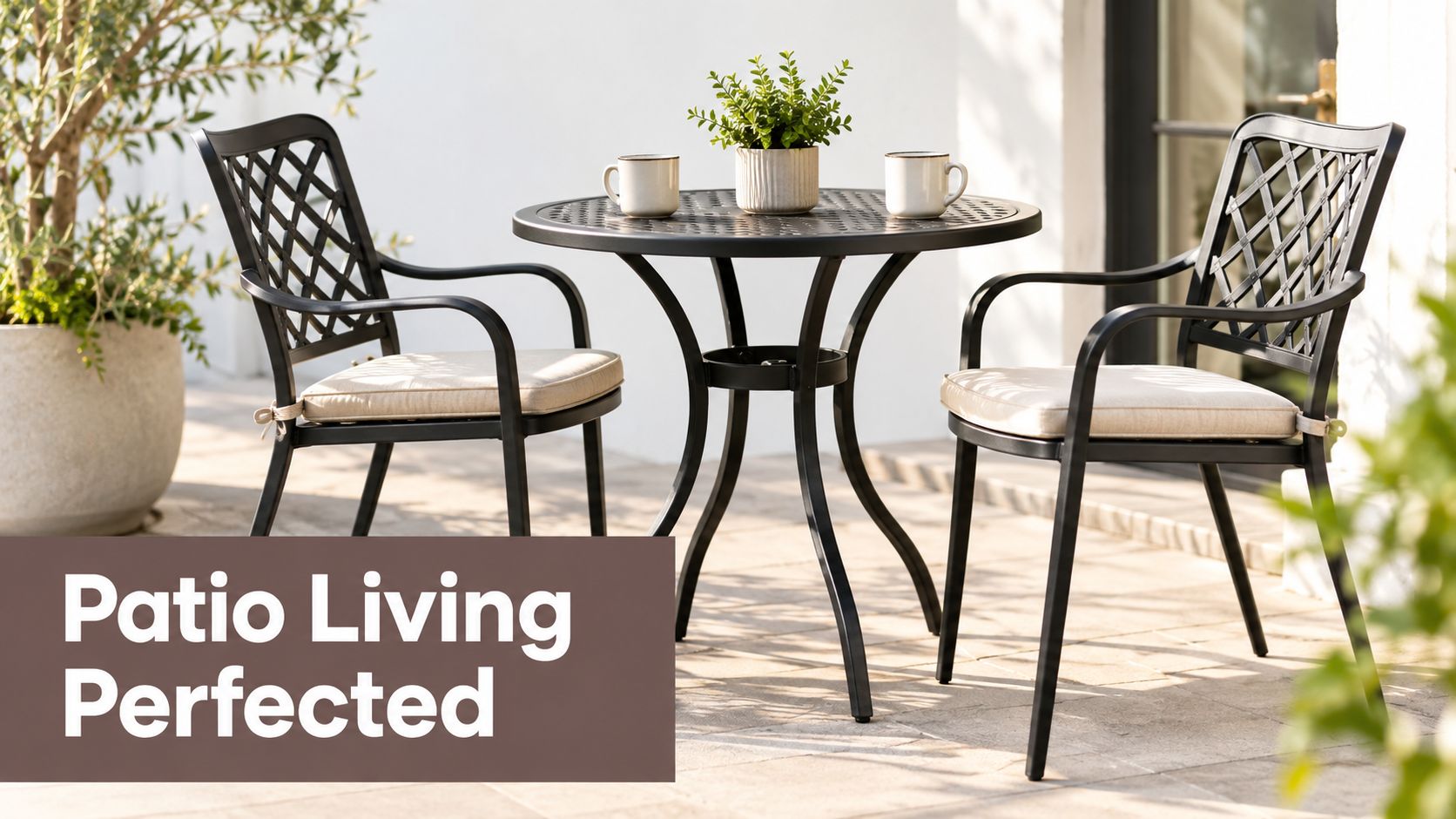
An iron outdoor table still appeals because it rarely feels flimsy. It has visual weight and actual weight. That matters if your patio gets breezes, if your space is open around a pool, or if you want furniture that looks settled instead of temporary.
Why homeowners still choose iron
Some materials disappear into the background. Iron usually doesn't. It frames a space.
- Stability matters: Iron works well where you don't want a table scooting around every time someone rests an elbow on it.
- Classic lines still fit premium homes: Scrollwork, lattice, and darker finishes pair easily with stone, brick, stucco, and traditional architecture.
- It supports layered design: You can soften iron with cushions, teak chairs, planters, and textiles without losing that strong base.
If you're still comparing layouts and categories, it helps to browse outdoor furniture by function first, then narrow down material. That keeps you from choosing a beautiful table that doesn't match how you entertain.
Practical rule: Buy iron when you want a table to feel anchored, not when you want to rearrange your patio every weekend.
The catch is maintenance. Iron can be a long-term piece, but it isn't carefree. If you're exploring options across dining, lounge, and mixed-material setups, Urban Man Caves keeps a broad outdoor furniture collection that makes those side-by-side comparisons easier. For the right homeowner, iron is still a smart choice. It just works best when it's chosen on purpose.
How Iron Outdoor Tables Are Made and Why It Matters
A table can look impressive on a showroom floor and still be the wrong fit for your patio if you do not understand how it was built. With iron, the build method shapes more than appearance. It affects weight, surface detail, repairability, and how the table lives outdoors year after year.
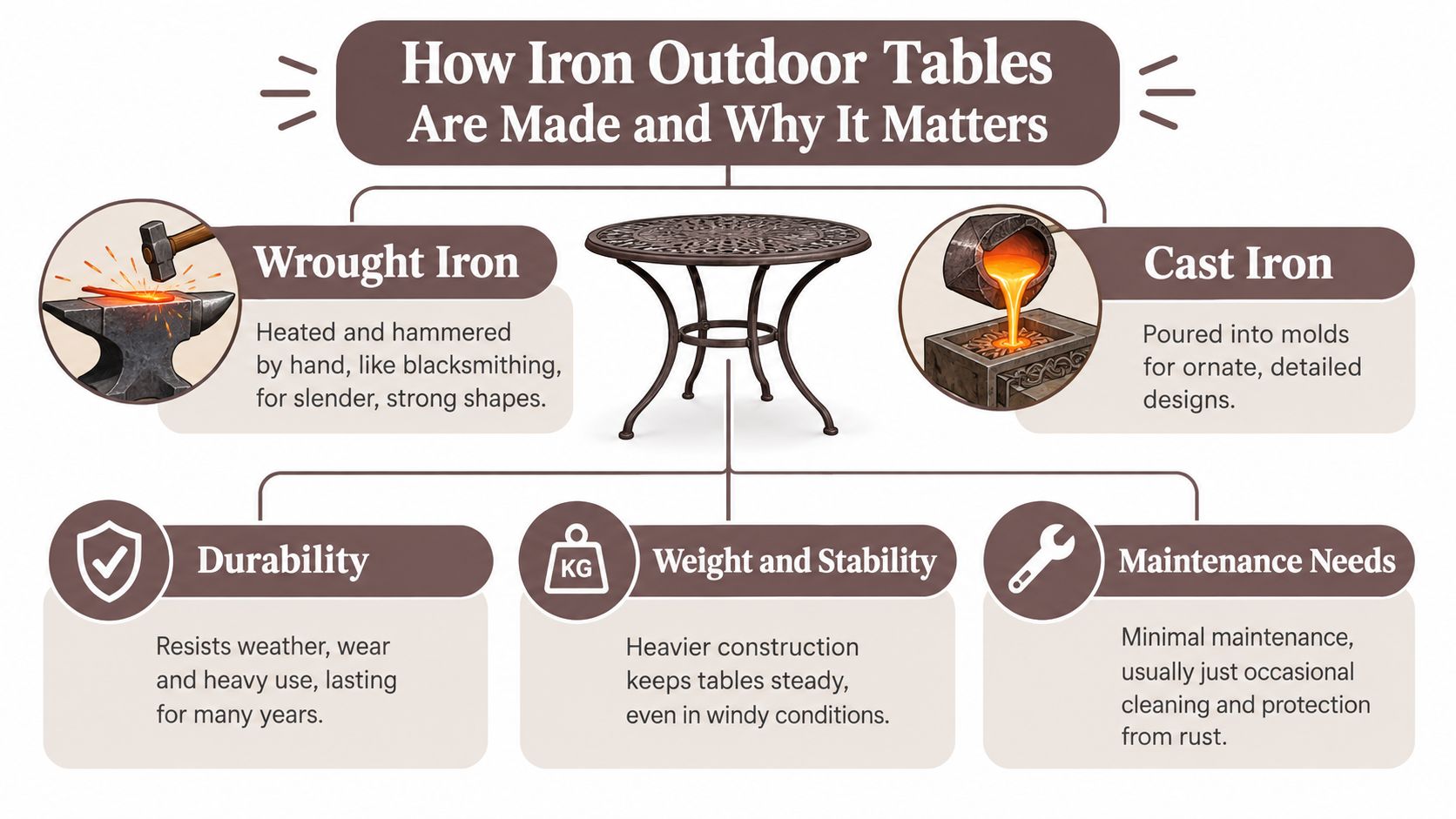
The first distinction is simple. Wrought iron is shaped while the metal is heated. Cast iron is poured into a mold and cooled into a fixed form. Hand-forged pieces usually show more variation and a more crafted feel. Cast pieces tend to deliver sharper repetition, heavier sections, and more decorative pattern.
Historical references place iron furniture far back in the furniture timeline, with wrought-iron garden furniture gaining popularity in England before industrial production made iron outdoor pieces more widely available (Collectors Weekly on the history of wrought-iron garden furniture).
Wrought iron in plain language
Wrought iron works like bent hardwood in fine furniture. The maker heats the material, shapes it, and builds the form piece by piece.
That process often produces slimmer lines, scrolls, curves, and bases that feel more handmade than machine-perfect. If a table has a base that looks drawn by hand rather than stamped from a template, you are usually seeing the result of forging.
For a homeowner, that matters because forged-looking frames often suit patios where you want visual lightness without giving up strength. They can still be heavy, but they usually feel less blocky than cast designs.
Cast iron in plain language
Cast iron is the mold-based version. Molten metal is poured into a form, which allows the same shape to be repeated with much more consistency.
That is why cast iron often shows up in pedestal bases, ornate floral motifs, and detailed relief patterns. Museums and antiques specialists also note that cast-iron garden furniture became widely popular during the 19th century, especially as industrial production expanded and public exhibitions helped spread the style (Journal of Antiques on cast-iron garden furniture).
Cast construction usually brings more visual mass. That can be a benefit on windy patios or under large tops, but it also means more heat retention and more effort when the table needs to be moved.
A short visual can help lock in the difference:
Why construction changes the buying decision
Premium buyers should slow down. Iron is not one thing.
A heavily cast table base often gives you excellent stability and strong traditional character. The trade-off is bulk, warmer surfaces in full sun, and more crevices where paint failure can start. A simpler forged frame may be easier to touch up and can look more refined, but the overall design still needs enough mass to feel planted.
Use this quick filter when you compare options:
- Choose cast-leaning iron when you want an anchored base, more ornament, and a table that stays put in exposed areas.
- Choose forged or simpler iron frames when you want cleaner lines, easier repainting, and less visual heaviness.
- Choose teak instead if you want a warmer surface and easier day-to-day living around heat.
- Choose concrete-composite instead if you want a sculptural modern look with mass, but without the same old-world detailing.
If you want to soften an iron table with a warmer seat, something like the JUNUS DINING CHAIR introduces teak, synthetic wicker, and Sunbrella cushions into the mix. That pairing works well when you like iron's structure but do not want the full dining setup to feel hard or visually dense.
Iron Versus Teak and Concrete for Modern Outdoor Living
Iron used to be an easy default. Today, it's more of a deliberate trade-off.
Recent design coverage points toward sculptural concrete-composite tables, earthier teak, and mixed-material pieces, while wrought iron tends to return as more of a vintage Euro-summer look than the automatic functional choice (Houzz outdoor furnishing trends coverage). That doesn't mean iron is obsolete. It means you should choose it for the right reasons.
Where iron wins
Iron is strong when you want a table to stay put and visually anchor the patio. In exposed spaces, that grounded feel can be useful. It also suits homes that lean traditional, Mediterranean, formal garden, or old-world in style.
Iron can also look better with age than trendy materials that feel dated once the style cycle moves on. The silhouette matters a lot here. A simple pedestal or clean slat top usually ages better than overly busy ornament.
Where teak pulls ahead
Teak changes the mood. It's warmer, more relaxed, and easier on the eye in casual entertaining spaces. It also pairs naturally with stone, greenery, and soft upholstery.
Homeowners often choose teak when they want their patio to feel polished without feeling stiff. If your outdoor dining area flows into a lounge zone, a teak-heavy layout can create a more unified, hospitality-style feel.
Where concrete-composite makes sense
Concrete-composite tends to land in modern settings. It gives you mass and sculptural presence, but with a different personality than iron. Instead of delicate lines or scrollwork, you get broad planes, muted texture, and a contemporary silhouette.
If your project leans modern and you want a substantial table form, a concrete-top outdoor dining option may fit the brief better than iron.
| Choosing Between Iron Teak and Concrete Composite | |||
|---|---|---|---|
| Material | Best For | Maintenance Level | Key Trade-off |
| Iron | Windy patios, classic architecture, formal dining areas | Higher | Stable and elegant, but chips and rust need attention |
| Teak | Warm, relaxed luxury, mixed seating areas, easy styling | Moderate | Softer visual feel, but not as inherently heavy or formal |
| Concrete-composite | Modern patios, sculptural layouts, statement pieces | Moderate | Strong presence, but can feel visually heavier and less adaptable stylistically |
Iron is no longer the safe default. It's the right answer when stability, architecture, and classic character matter more than low-touch ownership.
A simple way to decide is this. Choose iron if your patio is exposed, your style is classic, and you don't mind periodic upkeep. Choose teak if comfort, warmth, and flexibility matter most. Choose concrete-composite if your space is contemporary and you want the table to read like architecture.
Styles Finishes and Details That Signal a Quality Iron Table
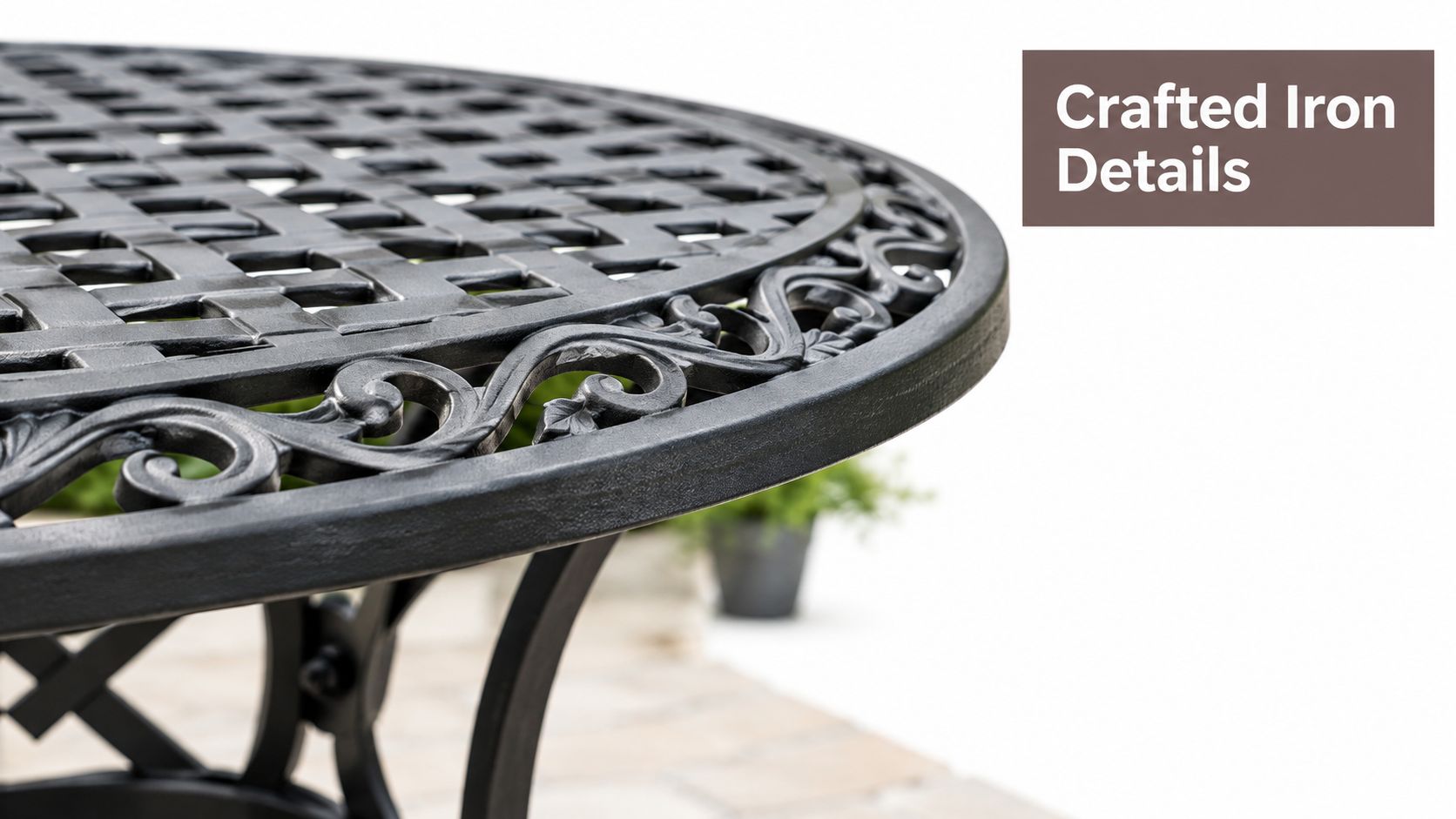
An iron table can look impressive online and disappoint in person. The difference usually shows up in the details you touch, not the silhouette you notice first.
Start with the style language
Iron tables usually fall into a few visual families.
- Bistro and café styles: Smaller scale, often round, easy to place on compact patios or near a grilling zone.
- Lattice and garden styles: More traditional, often at home beside brick, hedges, or stone paths.
- Scrollwork and ornate designs: Decorative and romantic. Best when the home already supports that level of detail.
- Cleaner modern frames: Simpler lines, darker finishes, less ornament. These work better in updated spaces.
If your house is modern but your table is highly ornate, the patio can feel mismatched fast. Iron looks best when it echoes the architecture instead of fighting it.
The finish matters more than many buyers expect
For outdoor use, bare iron is vulnerable because iron oxidizes when moisture and oxygen reach exposed metal. Guidance for ferrous outdoor furniture points to a tightly bonded coating system, with powder coating favored because it forms a dense film that blocks moisture better than basic paint. The same guidance notes that a zinc-rich primer beneath powder coat greatly improves corrosion resistance, and chips or scratches often become the first rust points at joints, feet, and water-collection areas (outdoor furniture corrosion guidance).
That means a premium iron outdoor table should make you inspect these areas:
- Undersides and feet: Water sits here, and damage often starts where buyers rarely look.
- Welds and joints: Rough transitions or thin coating usually age poorly.
- Touch points: Table edges, chair contact zones, and umbrella-hole areas take repeated wear.
The iron itself doesn't protect the table. The coating system does.
What quality feels like in person
Run your hand under the edge. Look at the bottom of the legs. Check whether the finish feels even or whether it already looks thin at corners.
A better-made table usually has a finish that feels deliberate, not dusty or brittle. It should look complete from the side you never photograph. That's often the fastest test.
Sizing Placement and Comfort for Patios and Man Caves
A beautiful table that crowds the room gets used less. Many outdoor upgrades go sideways. Homeowners choose by look first, then realize chairs can't slide back comfortably or the path to the grill is too tight.
Use the room the way you actually live in it
A dining patio and a man cave lounge patio don't ask the same thing from a table.
For dining, you need enough room for chairs to pull out, people to pass behind them, and serving space in the middle. For a lounge area, the table often acts more like a central anchor between club chairs, a sectional, or a fire feature.
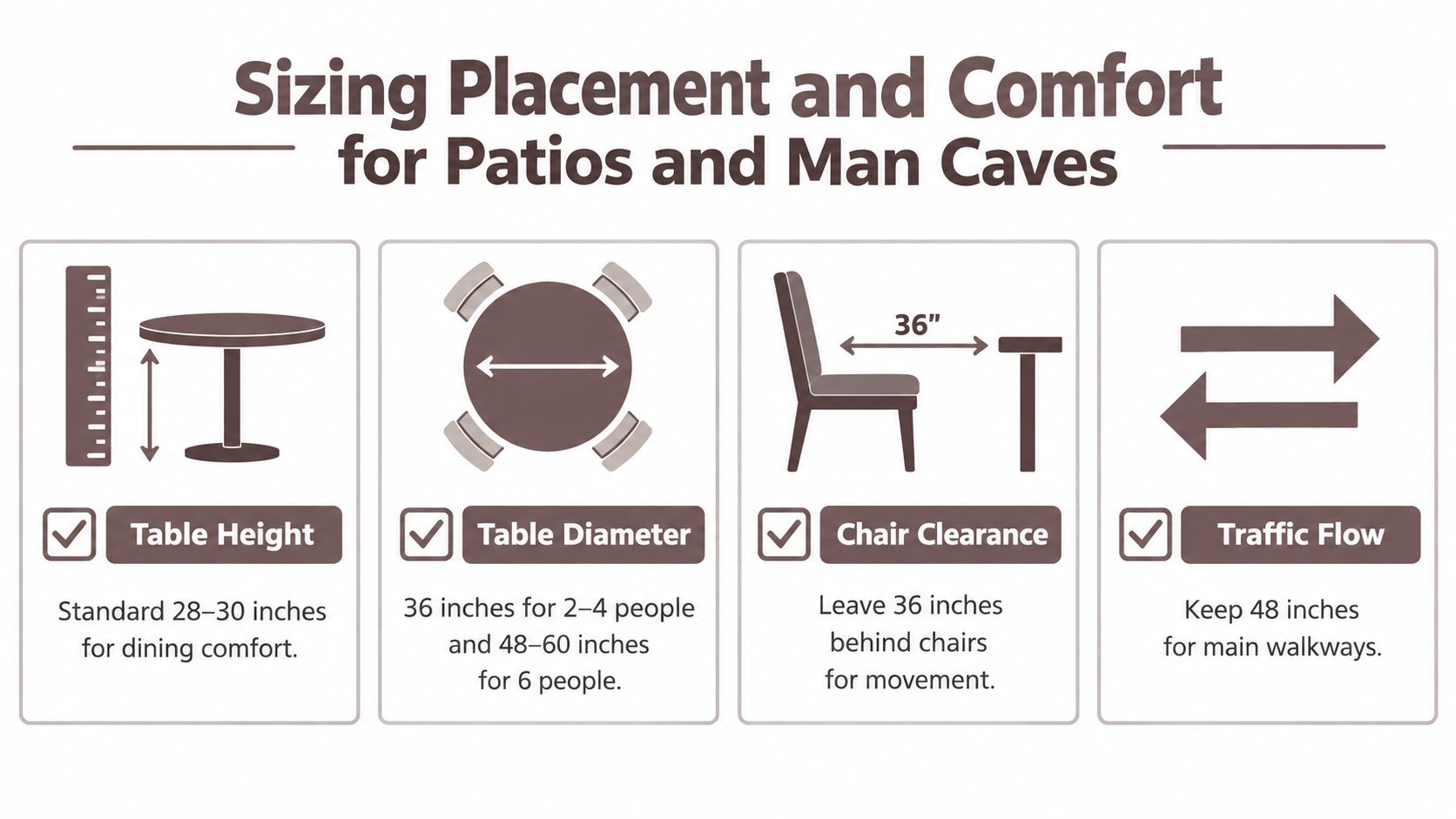
The visual guide above includes common layout benchmarks such as 28 to 30 inches for dining table height, 36 inches for a compact round table serving 2 to 4 people, 48 to 60 inches for a table serving 6, 36 inches behind chairs for movement, and 48 inches for main walkways. Use those as planning checkpoints while you measure.
A practical placement checklist
- For balconies or tight patios: A round iron bistro table usually fits better than a square table because corners don't interrupt movement.
- For grill zones: Keep enough space between the table and cooking area so one person can plate food while another still moves past comfortably.
- For covered man cave spaces: Heavier iron can work well because the table becomes part of the room, not a piece you constantly shift.
- For uneven surfaces: Check whether the legs sit firmly on pavers, decking, or stone before you commit to a larger top.
If you're looking for more layout inspiration suited to hot-climate outdoor living, these patio ideas for CA and AZ homes can help you think through shade, zoning, and material mix.
Pairing the table with the rest of the setup
One common mistake is putting a heavy iron dining set next to equally heavy visual elements on every side. The patio starts to feel packed.
Instead, balance the mass:
- Use lighter bar seating nearby: A separate outdoor bar table collection can create a second entertaining zone without repeating the same visual weight.
- Mix textures: Stone, teak, cushions, and greenery keep iron from feeling severe.
- Protect circulation: Leave your cleanest path between the door, grill, and seating.
If guests have to sidestep chairs every time they move around the patio, the table is too large for the space no matter how good it looks.
Rust Protection and Seasonal Care That Actually Works
Iron furniture care gets confusing because people focus on the metal and ignore the finish. In real outdoor use, longevity comes from the coating system, surface prep, and how quickly you deal with small damage.
Industry guidance often uses ASTM B117 salt-spray exposure and cross-hatch adhesion testing to evaluate outdoor metal coatings. For outdoor furniture, roughly 500 hours of salt-spray is commonly treated as a baseline for moderate climates, while 1,000+ hours is preferred for coastal or high-humidity markets. The same guidance cites 60 to 120 µm dry-film coating thickness as a practical benchmark for residential outdoor exposure (outdoor furniture coating benchmarks).
What that means in plain English
Think of the finish like a rain jacket. A thin or poorly bonded jacket may look fine on day one, but once moisture gets through a weak spot, the problem spreads underneath.
That's why rust often starts in the same places:
- Chips on edges
- Scratches near chair contact points
- Joints and seams
- Feet that sit on damp surfaces
- Areas where water pools after rain
The care routine that actually helps
You don't need an elaborate ritual. You need consistency.
- Wash off grime regularly. Dirt holds moisture against the finish, especially in shaded or damp areas.
- Inspect after storms or moving furniture. Small chips matter more than most owners realize.
- Touch up damage quickly. Waiting gives moisture time to creep under the coating.
- Keep water from lingering. Dry the top after heavy rain if the table design tends to hold puddles.
- Use protection in the off-season. A fitted option from a weather cover collection can help reduce standing moisture, debris buildup, and finish wear when the table isn't in use.
Climate changes the workload
In dry, covered conditions, iron is easier to own. In coastal, humid, or wet environments, maintenance becomes more active. That doesn't rule iron out. It just means you should go in with clear expectations.
A scratch on teak usually reads as age. A scratch on iron can become a corrosion entry point. That single difference explains a lot about who ends up loving iron and who ends up replacing it.
Styling Your Iron Table and Making the Final Choice
Iron works best when the styling respects what it is. Don't try to make it disappear. Use it as the anchor, then soften the edges around it.
For a vintage European look, pair iron with light cushions, striped textiles, potted herbs, and classic lanterns. For a more structured patio, combine a simpler iron frame with stone pavers, neutral upholstery, and structured planters. If you like industrial notes, black iron plays well with concrete, darker woods, and matte finishes.
A short final checklist
Ask yourself these questions before you buy:
- Is your patio exposed to wind? Iron's weight can be a real advantage.
- Do you want a warm, relaxed look or a formal one? Teak usually reads warmer. Iron usually reads more architectural.
- Will you keep up with finish checks and touch-ups? If not, another material may fit your lifestyle better.
- Does the table need to move often? If yes, iron may become frustrating.
- Are you mixing materials intentionally? That's often the sweet spot for premium patios.
If you love the structure of iron but want the seating to feel softer and more forgiving, a teak chair such as the Junus Dining Armchair can bring in a natural finish, synthetic wicker, and Sunbrella cushions without losing the refined look.
The best choice isn't the most timeless material on paper. It's the one that fits your climate, your patience for upkeep, and the way you host.
Urban Man Caves offers outdoor furniture, bar tables, weather covers, grills, fire features, and other premium pieces for homeowners building patios that are made for real use. If you're weighing iron against teak or concrete for your own setup, visit urbanmancaves.com to compare materials and build an outdoor space that fits how you relax and entertain.


