

Last Updated: November 4, 2026
Quick Summary
The infrared vs traditional gas grill choice comes down to heat delivery: infrared wins on searing speed and crust, while traditional gas wins on versatility and low-temperature control. Infrared burners push radiant energy straight into the food, but most outdoor kitchens end up wanting both methods.
- Traditional gas grills cook mostly by convection, heating air that swirls under the lid.
- Infrared burners run hot, leaving a short window between seared and burnt.
- Less grease dripping into open flame means infrared grills see fewer flare-ups.
- Pull steaks about 5°F below target because carryover cooking continues during the rest.
- The Infrared Searing Grill Burner is a drop-in replacement delivering 20,000 BTUs of radiant heat.
Table of Contents
- Infrared vs Traditional Gas Grill: The Core Differences
- Side-by-Side Comparison Table
- Infrared Grill Pros and Cons for Outdoor Kitchens
- Infrared Searing Station Benefits: Speed, Crust and Juice Retention
- Fuel Consumption, Flare-Ups and Heat Zones in Practice
- How to Clean Infrared Grill Burners Without Damaging the Emitter
- Food-by-Food Performance: Steaks, Ribs, Vegetables and Flatbreads
- Upgrading Your Grill: Choosing the Right Infrared Burner
- Frequently Asked Questions
Infrared vs Traditional Gas Grill: The Core Differences
The infrared vs traditional gas grill decision comes down to how heat reaches your food. A traditional gas grill heats air, and that hot air cooks the food. An infrared grill converts gas into radiant energy that strikes the steak directly. Most serious outdoor kitchens end up wanting both.
Here is the short version: infrared wins on searing speed and crust, traditional gas wins on versatility and low-temperature control. The rest of this guide breaks down where each method actually earns its place on your patio.
How Radiant Heat and Convection Work
Radiant heat is energy that travels in a straight line from a hot surface to whatever it hits. Convection is heat carried by moving air. Traditional burners produce mostly convection: the flame heats air, the air swirls under the lid, and the food cooks gradually from all sides.
Infrared burners work differently. Gas passes across a ceramic emitter or a perforated metal screen, which glows and pushes radiant energy onto the cooking grates. The surface temperature climbs fast, so the outside of a steak browns before the inside overcooks. That is the Maillard reaction doing its work, and it is the flavor difference people notice first.
For a concrete example of a full-size gas grill built with a rear infrared burner, browse the Blaze Professional 44 inch 4 burner built in gas grill. For a traditional multi-burner layout, the Brahma 5 burner stainless steel built in gas grill shows how a conventional cooking setup is arranged.

Side-by-Side Comparison Table
| Factor | Infrared Grill | Traditional Gas Grill |
|---|---|---|
| Primary heat type | Radiant, direct to food | Convection, air-based |
| Preheat time | Fast, minutes | Slower, needs lid time |
| Searing power | Very high surface temp | Moderate |
| Low-and-slow control | Harder to hold low temps | Easy and steady |
| Flare-up risk | Lower | Higher with fatty cuts |
| Best for | Steaks, chops, flatbreads | Ribs, roasts, whole meals |
| Learning curve | Steep on timing | Gentle |
| Maintenance | Emitter care matters | Grate and burner cleaning |
Infrared Grill Pros and Cons for Outdoor Kitchens
Infrared grill pros and cons are worth spelling out because the marketing around these burners oversells them.
The drawbacks are just as real. Infrared burners run hot, and that means a short window between perfectly seared and burnt. Many homeowners solve this by pairing an infrared searing zone with standard burners for everything else.
- Pro: surface temperatures climb quickly, so weeknight steaks take minutes
- Pro: less grease dripping into open flame means fewer flare-ups
- Pro: strong browning locks in natural juices on thick proteins
- Con: timing mistakes are punished fast
- Con: not the tool for long, low cooks
- Con: emitter cleaning takes more attention than a standard grate
Infrared Searing Station Benefits: Speed, Crust and Juice Retention
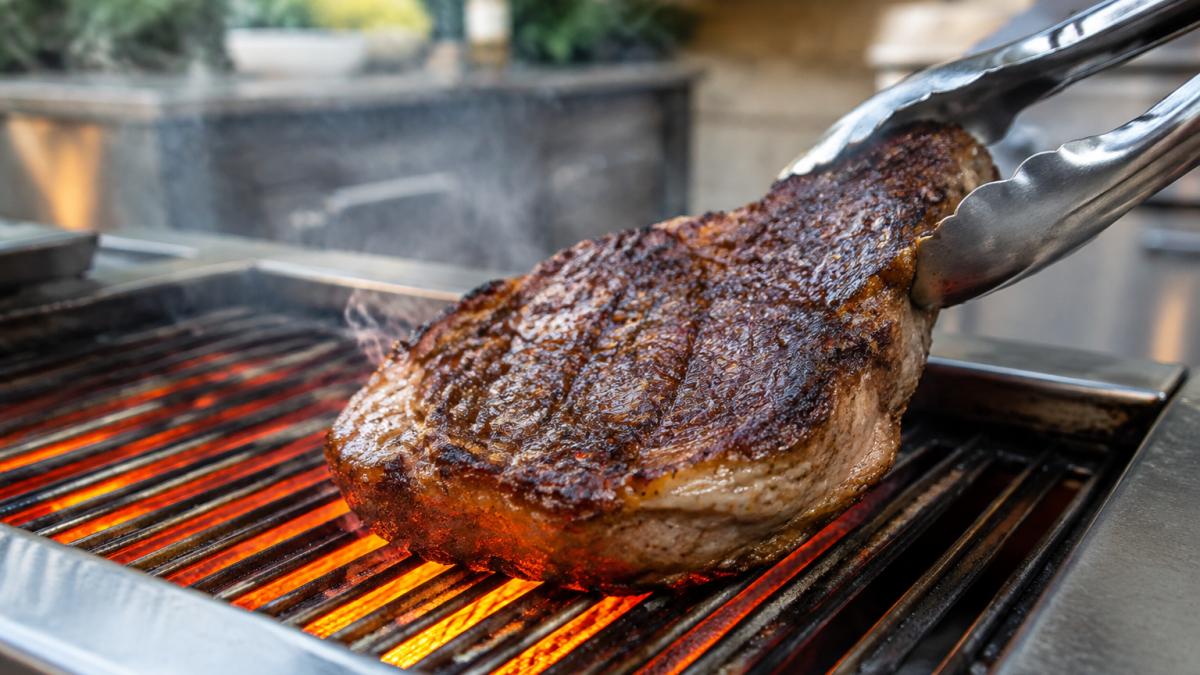
Crust forms because radiant energy hits the meat surface hard and fast. Moisture retention follows: a quick sear creates a browned exterior that limits how much juice escapes during the rest of the cook. If you want a grill that ships with a rear infrared burner already installed, the Blaze Professional LUX 34 inch 3 burner built in gas grill is built around that idea.

Fuel Consumption, Flare-Ups and Heat Zones in Practice
Heat zones are the other practical difference. A traditional grill gives you wide, even heat across the grates, which is ideal for indirect cooking and multi-dish meals. Infrared concentrates heat in a smaller footprint, so you get one very hot zone and use the rest of the grill for gentler work. The A790I grill head with infrared panels and viewing window shows how infrared panels and analog controls combine for precise zone management.
How to Clean Infrared Grill Burners Without Damaging the Emitter
- Let the burner cool completely before touching anything
- Brush loose ash off the emitter with a soft brush, never a wire one
- Run the burner on high for a few minutes to burn off residue
- Wipe the stainless housing with a suitable cleaner and soft cloth
- Check the gas ports for blockages and clear them with a pin
- Reassemble and test ignition before the next cook
Food-by-Food Performance: Steaks, Ribs, Vegetables and Flatbreads
Steaks and thick chops. Infrared is the clear win. Use a meat thermometer and pull the steak about 5°F below your target, because carryover cooking continues on the rest.
Ribs and large roasts. Use the traditional burners with the lid closed and the meat over indirect heat, and add wood chips in a smoker box if you want smoke flavor.
Infrared Searing Grill Burner →
Fish and delicate proteins. This is the split decision. A common pattern is to sear skin-side down on infrared for the first two minutes, then finish on a cooler zone.
Vegetables.
Flatbreads and pizza.
Burgers and sausages.
Upgrading Your Grill: Choosing the Right Infrared Burner
Choosing the right infrared burner starts with fit, not power. Match the burner to your existing grill model and gas manifold before anything else, because a drop-in unit that does not seat correctly is a safety problem, not an upgrade.
The Infrared Searing Grill Burner is a direct drop-in replacement for one cast stainless burner in Bull Premium gas grills and delivers 20,000 BTUs of concentrated radiant heat.

For American Outdoor Grill setups, the Infra-Red Burner Kit is a direct swap for conventional gas flames in AOG cooking components.
The real challenge is not picking a side in the infrared vs traditional gas grill debate. It is building a cooking zone that gives you fast searing and steady low heat in the same outdoor kitchen. Urban Man Caves carries the infrared burners, built-in grills, and accessories to make that happen, backed by a price match promise, free shipping on orders over $50 in the lower 48 states, and personal expert support. Get started with Urban Man Caves and build an outdoor kitchen that sears, smokes, and entertains exactly the way you want.
Frequently Asked Questions
Are infrared grills better than regular grills for everyday cooking?
For everyday cooking, a traditional gas grill is usually the easier all-rounder because convection heat is gentler across large batches of chicken, fish and vegetables. Infrared wins on high-heat jobs: steaks, chops, burgers and anything you want charred fast. Many outdoor kitchens solve this by running both, keeping a primary convection zone for longer cooks and adding a drop-in infrared sear burner for the final crust. That combination gives you speed where it matters without losing low-and-slow control.
What are the disadvantages of using an infrared grill?
Some grills only accept specific replacement sizes. Check your grill's burner bay dimensions before buying an upgrade.
How does heat distribution differ between infrared and convection gas burners?
A convection burner heats air inside the grill and that air circulates around the food, which creates temperature variation and cold spots near the edges. An infrared burner converts gas into radiant energy at the emitter surface and beams it directly at the cooking grates, so the heat blanket is more even and recovery between batches is quicker. The trade-off is that infrared heat is directional: food directly under the emitter sears hard, while the surrounding zone stays cooler.
Do infrared grills require more maintenance than traditional gas grills?
They need different maintenance, not necessarily more. Traditional burners benefit from occasional port cleaning and a brush-down of the grates. Infrared emitters need the ceramic surface kept free of grease and ash so radiant output stays consistent, and you should never scrub a hot emitter with a stiff metal brush. A short routine after each cook, plus a deeper clean every few sessions, keeps both types working well. Storing the grill covered outdoors extends the life of either burner.
Can you achieve a professional steakhouse sear on an infrared grill?
Yes, and it is the strongest argument for infrared. A concentrated infrared burner reaches high surface temperatures quickly, so a dry-brined steak develops a dark Maillard crust in roughly two to three minutes per side without the interior overcooking. Use a meat thermometer and pull the steak about 5 degrees below your target temperature, then rest it. The result is a crust closer to a steakhouse broiler than what most open-flame gas grills produce.


