

Table of Contents
- Why Teak Furniture Requires Different Outdoor Care
- How to Clean Teak Outdoor Furniture
- How to Remove Stains from Teak Furniture
- How to Restore Weathered Teak Furniture
- Teak Sealer for Outdoor Furniture: Oils, Sealers, and Protectors
- Maintenance Schedule and Climate Considerations
- Common Mistakes to Avoid
- Conclusion
- Frequently Asked Questions
Last Updated: October 13, 2026
Why Teak Furniture Requires Different Outdoor Care
Teak is exceptional for outdoor use. Unlike most hardwoods, it naturally resists rot, insects, and weather damage. But this durability doesn't mean zero maintenance.
The key difference: teak has natural oils that protect it, and sun and rain break those oils down over time.
Here's what most people get wrong: they assume teak requires constant attention. It doesn't. Teak actually needs less maintenance than most outdoor wood.
How to Clean Teak Outdoor Furniture
Cleaning teak outdoor furniture starts with understanding what you're removing. Dust and surface dirt are normal; mildew and stains need different approaches. Here are the steps.
Routine Dusting and Debris Removal
Start here every few weeks, dust and debris trap moisture against the wood.
What you'll do:
- Brush the furniture with a soft, dry cloth or soft-bristle brush
- Pay attention to grooves and joints where debris collects
- Remove leaves and twigs immediately after they land
- Wipe down with a microfiber cloth for a clean finish
This takes 5-10 minutes per piece and prevents dirt from becoming embedded in the grain.
Deep Cleaning with Mild Soap and Water
When routine dusting isn't enough, teak responds well to mild soap and warm water.
Here's your process:
- Fill a bucket with warm water
- Add a small amount of mild dish soap (not detergent)
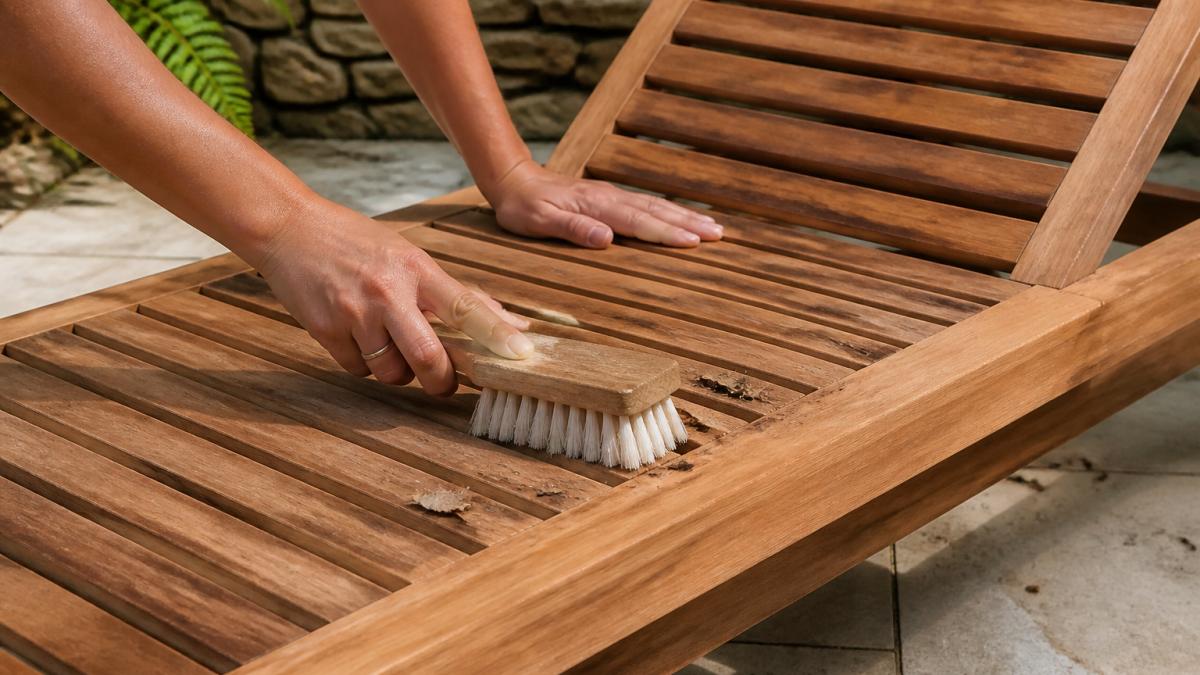
- Dip a soft brush into the solution
- Scrub the furniture gently in circular motions
- Rinse thoroughly with clean water
- Dry with a soft cloth or let air-dry completely
This removes surface grime without damaging the wood: warm water opens the grain slightly so the soap can lift dirt. Mild soap is critical, harsh cleaners strip the natural oils you're protecting.
What NOT to do:
- Never use pressure washers on teak (they damage the grain)
- Don't use bleach or harsh chemicals
- Avoid leaving soap residue (rinse thoroughly)
- Don't let the furniture stay wet for hours
Scrubbing Direction and Brush Selection
The direction you scrub matters, scrubbing against the grain raises splinters and damages the surface.
The right technique:
Always scrub with the grain, not across it.
For brush selection, use a soft-bristle brush or non-abrasive scrubbing pad. Stiff brushes and steel wool scratch teak, the goal is to clean without scarring the surface.
Tools that work:
- Soft-bristle deck brushes
- Natural fiber brushes
- Non-abrasive nylon scrubbing pads
- Soft microfiber cloths
Avoid wire brushes, steel wool, and stiff-bristled tools. Teak is softer than you might think, and aggressive scrubbing leaves permanent marks.
How to Remove Stains from Teak Furniture
Stains happen, food spills, mildew, rust marks, and organic growth are common outdoors. Treatment depends on the cause.
Mildew and Mold Removal
Mildew appears as dark spots or a fuzzy coating, usually in shaded areas where moisture lingers. It's common but easy to remove if caught early.
Your removal steps:
- Mix equal parts white vinegar and water in a spray bottle
- Spray the affected area generously
- Let it sit for 10-15 minutes
- Scrub gently with a soft brush
- Rinse thoroughly with clean water
- Dry completely with a cloth or allow air-drying
Vinegar kills mildew spores without harming teak. This works for light to moderate growth; for heavy growth, repeat the process.
Prevention tip: Mildew thrives in moisture and shade. Improve airflow, move pieces into sunlight when possible, and let water drain quickly after rain.
Food, Grease, and Organic Stains
Food spills and grease stains sit on the surface and can attract mildew if left untreated.
For fresh spills:
- Blot immediately with a clean cloth
- Don't let liquid soak into the grain
- Wipe with a damp cloth and mild soap
- Dry thoroughly
For set-in stains:
- Create a paste of baking soda and water
- Apply to the stain and let sit for 15-20 minutes
- Gently scrub with a soft brush
- Rinse with clean water
- Dry completely
Baking soda is mildly abrasive but safe for teak, lifting stains without stripping oils. For stubborn grease, a small amount of mineral spirits on a cloth can help, use sparingly and always follow with a thorough water rinse.
How to Restore Weathered Teak Furniture
Over time, teak exposed to sun and rain develops a weathered appearance. This is natural and beautiful. But you have choices about how your furniture looks.
Understanding Natural Silver-Grey Patina
Teak naturally weathers to silver-grey when exposed to UV light and moisture.
Here's what matters:
The silver-grey patina is completely normal and doesn't mean your furniture is failing. Many homeowners prefer this elegant, understated look, which requires minimal maintenance, if you like it, just keep dusting and cleaning as needed.
The patina also protects: the grey layer shields deeper wood from UV damage, so weathering is your furniture's way of protecting itself.
Restoring Golden Color Through Sanding
If you prefer the original golden-brown color, sanding removes the weathered surface layer and reveals fresh wood underneath.
The restoration process:
- Start with 80-120 grit sandpaper for heavy weathering
- Sand with the direction of the grain
- Progress to 150-180 grit for a smooth finish
- Wipe away all dust with a damp cloth
- Allow the wood to dry completely (24 hours minimum)
- Apply teak oil or sealant if desired
Sanding is labor-intensive but effective: a small lounge chair takes 2-3 hours, a full dining set a day or more. Hire a professional or do it yourself if you're comfortable with power tools.
Important notes:
- Always sand with the grain, never against it
- Wear a dust mask during sanding
- Don't oversand, you only need to remove the grey layer
- This is a one-time restoration, not routine maintenance
After sanding, your furniture looks new again, leave it natural or apply a finish to slow future weathering.
Teak Sealer for Outdoor Furniture: Oils, Sealers, and Protectors
Here's where confusion sets in. There are three main products for protecting teak: oils, sealers, and protective finishes. They serve different purposes.
Teak Oil vs. Sealant vs. Protective Finish
Teak Oil: Teak oil is a penetrating finish that soaks into the wood and replenishes the natural oils sun and rain deplete.
Sealant: A sealant creates a surface barrier that prevents water penetration and slows UV damage.
Which one to choose:
To maintain the golden color with minimal effort, use teak oil and reapply annually.
Many homeowners skip all three and let the wood weather naturally. This is perfectly valid.
Application Best Practices
If you choose to apply a finish, do it correctly. Poor application creates blotchy results and wastes product.
Before application:
- Clean the furniture thoroughly and let it dry completely (24+ hours)
- Sand lightly if the surface is rough or weathered
- Wipe away all dust with a damp cloth
- Let dry again
During application:
- Apply a thin, even coat with a brush or cloth
- Work with the grain direction
- Don't oversaturate, excess oil pools and looks uneven
- Apply in shade or on a cloudy day (sun speeds drying unevenly)
- Allow proper drying time (check product instructions)
- Apply a second coat if needed after drying
After application:
- Wipe away excess with a clean cloth
- Allow full curing time before using the furniture
- Most products need 24-48 hours to fully harden
The key is thin, even coats: multiple thin layers look better and last longer than one thick layer.
Maintenance Schedule and Climate Considerations
Your routine depends on where you live and how much sun and rain your furniture gets.
Cleaning Frequency by Season and Exposure
In dry climates:
- Dust weekly
- Deep clean with soap and water every 2-3 months
- Inspect for mildew (less common but possible in shade)
In wet or humid climates:
- Dust twice weekly
- Deep clean monthly or after heavy rain
- Watch for mildew in shaded areas
- Dry furniture thoroughly after rain
In moderate climates:
- Dust weekly
- Deep clean every 4-6 weeks
- Increase frequency during rainy seasons
Full sun exposure:
- Weathering happens faster
- More frequent dusting (dust reflects some UV)
- Consider annual oiling if you want to maintain color
- Sealant provides more protection in intense sun
Shaded areas:
- Moisture lingers longer
- Higher mildew risk
- More frequent inspection needed
- Improve airflow when possible
Match your maintenance effort to your climate, you can't prevent weathering, but you can slow it with the right schedule.
Protection, Covers, and Storage
Covers and storage extend furniture life significantly, but come with trade-offs.
Furniture covers:
- Protect from sun and rain
- Can trap moisture if not breathable
- Use breathable covers designed for outdoor furniture
- Remove covers regularly to allow airflow
- Covers work best for seasonal storage, not year-round use
Storage:
- Move furniture indoors during winter in cold climates
- Store in a dry garage or shed
- Cover with a breathable tarp if outdoor storage is necessary
- Ensure good airflow in storage areas
- Check occasionally for mildew or pests
Elevated positioning:
- Keep furniture off the ground on a patio or deck
- Avoid direct contact with soil or grass
- Allows water to drain and air to circulate
- Reduces moisture absorption and rot risk
The best protection is good air circulation. Trapped moisture causes more problems than sun exposure. A covered patio with airflow beats a sealed storage area.
Common Mistakes to Avoid
These errors cost homeowners time and money.
Mistake 2: Ignoring mildew early Small mildew spots are easy to remove.
Mistake 4: Applying finish to wet wood Oil and sealants won't adhere to damp wood.
Mistake 5: Skipping the grain direction Scrubbing against the grain raises splinters and creates visible damage.
Mistake 7: Leaving water standing Pooled water on flat surfaces leads to mildew and staining.
Conclusion
To maintain teak furniture outdoors is straightforward. Dust regularly, clean with mild soap and water when needed, remove stains promptly, and decide whether to preserve the golden color or embrace the natural patina. Teak is forgiving, even with minimal care, it lasts for decades.
At Urban Man Caves, we source premium teak furniture like our JUNUS SUN LOUNGER and CURVE DINING ARMCHAIR EXTRA THICK specifically for their durability and low-maintenance requirements.


Frequently Asked Questions
How often should you clean outdoor teak furniture?
Routine light dusting should happen weekly to remove loose debris and dust. Deep cleaning with mild soap and water is recommended two to three times per year for most climates. In areas with heavy rain, high humidity, or significant sun exposure, increase cleaning frequency to four times yearly. Between cleanings, wipe down furniture after rain or when dust accumulates to prevent buildup that can trap moisture.
Does outdoor teak furniture need to be sealed?
Teak naturally resists rot, mildew, and insects without sealant, but sealing is optional depending on your maintenance goals. If you prefer to maintain the golden honey color, apply teak oil or sealer annually. If you're comfortable with the natural silver-grey patina that develops over time, sealing is unnecessary. Sealers extend the life of the finish and reduce weathering but require more frequent reapplication than simply allowing teak to age naturally.
Can you use a pressure washer on teak furniture?
Pressure washers are not recommended for teak furniture. High pressure can damage the wood grain, create splintering, and force water deep into the wood, leading to rot or mold. Stick with soft-bristle brushes, non-abrasive scrubbing pads, and hand-applied cleaning solutions. For stubborn stains, allow a mild cleaning solution to soak briefly before gentle scrubbing, then rinse thoroughly with a garden hose on low pressure.
How do you keep teak furniture from turning grey?
The silver-grey patina is teak's natural aging process and develops as UV rays oxidize the wood surface. To maintain the original golden-honey color, apply teak oil or sealer annually and clean regularly with mild soap and water. Some homeowners prefer the patina as it's maintenance-free and equally durable. If you choose to restore golden color, light sanding followed by teak oil application will refresh the appearance, though you'll need to repeat this process yearly to prevent re-greying.


