

Table of Contents
- Understanding Weather-Resistant Outdoor Furniture Materials
- Best Outdoor Furniture Materials for All Seasons
- Assessing Your Climate and Environment
- How to Maintain Teak Outdoor Furniture
- Weatherproof Patio Furniture Covers and Protection
- Evaluating Durability: What Separates Premium from Basic
- Frequently Asked Questions
Last Updated: September 30, 2026
Understanding Weather-Resistant Outdoor Furniture Materials
Weather-resistant outdoor furniture combines durability with the ability to withstand UV rays, moisture, temperature swings, and salt exposure. The materials that perform best fall into three main categories: natural hardwoods, metal alloys, and synthetic options. Your climate, budget, and maintenance tolerance should drive which direction you go.
Teak: Natural Durability and Longevity
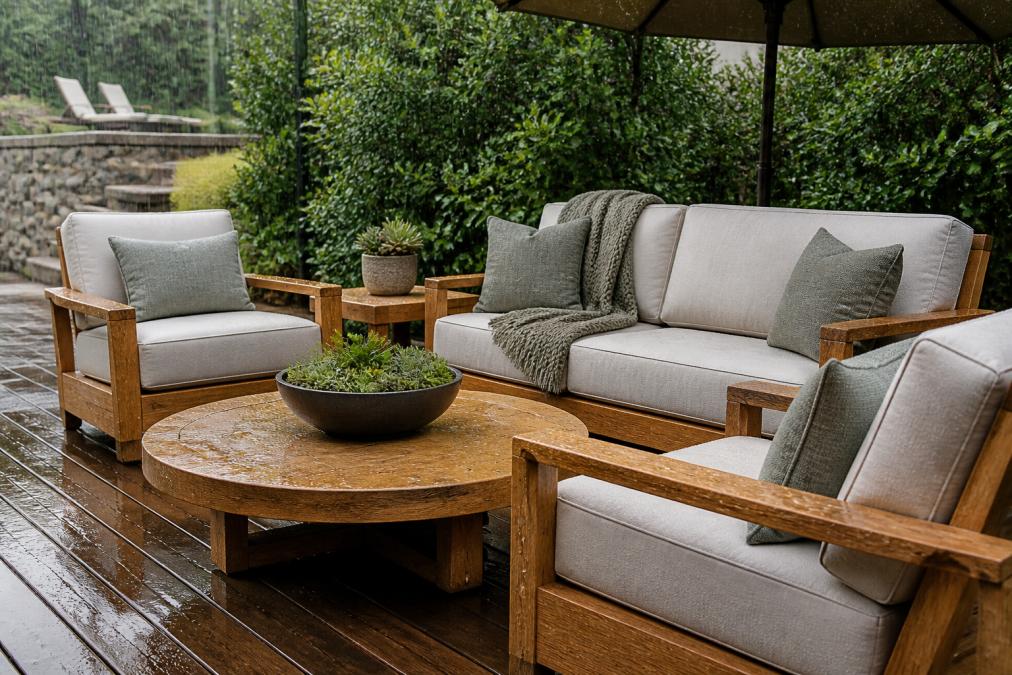
Teak is the gold standard for weather-resistant outdoor furniture because its natural oils resist rot, mildew, and insect damage without chemical treatment. A-grade teak, kiln-dried to 8-12% moisture content, resists shrinking and cracking, developing a silvery patina over time or maintaining its honey-golden color with occasional oil treatments.

Aluminum and Stainless Steel: Corrosion-Resistant Options
Powder-coated aluminum offers lightweight durability at a lower price point than teak, though the finish can chip with physical impact. Stainless steel hardware adds corrosion resistance, making it ideal for coastal environments. Metal furniture works well in hot, sunny climates but can become uncomfortably hot to touch without cushioning.
Synthetic Resin Wicker and High-Density Polyethylene
Synthetic resin wicker and high-density polyethylene (HDPE) resist UV rays, moisture, and mildew with minimal upkeep, no oiling, sealing, or refinishing required. Batyline fabric, a breathable, UV-stabilized synthetic textile, offers comfort without absorbing water, ideal for poolside use.
Best Outdoor Furniture Materials for All Seasons
Different climates demand different materials. The best weather-resistant outdoor furniture choice depends entirely on where you live and what your environment throws at it.
Hot and Sunny Climates
In hot, dry regions, UV-stabilized synthetic wicker and HDPE resist UV damage without teak's maintenance demands. Sunbrella fabrics are engineered for UV resistance and quick drying, fading slower than standard outdoor fabrics.
Humid and Wet Climates
Humidity and rain create conditions where mildew thrives and moisture penetrates materials. Teak excels here because its natural oils repel water. Synthetic wicker with stainless steel hardware handles moisture better than natural materials. Avoid untreated softwoods in humid climates, they'll rot quickly.
Coastal Environments
Stainless steel hardware resists salt better than powder-coated aluminum. Teak's natural oils and synthetic resin wicker with stainless steel frames both handle coastal conditions well. Rinse furniture periodically with fresh water to remove salt residue and extend lifespan significantly.
Assessing Your Climate and Environment
Before selecting specific pieces, identify your climate zone and the specific environmental stressors your furniture will face. A shaded patio behaves differently than a sun-exposed deck, and proximity to water changes the equation.
How to Maintain Teak Outdoor Furniture
Teak requires minimal maintenance compared to other outdoor woods. The wood naturally weathers to silvery-gray, but a maintenance routine preserves the original honey-golden tone if preferred.
Routine Cleaning and Prevention
Clean teak quarterly or after heavy rain using fresh water and a soft-bristled brush. For stubborn stains, use a mild soap solution (1 tablespoon dish soap per gallon of water). Avoid pressure washing, which damages the surface. Allow 24-48 hours drying before applying finishes or covers.
Addressing Graying and Weathering
Teak Oil Application (Preferred for Maintenance): Apply teak-specific oil annually or semi-annually. Apply with a lint-free cloth following the grain, wipe excess after 15-20 minutes, and allow 24-48 hours drying before use.
Preventing and Treating Mildew
Mildew appears as dark spots, especially in humid or shaded areas. Prevention: Ensure adequate airflow, clean quarterly, use breathable covers, and apply mildew-inhibiting sealant annually in humid climates. Treatment: Mix 1 part white vinegar to 3 parts water, spray affected areas, let sit 10-15 minutes, scrub gently, and rinse thoroughly.
Repairing Surface Cracks and Checks
Small surface cracks (checks) are common and cosmetic unless deep (>1/8 inch) or widening. For cosmetic cracks, clean with a soft brush and apply teak oil to darken and conceal. For deep cracks, clean, fill with exterior wood filler, sand smooth with 120-150 grit sandpaper, and apply teak oil.
Addressing Wood Rot (Rare but Serious)
Rot is uncommon in teak but can occur in areas with poor drainage. For minor surface rot, remove soft wood with a chisel, apply wood hardener, fill with exterior filler, sand smooth, and apply teak oil. Structural rot compromises integrity and requires professional restoration or replacement.
Seasonal Storage and Protection
Teak doesn't require indoor storage in most climates, but harsh winters or extended rainy seasons benefit from protection. For off-season storage, clean and dry completely, store indoors if possible, or use a breathable, waterproof cover. For year-round outdoor use, cover during extended rain or winter, remove covers periodically to allow breathing, inspect quarterly, and reapply oil annually.
Tools and Products for Teak Maintenance
Essential supplies:
- Soft-bristled brush (not wire)
- Lint-free cloths or cotton rags
- Teak oil
- Mild dish soap
- White vinegar (for mildew)
- Sandpaper (120-150 grit)
- Wood filler (exterior-grade)
- Protective cover (breathable, not plastic)
With these maintenance practices, teak furniture remains structurally sound and visually appealing for 25-30 years or longer.
Weatherproof Patio Furniture Covers and Protection
Protective covers are insurance for your investment. A quality cover prevents UV damage, moisture accumulation, and debris buildup. Look for covers made from breathable, water-resistant materials that allow moisture to escape rather than trap it. Covers should fit snugly to prevent wind from lifting them and should have reinforced grommets for secure fastening.
Evaluating Durability: What Separates Premium from Basic
Premium weather-resistant outdoor furniture differs from budget options in material quality, construction, and longevity. Understanding durability requires a cost-per-year analysis that accounts for lifespan, maintenance labor, and replacement frequency.
Material Grade and Its Impact on Lifespan
Premium teak is A-grade, kiln-dried to 8-12% moisture content, preventing the warping and cracking that plague lower grades. Budget teak may be B or C grade with inconsistent drying, leading to failure within 5-8 years instead of 20-30.
Hardware Quality: The Rust Factor
Premium pieces use 316-grade stainless steel fasteners (marine-grade, resistant to chloride corrosion). Budget furniture uses 304-grade stainless or plated steel, which rust within 2-3 years in coastal or humid environments. Stainless steel hardware costs 3-5x more than plated steel at manufacture, but a $50 hardware upgrade on a $1,500 piece (3% cost increase) prevents $200+ in repairs and extends lifespan by 5-10 years.
Joinery and Construction Longevity
Premium furniture uses mortise-and-tenon joints (wood) or welded seams (metal) that distribute stress across large surface areas. Budget furniture uses bolted connections or simple butt joints that concentrate stress at fastener points. Mortise-and-tenon joints create structural integrity that actually strengthens with age as wood settles.
Cushion Fabric: UV and Moisture Durability
Premium cushions use solution-dyed acrylic fabrics like Sunbrella or high-performance polyester blends. These resist fading for 5+ years in direct sun and dry quickly after rain. Budget cushions use surface-dyed fabrics that fade within 1-2 years and absorb water, leading to mildew and deterioration.
The True Cost-Per-Year Calculation
To compare furniture fairly, calculate total cost of ownership:
Formula: (Purchase Price + Annual Maintenance Cost × Expected Lifespan + Replacement Frequency Cost) ÷ Years Until Disposal
Example: Premium Teak Dining Chair
- $650 purchase, $30/year maintenance (oil), 25-year lifespan, no replacement needed
- Total: ($650 + $750 maintenance) ÷ 25 = $56/year
Example: Budget Wood Chair
- $250 purchase, $50/year maintenance, 5-year lifespan, then replace
- Total: ($250 + $250 maintenance + $250 replacement) ÷ 5 = $150/year
Warranty and Support as a Durability Indicator
Premium brands typically offer 5-10 year structural warranties and 2-3 year cushion warranties, backed by replacement or repair guarantees. Budget furniture often carries 1-year limited warranties or none at all. A warranty reflects the manufacturer's confidence in durability.
Comparing Material Combinations
The most durable outdoor furniture pairs premium materials strategically:
- Teak frame + Sunbrella cushions: Hardwood longevity (25+ years) + fabric durability (8-10 years). Cost-per-year: $50-70.
- Stainless steel frame + synthetic wicker + Sunbrella cushions: Metal durability (20+ years) + wicker durability (12-15 years) + fabric durability (8-10 years). Cost-per-year: $45-65.
- Powder-coated aluminum + budget fabric: Metal durability (8-12 years) + fabric durability (2-3 years). Cost-per-year: $80-120.
| Material Combo | Upfront Cost | Annual Maintenance | Lifespan | Cost-Per-Year | Best For |
|---|---|---|---|---|---|
| Premium Teak + Sunbrella | $1,500 | $30 | 25 years | $62 | Long-term investment, any climate |
| Stainless + Synthetic Wicker + Sunbrella | $1,200 | $20 | 20 years | $61 | Coastal, humid, low-maintenance preference |
| Powder-Coated Aluminum + Premium Fabric | $600 | $25 | 10 years | $63 | Budget-conscious, dry climates |
| Budget Wood + Budget Fabric | $250 | $40 | 4 years | $98 | Temporary use, rental properties |
Premium and mid-range options often cost the same per year when maintenance and replacement are factored in. Budget furniture appears cheaper until you account for the full lifecycle.
Frequently Asked Questions
What kind of outdoor furniture can be left outside all year long?
Furniture made from weather-resistant materials like teak, powder-coated aluminum, and stainless steel can remain outside year-round. Teak naturally resists rot and mildew, while aluminum and stainless steel are corrosion-resistant. All-weather synthetic resin wicker also handles continuous outdoor exposure. The key is choosing materials rated for your specific climate, coastal areas need extra corrosion resistance, while humid regions require mildew-resistant options. Even durable materials benefit from seasonal maintenance and protective covers during extreme weather.
Is teak wood actually weather-resistant?
Yes. Teak is one of the most weather-resistant woods available because it naturally contains oils that repel water and resist rot, mildew, and insects. A-grade teak, kiln-dried to 8-12% moisture content, provides superior structural integrity and prevents shrinking and cracking. Over time, teak develops a natural silver-gray patina, which is a sign the wood is aging gracefully, not deteriorating. With minimal maintenance, occasional cleaning and optional oil treatments, teak furniture can last for generations in outdoor living spaces.
What are the best materials for outdoor furniture in humid climates?
In humid environments, prioritize mildew-resistant and moisture-wicking materials. Teak excels due to its natural oils and resistance to mold. Stainless steel and powder-coated aluminum resist corrosion from moisture and salt air. All-weather synthetic resin wicker and high-density polyethylene are also excellent choices because they don't absorb water. Pair any material with fade-resistant, quick-drying outdoor upholstery fabrics like Sunbrella, which resist mildew and moisture. Ensure furniture has proper drainage and air circulation to prevent moisture buildup.
How do I know if outdoor furniture will hold up better than budget options?
Premium weather-resistant furniture uses higher-grade materials, better construction, and superior hardware. Look for A-grade teak (not lower grades), stainless steel fasteners (not standard steel), and mortise-and-tenon joinery for structural integrity. Premium pieces often feature UV-stabilized fabrics, abrasion-resistant weaves, and weather-resistant finishes. Check for manufacturer warranties. Budget furniture typically uses lower-grade wood, standard steel hardware prone to rust, and weaker fabric that fades quickly. Investing in quality materials and construction ensures your furniture resists UV rays, moisture, and weathering for 10+ years rather than 2-3 years.


