

Table of Contents
- Understand Material Options for Durability
- Best Weather-Resistant Outdoor Furniture Materials
- How to Maintain Teak Outdoor Furniture
- How to Protect Patio Furniture from Sun Damage
- Evaluate Frame Stability and Load-Bearing Capacity
- Plan Your Patio Layout and Climate Suitability
- Budget for Quality and Long-Term Value
- Prioritize Repairability and Parts Availability
- Frequently Asked Questions
Last Updated: September 25, 2026
Choosing durable outdoor furniture requires understanding materials, weather resistance, and climate conditions. At Urban Man Caves, we help homeowners invest in outdoor spaces built to last, combining premium materials with expert guidance so your patio becomes a year-round gathering destination rather than a maintenance headache.
The difference between furniture that lasts five years and furniture that lasts fifteen comes down to material selection, proper maintenance, and realistic climate expectations.
Understand Material Options for Durability
The frame and fabric you choose determine your furniture's lifespan. Match materials to your specific climate and environment.
Powder-Coated Steel and Aluminum Frames
Powder-coated steel and aluminum frames form the backbone of most durable outdoor furniture. Both materials resist corrosion when properly finished, but they behave differently under stress.
Aluminum frames are lighter, naturally corrosion-resistant, and work well in coastal environments. The powder coating prevents oxidation and extends life. The tradeoff: aluminum is less rigid than steel, so larger pieces may flex slightly over time.
Powder-coated steel frames offer superior rigidity and load-bearing capacity, making them ideal for sectionals and high-traffic areas. Any chip exposing bare metal will rust within weeks in humid climates, spreading quickly under the coating.
Use aluminum for smaller pieces or coastal settings; use powder-coated steel for large seating areas. Inspect steel coatings annually for damage and verify rust-prevention warranties.
Synthetic Wicker and Olefin Fabrics
Synthetic wicker resists moisture, mildew, and UV fading far better than natural wicker. It won't swell, split, or develop mold in damp climates.
Olefin fabrics are solution-dyed, making them significantly more fade-resistant than acrylic or polyester. They dry quickly, resist mildew, and handle chlorine exposure well.
Synthetic wicker can become brittle in extreme cold. Olefin fabrics can stain if spills aren't cleaned promptly. Neither is truly maintenance-free.
Best Weather-Resistant Outdoor Furniture Materials
Weather resistance depends on your climate. A material thriving in dry heat may fail in humid freeze-thaw cycles.
Teak and Hardwood Durability
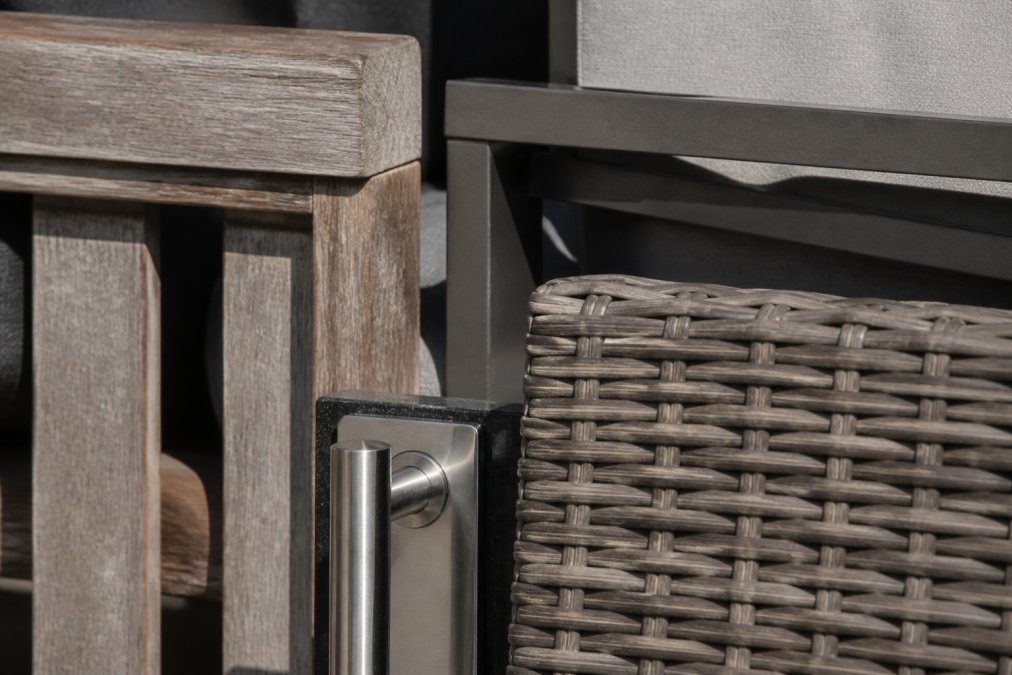
Teak is the gold standard for outdoor hardwood furniture because its natural oils resist rot, insects, and decay without chemical treatment.
Teak develops a silvery-grey patina over 12-18 months, which doesn't indicate damage. Annual oil treatments preserve the original honey tone but are optional for durability.
Teak is expensive and requires storage in freeze-thaw climates. It can develop surface checking (small cracks) from expansion and contraction, though this doesn't compromise structural integrity.
Stainless Steel and Corrosion Resistance
Stainless steel resists rust and corrosion because the material itself doesn't oxidize. Marine-grade stainless (316 alloy) is ideal for coastal environments with constant salt spray.
Stainless steel requires virtually no protective coating. Fingerprints and salt residue are cosmetic and rinse away with fresh water.
Stainless steel conducts heat and shows water spots, so it's often paired with wood or cushioned seating and requires regular cleaning for a polished appearance.
How to Maintain Teak Outdoor Furniture
Teak doesn't require maintenance for durability, but maintenance preserves its original color, a purely aesthetic choice.
To maintain the original honey color, apply teak oil annually before the rainy season. Quality oils contain UV inhibitors that slow weathering.
For the silvery patina, rinse occasionally with fresh water. The grey color is surface oxidation, not decay.
Clean with a soft brush and mild soap. Avoid pressure washers. For mold, scrub with a bleach solution (1:10) and rinse thoroughly.
Store teak furniture indoors during the off-season if you live in a climate with harsh winters. If you can't store it, use a quality furniture cover that allows air circulation, trapped moisture under a non-breathable cover promotes mold growth.
FIRE PIT, BROOKS (1242) WHITE →
How to Protect Patio Furniture from Sun Damage
Sun damage comes in two forms: UV fading of fabrics and heat degradation of materials. Both are preventable with the right approach.
UV Protection and Fabric Selection
UV rays break down fabric dyes and synthetic fibers over time, causing fading and brittleness. Olefin and acrylic fabrics with solution-dyed color resist fading far better than polyester or cotton blends. If you're choosing cushions or slings, prioritize olefin fabrics labeled with UV protection or high colorfastness ratings.
Performance fabrics are specifically engineered for outdoor use and maintain their color for years under direct sun exposure. They cost more than basic outdoor fabrics, but the longevity justifies it if you're investing in quality furniture.
Beyond fabric choice, physical protection matters. Positioning furniture under a pergola, shade structure, or tree canopy reduces direct UV exposure by 50-75%. Even partial shade extends fabric life significantly.
Seasonal Storage and Covers
Furniture covers protect against sun, rain, and dust when furniture is in use. Quality covers are breathable, allowing moisture to escape rather than trapping it underneath. Non-breathable covers can trap condensation and promote mold growth, so this matters.
During the off-season, storage is the gold standard. Indoor storage, a garage, shed, or basement, eliminates all weather exposure. If indoor storage isn't possible, use a quality breathable cover and ensure the furniture is clean and completely dry before covering it.
For high-value pieces like teak dining sets or cushioned sectionals, off-season storage is worth the effort. The cost of a storage unit is far less than replacing furniture damaged by a single harsh winter.
Evaluate Frame Stability and Load-Bearing Capacity
A beautiful frame means nothing if it wobbles under weight or collapses after a season. Frame stability depends on construction quality, joint design, and material choice.
Inspect the joints where the frame members connect. Welded joints are stronger than bolted joints, but bolted joints allow for disassembly and replacement if damage occurs. Bolted connections should be tight with no visible gaps. If bolts are accessible, check them annually and tighten as needed.
Load-bearing capacity matters if you're seating multiple people or placing heavy items on the furniture. Manufacturers should provide weight limits for each piece. A dining chair rated for 300 pounds can handle most people, but a sectional should be rated for at least 500-750 pounds to account for multiple occupants and movement.
Test stability before buying if possible. Push on the armrest and back of a chair, does it flex excessively or feel solid? Wobbling indicates either poor construction or joints that have loosened. For online purchases, read reviews specifically mentioning stability and durability over time.
Frame geometry also affects stability. Wider bases and lower centers of gravity resist tipping better than tall, narrow designs. This matters if you have wind exposure or if children will be using the furniture.
Plan Your Patio Layout and Climate Suitability
Your climate determines which materials will actually perform well in your specific environment. A material that excels in dry heat may fail in humid freeze-thaw cycles, and vice versa.
In hot, dry climates, metal frames can become uncomfortably hot to touch, so prioritize cushioned seating or wood frames. Synthetic fabrics hold up well to intense UV exposure. Teak and other hardwoods thrive in these conditions with minimal maintenance.
In humid climates with frequent rain, focus on materials with excellent moisture resistance: aluminum frames, synthetic wicker, olefin fabrics, and stainless steel. Teak still works but requires more frequent cleaning to prevent mold. Avoid natural wicker and untreated wood.
In freeze-thaw climates (temperatures regularly dropping below 20°F), choose materials that handle expansion and contraction: aluminum and stainless steel frames, synthetic wicker, and olefin fabrics. Teak can develop surface checking in extreme freeze-thaw cycles. Store or cover furniture during winter to reduce stress from moisture absorption and freezing.
Measure your patio space before selecting furniture. A sectional that looks spacious in a showroom can overwhelm a small patio. Leave at least 18-24 inches of walking space around major pieces.
Budget for Quality and Long-Term Value
The upfront cost of durable outdoor furniture is higher than cheaper alternatives, but the per-year cost is often lower when you factor in lifespan.
Prioritize Repairability and Parts Availability
Durable furniture isn't just about materials, it's about being able to fix it when components wear out. A frame that lasts twenty years is worthless if you can't replace a broken slat or armrest.
Frequently Asked Questions
What type of outdoor furniture material lasts the longest?
Teak, stainless steel, and powder-coated aluminum are among the most durable outdoor furniture materials. Teak naturally resists rot and insect damage due to its oil content. Powder-coated steel and aluminum frames resist corrosion when properly maintained. Synthetic wicker and olefin fabrics outperform natural fibers in UV resistance and moisture tolerance. The best choice depends on your climate, freeze-thaw cycles demand materials with high moisture resistance, while intense sun exposure requires UV-protective fabrics with strong colorfastness.
How do I determine the quality of teak outdoor furniture?
Look for solid teak construction rather than veneer. Quality teak furniture should have tight joinery, smooth finishes, and no visible gaps. Check for consistent color and grain, premium teak ranges from honey to golden brown. Inspect hardware for stainless steel or marine-grade fasteners that resist corrosion. Reputable sellers often include care instructions for long-term maintenance.
What's the best way to protect patio furniture from sun damage?
Use furniture covers when not in use, especially during off-season storage. Choose covers made from breathable, UV-blocking materials to prevent mildew while shielding fabric from fading. Position furniture in shaded areas when possible, and apply UV-protective treatments to cushions annually. Select fabrics labeled with high colorfastness ratings and UV protection, such as solution-dyed acrylic fibers or olefin. Regular maintenance, cleaning and conditioning, extends the life of both wood and fabric components.
Does powder-coated aluminum furniture rust?
Powder-coated aluminum is highly corrosion-resistant because aluminum naturally forms a protective oxide layer. The powder coating adds an extra barrier against moisture and salt air, making it ideal for coastal or humid climates. However, damage to the coating, such as scratches or chips, can expose bare aluminum and potentially allow corrosion to begin. Inspect your furniture regularly and touch up any damaged areas with matching paint. Proper storage and occasional cleaning help maintain the protective finish and prevent long-term deterioration.


