

Table of Contents
- Gas Versus Wood-Burning Fireplace Overview
- Gas Fire Pit Pros and Cons
- Wood-Burning Fire Pit Pros and Cons
- Heating Performance and Heat Output
- Gas Fire Pit Operating Cost and Fuel Expenses
- Installation Requirements and Fire Pit Installation on a Paver Patio
- Which Fire Should You Choose?
- Frequently Asked Questions
Last Updated: October 7, 2026
Gas Versus Wood-Burning Fireplace Overview
When comparing gas vs wood fire, you're choosing between two different outdoor experiences. A gas fire pit uses propane or natural gas to create flame and heat with the flip of a switch. A wood-burning fireplace burns firewood and requires active management of fuel, ash, and emissions.

The choice between gas and wood fire comes down to how you live: reliability and low effort, or the ritual of wood burning for a traditional aesthetic.
Gas Fire Pit Pros and Cons
Gas fire pits win on convenience. Press a button and you have flame, no kindling, smoke management, or ash cleanup. Heat output is consistent and controllable, so you adjust flame height to match your comfort or the weather.
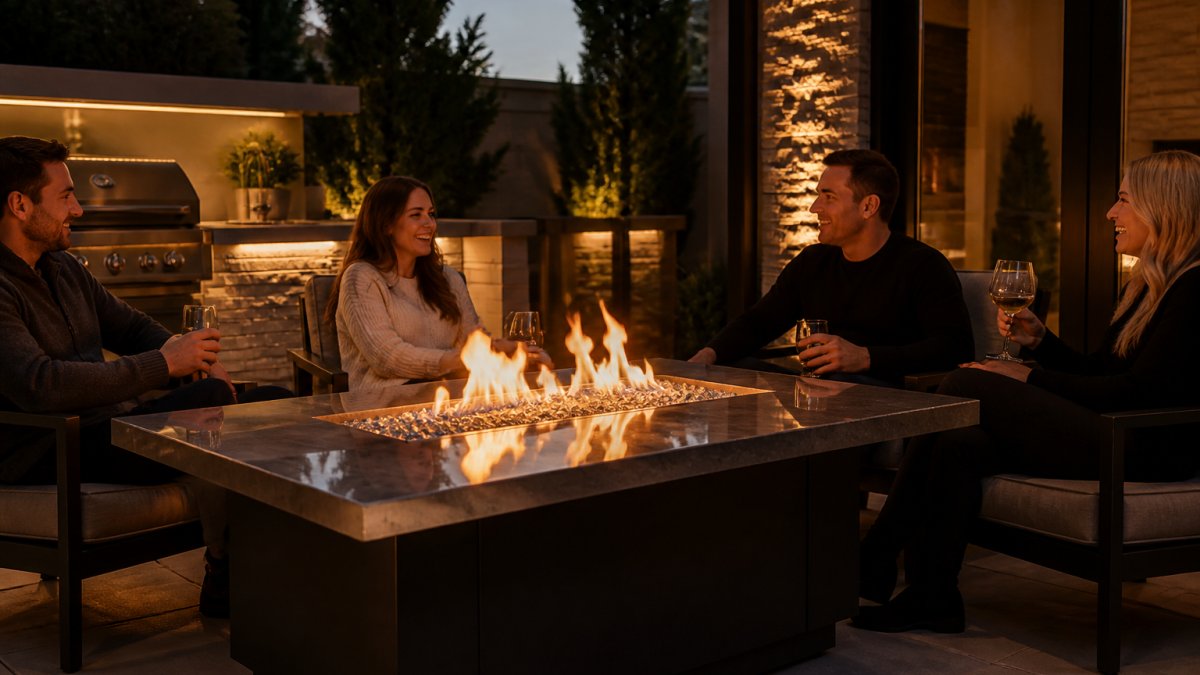
Pros of gas fire pits:
- Instant ignition with no prep time
- Adjustable flame and heat output via thermostat or remote control
- No smoke, soot, or ash to clean up
- Works in any weather (wind doesn't extinguish the flame like wood)
- Minimal maintenance, just occasional glass cleaning
- Can be converted between propane and natural gas with a kit
- Safer around children and pets (no stray embers, protective glass)
Cons of gas fire pits:
- Higher upfront installation cost, especially for natural gas line work
- Ongoing fuel expenses (propane tank refills or natural gas line charges)
- Less authentic ambiance than wood (some people miss the crackling sound)
- Requires electricity for electronic ignition on some models
- Propane tanks need storage space and regular monitoring
- Less "gathering ritual" appeal, it feels more like flipping a light switch
- Conversion kits add expense if you want fuel flexibility
A quality gas fire pit from Urban Man Caves ranges from around $1,499 to $4,599.99 depending on size and materials. The Kenwood and Brooks Rectangular Chat Height Gas Fire Pit Table runs $1,499 and delivers 55,000 BTUs. The Cove Gas Fire Pit Bowl at $4,599.99 is a sculptural concrete centerpiece that also heats your space.

Wood-Burning Fire Pit Pros and Cons
Wood fires deliver something gas can't: crackling wood, the smell of smoke, and the ritual of tending a real flame. People have gathered around them for thousands of years, and the ambiance is authentic in ways a gas flame isn't.
Pros of wood-burning fire pits:
- Lower upfront cost (basic fire pit structure is simple)
- No fuel line installation or conversion kits needed
- Authentic crackling sound and wood smoke aroma
- Works during power outages (no electricity dependency)
- Gathering ritual appeals to many homeowners
- No monthly fuel bills if you have access to firewood
- Backup heating option when natural gas or propane isn't available
Cons of wood-burning fire pits:
- Requires active management (starting fire, feeding wood, monitoring flame)
- Produces ash, soot, and creosote buildup inside any chimney or flue
- Regular chimney sweeping needed to prevent fire hazard
- Smoke can be uncomfortable in windy conditions
- Stray embers pose fire risk to nearby structures and guests
- Weather dependent (rain or high winds make operation difficult)
- Local air quality regulations may restrict wood burning in your area
- Firewood storage takes up yard space
- Ongoing fuel costs add up (quality firewood isn't cheap)
- Cleanup after each use takes 20-30 minutes
The hidden cost of wood fires: firewood. Seasoned hardwood runs $150-300 per cord depending on region, and a single evening can consume half a cord.
Heating Performance and Heat Output
Both gas and wood fires deliver heat, but differently. A gas fire pit produces consistent, controllable warmth, with most quality burners generating 55,000-106,000 BTUs. The Bronson Block Round Gas Fire Pit Kit delivers 105,000 BTUs on propane or 106,000 on natural gas, enough to heat a 20-foot radius on a cool evening.

You control exactly how much heat you want: dial it down on mild nights, crank it up when temperatures drop, and the flame stays steady regardless of wind.
Wood fires produce variable heat depending on wood quality, moisture content, and how actively you manage the flame. A well-tended wood fire can match or exceed gas output, but inconsistency is the trade-off, wet wood produces more smoke and less heat.
For year-round entertaining, gas wins on reliability. For backup heating during power outages, wood is your only option if gas infrastructure fails.
| Heating Factor | Gas Fire Pit | Wood-Burning Fire Pit |
|---|---|---|
| BTU Output | 55,000-106,000 (consistent) | Highly variable |
| Control | Precise (thermostat/remote) | Manual (requires tending) |
| Weather Impact | Minimal (works in wind) | High (smoke, rain issues) |
| Reliability | Predictable each use | Depends on fuel quality |
| Backup Power | None (needs electricity for most) | Works during outages |
Gas Fire Pit Operating Cost and Fuel Expenses
Fuel cost is where the gas-versus-wood decision quietly gets decided, and where most comparisons cheat by quoting a single number. A more honest approach is modeling total cost of ownership over a realistic lifespan.
Start with the fuel math.
- Propane: A standard 20-pound refillable cylinder holds about 4.6 gallons of propane and roughly 430,000 BTUs of usable energy. A 55,000 BTU burner at full flame consumes about 0.6 gallons per hour, so one tank yields roughly 7-8 hours at full output and closer to 12-15 hours at half flame. At typical refill prices, that works out to a few dollars per hour of full-flame burn.
- Natural gas: Billed by the therm (roughly 100,000 BTUs). A 55,000 BTU burner running one hour uses about 0.55 therms. At common residential rates, that's a fraction of the cost of propane per BTU, which is why homeowners with an existing gas line usually convert.
- Wood: Seasoned hardwood is sold by the cord (128 cubic feet, stacked). Burn rate depends heavily on species, moisture content, and fire size, but a lively fire can consume a substantial fraction of a cord over a long evening of entertaining. Wet or unseasoned wood wastes most of its energy as steam and smoke rather than heat.
Build a five-year model, not a one-night comparison.
A useful total-cost-of-ownership framework adds five line items: purchase price, installation, fuel, routine maintenance, and repairs. Gas carries a higher upfront cost but a flatter annual operating curve; wood carries a lower upfront cost but a lumpier curve driven by fuel volume, chimney sweeping, and component replacement. The crossover point depends on how often you actually burn.
Assumptions you should write down before comparing:
- Hours of use per week during your burning season
- Flame setting (full vs. half) as a percentage of that time
- Local fuel prices for propane, natural gas, and seasoned cordwood
- Whether you already have a natural gas line at the patio
- Annual maintenance you'll perform yourself vs. pay for
Change any one assumption and the winner can flip.
Maintenance and repair line items people forget:
Bronson Block Round Gas Fire Pit Kit →
- Gas: burner cleaning, igniter or thermocouple replacement, glass or lava rock refresh, and occasional regulator or valve service, inexpensive and infrequent.
- Wood: annual chimney sweeping, creosote inspection, cap and spark-arrestor upkeep, grate and screen replacement, and eventual firebox or masonry repair, larger and less optional, because skipping them is a safety issue.
The takeaway: don't compare a tank refill to a cord of wood. Compare five-year totals under your own usage assumptions, including maintenance and repairs.
Installation Requirements and Fire Pit Installation on a Paver Patio
Installation is where the two options diverge most sharply. The right path depends on three questions: Do you have an existing chimney or flue? Do you have a gas line at the patio?
Decision path 1, Gas, existing gas line at the patio. This is the simplest case. A paver-based gas fire pit kit typically includes paver blocks, burner insert, control panel, and lava rock.
Decision path 2, Gas, no gas line at the patio. Here you choose between propane and running a natural gas line. Propane needs only a cylinder and regulator, so it stays DIY-friendly.
Decision path 4, Wood, no chimney (new build or full retrofit). This is the most involved path.
Venting and clearance basics that apply to both:
- Gas vent-free or vented units have specific clearance-to-combustible requirements printed in the manual, follow them exactly.
- Wood appliances need a flue sized to the appliance and a chimney height that meets code for adequate draft.
- Outdoor wood fire features still need clearance from structures, overhangs, and property lines.
- Any permanent installation should be checked against local building and fire codes before work begins.
Permits and inspections, verify, don't assume:
Permit requirements vary widely by jurisdiction. Propane fire pits on a residential patio are often exempt, while natural gas line work and permanent wood-burning installations frequently require a permit and inspection.
A realistic cost framing:
Rather than quoting a single number, think in ranges driven by your decision path. A self-installed propane paver kit sits at the low end.
The short version: gas is faster and cheaper to install when a gas line already exists, wood is cheaper only if a sound chimney already exists, and every permanent installation should be checked against local code first.
Which Fire Should You Choose?
In the gas vs wood fire decision, pick gas if you value convenience, consistent performance, and low maintenance, and want to entertain without fuel management or cleanup. Gas wins for busy professionals and families who use their outdoor space frequently.
Pick a wood-burning fireplace if ambiance matters more than convenience. You enjoy the ritual of building and tending a fire, have time for cleanup, want backup heat during outages, and are comfortable with regulatory compliance and chimney maintenance.
The honest middle ground: many homeowners choose gas as their primary fire feature and add a wood-burning option for occasional use.
Urban Man Caves specializes in premium gas fire pits for homeowners who want reliability without sacrifice. For year-round outdoor entertaining, gas fire pits keep gatherings comfortable regardless of season.
The real decision isn't about which fire is objectively better, it's about which matches your lifestyle. Whichever you choose, make it a centerpiece worth gathering around. The EPA's guide to outdoor air quality and wood-burning restrictions provides clarity on local regulations that may affect your decision.
Frequently Asked Questions
Is a gas or wood-burning fire pit better?
The better choice depends on your priorities. Gas fire pits offer convenience, easy ignition, and lower maintenance, ideal if you want reliability and minimal cleanup. Wood-burning fire pits deliver authentic ambiance and the classic bonfire experience, but require more effort and ongoing fuel management. For most homeowners seeking year-round entertaining spaces, gas provides superior ease of use and safety control.
Which is cheaper to use: a gas or wood fire pit?
Operating costs vary by fuel type and usage. Natural gas is often cheaper if your home has existing lines. Firewood costs $150-$300 per cord and burns quickly, making it more expensive for frequent use.
Which type of fire pit gives off more heat?
Both can deliver substantial warmth. Gas fire pits commonly produce 55,000-106,000 BTUs depending on burner size. Wood-burning fire pits heat through combustion and radiant warmth, often matching or exceeding gas output, but heat distribution is less consistent. Gas provides controllable, steady heat; wood delivers more dramatic flames but less predictable warmth.
What should you consider before installing a fire pit on a paver patio?
Check local codes and permits first, many areas require setback distances from structures. Verify your patio base can support the fire pit's weight. Ensure proper drainage beneath pavers to prevent water damage and shifting. Consider wind patterns, proximity to vegetation, and whether your patio layout allows safe gathering space. Some homeowners choose DIY kits like the Bronson Block system, which sit directly on pavers without permanent installation.
Is a gas fire pit easier to maintain than a wood-burning fire pit?
Yes, significantly. Gas fire pits require minimal maintenance, occasional burner cleaning and burner cover checks. Wood-burning fire pits demand regular chimney sweeping to remove creosote buildup, ash removal after each use, and ongoing firewood storage management. For busy homeowners, gas eliminates the labor and mess of wood ash and soot cleanup.


