

Table of Contents
- Does an Outdoor Kitchen Add Home Value?
- Understanding Outdoor Kitchen ROI
- Average Cost to Build an Outdoor Kitchen
- Best Outdoor Kitchen Features for Resale
- Factors That Influence Property Valuation
- Maintenance, Durability, and Long-Term Value
- Permits, Compliance, and Appraisal Impact
- Conclusion
- Frequently Asked Questions
Last Updated: October 2, 2026
Does an Outdoor Kitchen Add Home Value?
The short answer: yes, but with important caveats. Does an outdoor kitchen add home value? Yes, though the return depends heavily on your location, the quality of installation, and what features you choose.
Most homeowners ask this question because they're considering a significant investment, thousands of dollars in equipment, installation, and materials. The answer isn't "no", but it's also not "guaranteed."
According to the National Association of Home Builders, outdoor living spaces rank among the top features homebuyers consider. However, the actual resale value gain depends on factors we'll break down throughout this guide. What matters most is understanding that an outdoor kitchen adds lifestyle value immediately and can contribute to property appeal during a sale, but it's not a dollar-for-dollar investment recovery like a primary kitchen remodel.
Understanding Outdoor Kitchen ROI
An outdoor kitchen's return on investment typically ranges from 50% to 75% of what you spend, depending on market conditions and execution. That means if you invest $15,000, you might see $7,500 to $11,250 added to your home's resale value. This is significantly less than an indoor kitchen remodel, which often recovers 60% to 80% of costs.
Outdoor kitchens are lifestyle investments first, resale investments second. The resale value gain is a bonus, not the primary benefit.
Three major factors shape ROI: regional demand (Southern California and Florida see higher premiums than Minnesota), material quality (reputable grills hold appeal better than budget options), and professional installation with proper permitting.
Indoor kitchens are non-negotiable; outdoor kitchens are desirable upgrades. This distinction changes how appraisers and buyers perceive them.
Average Cost to Build an Outdoor Kitchen
Building an outdoor kitchen typically costs $5,000 to $25,000, with mid-range installations around $10,000 to $15,000.
Here's where costs break down:
- Built-in grill: $2,000 to $6,000
- Outdoor refrigerator: $1,500 to $3,000
- Countertops and prep surfaces: $2,000 to $5,000
- Cabinetry and storage: $1,500 to $3,500
- Gas line and electrical installation: $1,000 to $3,000
- Patio or foundation prep: $1,000 to $4,000
A professional-grade grill like the Blaze Professional LUX 34-inch 3-Burner Built-In Grill at $4,299, paired with a Premium Outdoor Rated Refrigerator at $2,449 and storage cabinetry at $1,599, totals $8,347 before countertops, installation, or permits.


The 790 PRE-FAB ISLAND SM/BA at $8,211 offers a standardized modular approach that simplifies installation and ensures consistent quality. This type of pre-fabricated system reduces labor costs and construction complexity compared to custom-built islands.

Best Outdoor Kitchen Features for Resale
Built-in grills rank as the most desirable element, they signal permanence and quality. Outdoor refrigeration comes second, demonstrating the space was designed for serious entertaining.
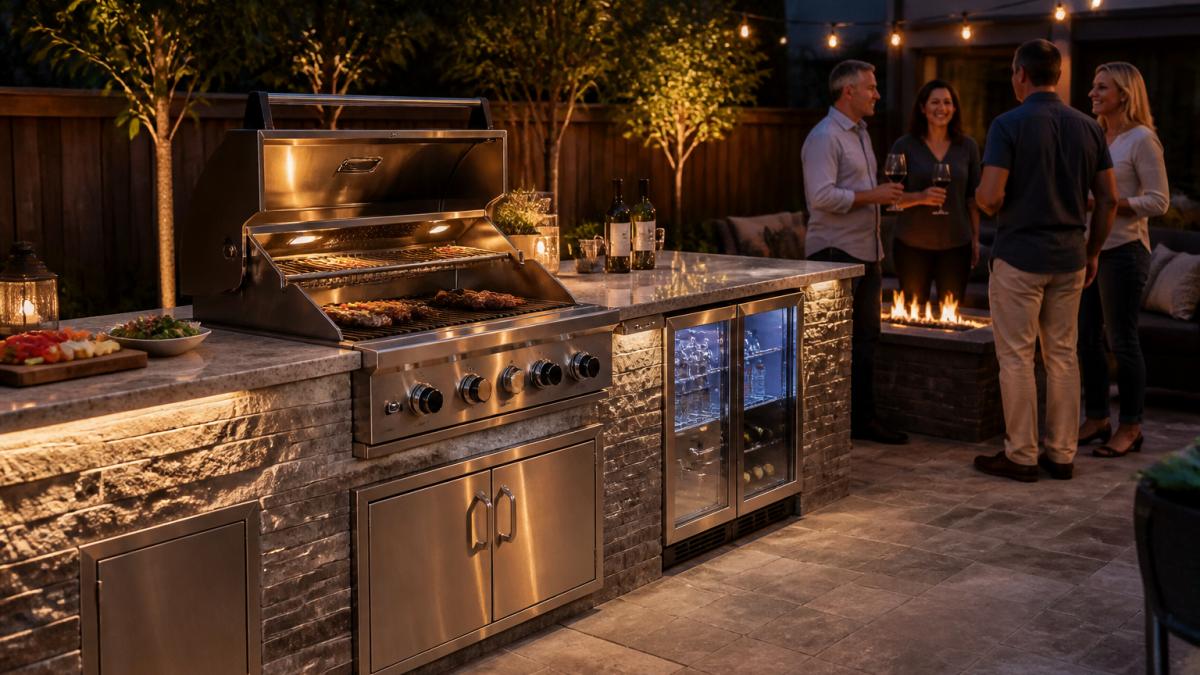
Here's what matters most to buyers:
- Built-in grill with quality construction, Stainless steel, commercial-grade burners, and established brand names like Blaze signal durability
- Outdoor refrigeration, Shows the space is functional for real entertaining, not just decoration
- Durable countertops, Granite, concrete, or composite materials that withstand weather
- Weather-resistant cabinetry, Stainless steel or sealed wood that won't deteriorate
- Proper drainage and grading, Prevents water pooling and structural damage
- Gas line and electrical infrastructure, Professional installation with permits protects resale value
- Integrated seating and dining areas, Extends the entertaining functionality
Features that don't drive resale value include decorative fire pits, elaborate tile work, and high-end sound systems. Buyers want functional, durable installations by professionals.
Factors That Influence Property Valuation
Professional appraisers use three primary approaches when assessing property value, and outdoor kitchens fit differently into each one.
The Cost Approach applies 25% to 50% depreciation immediately upon installation because outdoor kitchens are personal property improvements, not permanent structural additions.
The Market Approach compares your home to recently sold comparables with similar outdoor kitchens. This is most reliable when data exists.
The Income Approach applies if you rent out your home or offer short-term rentals.
Contributory Value vs. Cost: A $20,000 outdoor kitchen might contribute only $12,000 to $15,000 in resale value.
Market Demand in Your Region shapes everything. Homes in warm climates with year-round entertaining seasons command higher premiums for outdoor living spaces. According to the National Association of Realtors' Home Buyer and Seller Generational Trends Report, outdoor living spaces rank in the top ten desired features nationally, but regional variation is significant. In markets where outdoor entertaining is culturally valued and weather permits year-round use, outdoor kitchens contribute 60% to 75% of their cost to resale value. In cold-weather markets where the outdoor season lasts four to six months, contribution drops to 40% to 55%.
Integration with the Overall Property affects appraisal perception substantially. A professionally designed kitchen with complementary landscaping, proper grading, and drainage receives higher value than one that appears hastily added.
Age and Condition of the Home matter significantly. A new outdoor kitchen in a well-maintained home adds more value than the same kitchen in a home with deferred maintenance.
Permitting and Documentation directly impact appraisal value. Permitted installations with inspection records can be confidently valued.
Maintenance, Durability, and Long-Term Value
An outdoor kitchen only adds resale value if it still looks good when you sell.
Cumulative Maintenance Cost Over 10 Years illustrates the true financial picture. A mid-range outdoor kitchen with annual maintenance costs of $1,200 will cost $12,000 in upkeep over a decade.
This is why outdoor kitchens are lifestyle investments first and resale investments second. The resale value contribution is a bonus, not the primary justification.
Material Quality Directly Affects Maintenance Burden. Premium stainless steel (304 or 316 grade) resists corrosion far better than lower grades. Sealed wood cabinetry lasts longer than unsealed. Composite countertops require less maintenance than natural stone.
Climate-Specific Maintenance Realities vary dramatically. In coastal areas with salt spray, stainless steel corrosion accelerates and maintenance costs increase 40-60%. In arid climates, UV damage to wood and sealants is the primary concern.
Permits, Compliance, and Appraisal Impact
An unpermitted outdoor kitchen can cost you thousands in resale value. This is non-negotiable.
Building permits exist to ensure electrical work is safe, gas lines don't leak, and structures meet code requirements. When you build without permits, you create liability for yourself and massive liability for the next owner. Buyers' home inspectors routinely discover unpermitted work. Once discovered, it either needs to be remediated (expensive) or disclosed (which tanks offers).
Many homeowners skip permits to save money. A typical permit for an outdoor kitchen costs $200 to $500 and takes two to four weeks. Remediation for unpermitted work costs $2,000 to $5,000 or more. The math is simple: get the permit.
Professional installation with proper permits also protects your appraisal. An appraiser can confidently assign value to a permitted, professionally installed outdoor kitchen. An unpermitted installation gets assigned zero value or negative value (liability discount).
Gas line installation especially requires professional certification. Improper gas connections are fire and explosion hazards. Electrical work must meet code. These aren't areas for DIY shortcuts.
Conclusion
An outdoor kitchen does add home value, but expect 50% to 75% return on your investment rather than dollar-for-dollar recovery. The real value lies in the lifestyle benefit: years of entertaining, outdoor cooking, and enhanced property appeal. The resale value gain is a bonus.
Focus your investment on quality, durability, and professional installation. A well-built outdoor kitchen with a premium grill, reliable refrigeration, and proper permits will hold its appeal and add genuine value when you sell. Urban Man Caves helps homeowners make this choice confidently by offering curated, high-quality equipment designed for longevity. Explore our outdoor kitchen systems and premium appliances.
Frequently Asked Questions
How much does an outdoor kitchen increase home value?
An outdoor kitchen typically increases home value by 50-75% of the total investment, though this varies by location and quality. A $15,000-$20,000 outdoor kitchen installation may add $7,500-$15,000 in appraised value. Regional demand plays a significant role, warm-climate markets see stronger returns than colder regions. High-end materials, professional installation, and proper permitting maximize this return.
What are the best outdoor kitchen features for resale?
Built-in grills with professional-grade construction, outdoor refrigeration, durable countertop materials, and proper hardscaping rank highest for resale appeal. Features like the Blaze Professional LUX 34-in grill ($4,299) signal quality to appraisers. Weatherproof storage, utility infrastructure (gas and electrical), and cohesive design between cooking and dining zones also boost marketability. Avoid highly specialized features that appeal only to niche buyers.
Are outdoor kitchens worth the investment if I'm planning to sell soon?
If you plan to sell within 2-3 years, outdoor kitchens offer modest ROI (typically 50-60% return). Longer ownership periods improve returns as you enjoy the lifestyle benefit and the property appreciates. However, a well-executed outdoor kitchen enhances curb appeal and outdoor living appeal immediately, which can accelerate sale timelines. Ensure permits are current and materials are durable to avoid appraisal deductions.
Does an outdoor kitchen count as square footage in a home appraisal?
Outdoor kitchens do not count toward habitable living area square footage in appraisals. However, they add value through property appeal and lifestyle enhancement. Appraisers evaluate outdoor spaces separately as amenities that increase marketability. A well-designed outdoor kitchen with permanent infrastructure (hardscape, utilities, weatherproofing) carries more weight than portable equipment. Professional installation and permits strengthen the appraiser's confidence in the improvement.


