

Last Updated: October 30, 2026
Quick Summary
Corten steel fire pits are valued for weather resistance, low maintenance, and a warm rust-brown finish that improves with age. They form a protective patina that limits corrosion, so they handle rain, snow and heat well. Trade-offs include rust runoff during the first season, color change over time, and significant weight.
- The patina is a thin oxide layer that slows further corrosion of the metal underneath.
- Steel thickness is the biggest factor in how long a fire pit lasts.
- Ask the seller for the gauge or millimeter thickness before you buy.
- Use a protective mat or drip tray to catch rust runoff during the first season.
- Empty ash only after the unit has cooled completely to protect the steel floor.
Table of Contents
- How the protective rust patina forms
- The Main Benefits of Corten Steel Fire Pits
- Corten Steel Fire Pit Pros and Cons
- Corten Steel vs. Stainless Steel Fire Pit: Which Fits Your Yard
- How Long Does a Corten Steel Fire Pit Last?
- Corten Steel Fire Pit Maintenance, Placement and Rust Runoff
- Planning Your Corten Steel Fire Pit Purchase with Urban Man Caves
- Frequently Asked Questions
Corten steel fire pits have become a staple of high-end backyard design. They age gracefully, shrug off weather, and give a patio a warm, rust-toned focal point. Urban Man Caves carries a curated selection of premium fire features, and this guide covers what makes Corten steel different, its trade-offs, and how to choose the right fire pit for your yard.
Corten is a weathering steel, an alloy family that includes copper, chromium, nickel and phosphorus. Those additions let the steel form a stable surface layer when it oxidizes rather than flaking away.
How the protective rust patina forms
The finish on a Corten steel fire pit is a patina, a thin oxide layer that develops as the steel reacts with oxygen and moisture. While this natural process is self-limiting for outdoor fire pits, other decorative pieces may require different methods for protecting metal from rust to preserve their original aesthetic.
Patina development depends on the environment. Rain, humidity and regular air exposure speed the process, while a covered fire pit may take longer to develop an even color.
The Main Benefits of Corten Steel Fire Pits
Corten steel is generally valued for suiting outdoor life with limited upkeep. A well-made fire pit is built to handle rain, snow, fire heat and temperature swings.
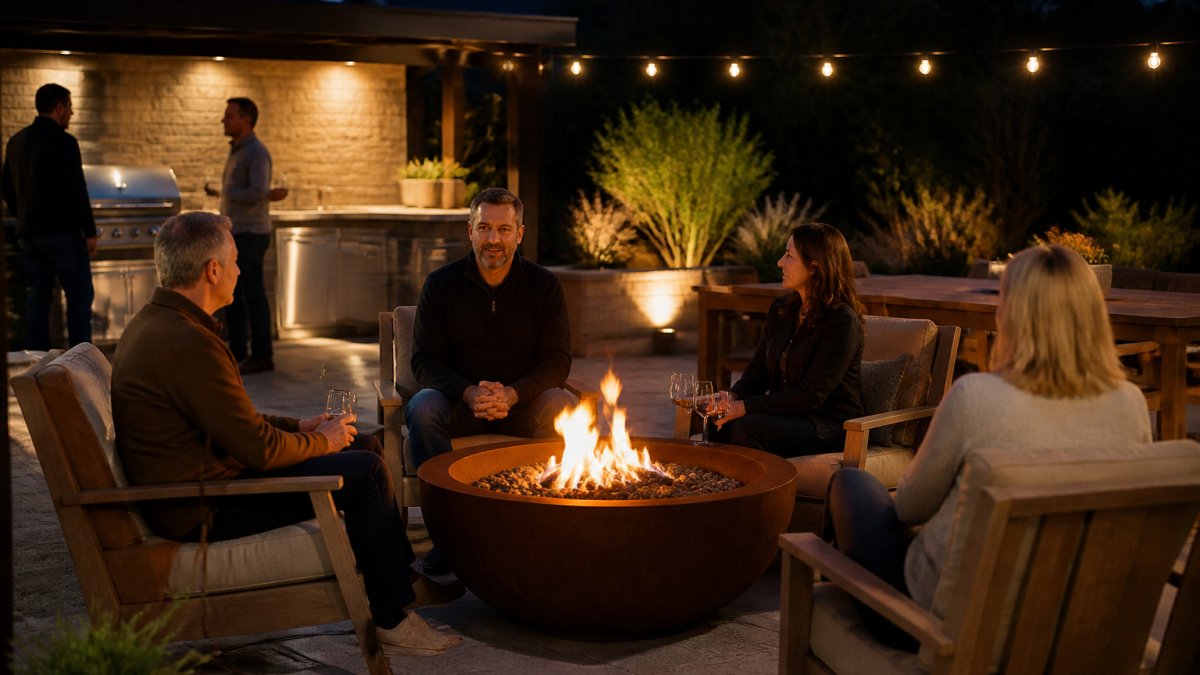
Its appearance is another draw. The warm, natural color complements stone, wood, teak furniture and modern lighting, and the finish looks intentional from day one and only improves with age.
Weather, corrosion and heat resistance
Weathering steel is designed to resist corrosion outdoors because the protective patina limits how far rust can penetrate the metal.
Lifespan for a fire pit depends on steel thickness, fabrication quality and care, so treat any specific number as an estimate.
The article's core advantages of Corten steel fire pits can be scanned at a glance:
| Benefit | What it means | Detail |
|---|---|---|
| Weather resistance | Patina limits corrosion | Designed for rain, snow and temperature swings |
| Appearance | Warm, natural colour | Complements stone, wood and modern lighting |
| Finish over time | Improves with age | Looks intentional from day one |
| Maintenance | Relatively low upkeep | Suits outdoor life with limited care |
Corten Steel Fire Pit Pros and Cons
Pros:
-
Low maintenance: The patina protects the steel, so routine care is minimal.
-
Distinctive look: The rust-brown finish suits modern, rustic and natural landscapes.
-
Weather resistant: It handles rain, humidity and seasonal change well.
-
Rust runoff: During early weathering, reddish water can stain pavers, concrete and light-colored fabric.
-
Color changes: The finish shifts over time, which some buyers find unpredictable.
-
Weight: Heavier steel is harder to move and may need a solid base.
Watch out: Rust runoff can mark light stone and concrete. Consider a sealed pad or mat under the unit during the first season.
Corten Steel vs. Stainless Steel Fire Pit: Which Fits Your Yard
The main alternative to Corten is stainless steel, which keeps a bright, clean look and does not develop a patina or rust runoff. To weigh stainless against other outdoor finishes, read the outdoor fire and kitchen comparison.
Corten suits buyers who want a warm, evolving finish and accept some color change. Stainless steel suits buyers who want a sleek, consistent appearance.
How Long Does a Corten Steel Fire Pit Last?
There is no single lifespan for a Corten steel fire pit, and any seller quoting one number without qualification is oversimplifying. The realistic range depends on steel thickness, fabrication quality, drainage and exposure, and how hard the unit is used.
Steel thickness (gauge) is the biggest lever
Thickness is an important factor in how long a fire pit will last. Thin steel heats and cools faster, warps more readily, and has less material to lose to corrosion. Thicker steel holds its shape through heating cycles and takes far longer to corrode through.
- Light-gauge steel (roughly 14-16 gauge, about 1.6-2.0 mm) is common in budget fire pits and decorative bowls. These units can last several seasons with good care but are more prone to warping and burn-through at the base if ash is left in the bowl.
- Mid-gauge steel (roughly 11-13 gauge, about 2.3-3.0 mm) is the practical sweet spot for residential fire pits. It balances weight, heat retention, and durability, and many quality units in this range hold up for a decade or more with routine care.
- Heavy-gauge steel (10 gauge and thicker, 3.4 mm and up) is typical of premium and commercial-grade fire pits. These units are heavy, resist warping well, and can last many years, often decades, if drainage and ash management are handled properly.
Ask the seller for the gauge or millimeter thickness before you buy.
Fabrication quality: welds, seams, and the bowl floor
Two fire pits made from the same gauge steel can have very different lifespans depending on how they are built.
- Welds. Continuous, fully penetrated welds resist corrosion better than spot or skip welds, which trap moisture and create crevices where rust starts early.
- The bowl floor. The bottom of the bowl holds ash, which retains moisture, and takes the most direct heat.
- Drainage. A drain hole or plug at the lowest point prevents standing water.
Exposure and drainage conditions
Corten steel is designed to weather, not to sit in water. The patina protects against atmospheric corrosion, rain, humidity and oxygen, not prolonged immersion or constant dampness.
- Good drainage extends life. A unit on a sloped paver patio with a clear drain hole will outlast an identical unit sitting where water pools.
- Coastal air is harder on steel. Salt accelerates corrosion, and even Corten's patina offers less protection in salt-heavy air.
- Covered vs. exposed. A unit left fully exposed to rain and snow weathers faster but dries faster between storms. A unit under a roof in a damp, shaded spot may corrode more slowly on the surface but suffer more from trapped moisture. The key is airflow and drainage, not simply "covered" or "uncovered."
Use frequency and heat cycles
Every fire heats the steel and every cooldown contracts it. Over years, those cycles stress welds and can warp thinner units. A fire pit used weekly will show wear sooner than one used a few times a season. Using a grate to keep the fire off the bowl floor, and avoiding roaring fires that exceed the unit's design, both extend service life.
What to ask before you buy
Rather than accepting a lifespan claim at face value, ask the seller:
- What is the steel gauge or thickness?
- Are the welds continuous, and is the bowl floor the same thickness as the walls?
- Does the unit have a drain hole or plug?
Read any warranty terms carefully, since many cover manufacturing defects rather than corrosion or wear.
Corten Steel Fire Pit Maintenance, Placement and Rust Runoff
Corten steel is generally considered low-maintenance, but some planning still helps. The practical work falls into three buckets: routine care, safe placement, and managing the rust runoff that occurs during the first weathering season.
Routine care that actually matters
- Empty ash after the unit cools completely. Ash holds moisture against the steel floor and accelerates corrosion from the inside out. Wait until the fire is out and the metal is cool to the touch.
- Brush, don't scrub. A soft-bristle brush or stiff nylon brush removes loose debris and ash without cutting into the patina.
- Skip harsh cleaners. Mild soap and water are sufficient for the exterior.
Safe placement and clearances
Placement is where most fire pit problems originate, and it is the area where generic advice fails. A few practical rules:
- Distance from structures. Keep the fire pit well clear of the house, garage, shed, combustible fences and overhanging branches. Local fire codes vary, so confirm the requirement with your municipal fire department before installing a wood-burning unit.
- Distance from furniture. Allow clear space around the bowl so chairs, cushions, and side tables are not exposed to radiant heat. Radiant heat can scorch fabric and melt synthetic materials even without direct flame contact.
- Ground surface. Set the fire pit on a stable, level, noncombustible surface, a concrete pad, a paver patio, or a dedicated fire pit pad. Wood decking may require a noncombustible barrier underneath; check local requirements. Never place a wood-burning fire pit directly on grass, mulch, or pine needles.
Rust runoff during the first season can stain light-colored pavers, concrete, and decking.
Managing rust runoff and staining
The patina does not form instantly. During the first few weeks to months, rain and dew can carry reddish-brown oxide off the steel and onto whatever sits below.
Practical ways to plan for it:
- Use a protective mat or drip tray. A rubber or composite mat sized slightly larger than the fire pit footprint catches runoff and keeps it off the patio. Choose a mat rated for high heat if the unit sits directly on it.
- Seal porous surfaces first. A penetrating sealer on concrete or stone buys you time to wipe up runoff before it soaks in.
- Move the unit during the first season. If your fire pit is portable, keep it on a sealed surface or a gravel border until the patina stabilizes, then relocate it to its permanent spot.
Once the patina matures, runoff typically slows and the staining risk drops. Until then, treat the fire pit as a piece of equipment that needs a drip plan, not just a decorative object.
Seasonal care and winter storage
- Drain before storage. Empty ash, sponge out standing water, and leave the drain open so moisture can escape.
- Cover with a breathable fitted cover. A cover that traps condensation can do more harm than no cover at all. Look for covers with vents or breathable fabric.
- Store the unit dry if possible. If the fire pit is portable, move it into a garage or shed for the off-season. If it stays outside, elevate it slightly so the base is not sitting in snow or standing water.
Planning Your Corten Steel Fire Pit Purchase with Urban Man Caves
Start by deciding on your size, shape and fuel type. Browse the drop-in fire pit pan with ignition kit options to compare sizes and configurations.
Think about the full setup, not just the fire pit. A matching protective cover, a level base and clear placement plan will protect your investment.
Pricing depends on size, configuration and delivery details, so check Urban Man Caves's website for current prices and a quote.
Frequently Asked Questions
What are the benefits of a Corten steel fire pit?
A Corten steel fire pit forms a stable protective patina after weathering, which slows further corrosion and gives it a warm rust-brown look. It handles outdoor exposure, rain and high heat well, and it is generally low maintenance. Because the patina is a natural finish, minor surface changes are normal and do not signal failure. Buyers also value its modern, sculptural appearance, which suits both contemporary and rustic backyards. Pricing varies by size, gauge and retailer, so check current prices and availability directly with Urban Man Caves before you buy.
How long does a Corten steel fire pit last?
A well-made Corten steel fire pit can last many years outdoors, Actual service life depends on material thickness, fabrication quality, drainage, how often it is used, and whether it is left exposed to standing water. A thicker gauge and good drainage hold up better over time. Treat lifespan figures as manufacturer or general claims rather than guarantees, and ask about the warranty before purchase.
Does Corten steel rust stain patios?
Yes, during the early weathering period the surface can shed rust-colored runoff when rain or dew hits it, which may stain concrete, pavers or light furniture. Placing the fire pit on a protective mat or gravel bed, sealing nearby pavers, and cleaning up early runoff all reduce staining. Once the patina stabilizes, shedding typically drops significantly. Covering the pit during long wet periods also helps.


