

Table of Contents
- Best Outdoor Furniture for Coastal Homes: Material Comparison
- Best Outdoor Furniture Materials for Coastal Areas
- How to Protect Outdoor Furniture from Salt Air
- How to Maintain Teak Outdoor Furniture
- Total Cost of Ownership and Lifespan Expectations
- Preparing Your Coastal Furniture for Storms and High Winds
- Featured Teak Furniture Options for Coastal Living
- Frequently Asked Questions
Last Updated: October 6, 2026
Best Outdoor Furniture for Coastal Homes: Material Comparison
Coastal living demands furniture that withstands salt air, humidity, and intense UV exposure. Most homeowners discover this the hard way after their first outdoor furniture set deteriorates within two years.
At Urban Man Caves, we've helped countless homeowners select durable outdoor furniture built specifically for coastal conditions.
This guide covers the materials that actually perform in salt-spray environments, how to protect your investment, and which pieces deliver the best combination of durability and style for beachside living.
Quick Comparison Table
| Material | Salt Air Resistance | UV Durability | Maintenance | Typical Lifespan | Best Use |
|---|---|---|---|---|---|
| Teak | Excellent | Excellent | Minimal | 15-25+ years | All-purpose seating, dining |
| Aluminum (powder-coated) | Very Good | Good | Low | 10-15 years | Modern designs, lightweight needs |
| HDPE/Poly Lumber | Very Good | Good | Very Low | 15-20 years | High-traffic areas, families |
| All-Weather Wicker | Good | Fair | Moderate | 8-12 years | Accent pieces, covered areas |
Best Outdoor Furniture Materials for Coastal Areas
Choosing the right material is the foundation of a coastal furniture strategy. Not all materials handle salt-laden air equally, and the ones that do often require different maintenance approaches.
Teak: Natural Salt and Weather Resistance
Teak stands apart because of its natural oils. These oils create an inherent barrier against rot, mildew, and insect damage without requiring chemical treatments.
What makes teak exceptional for coastal homes is its resilience to salt spray.
The Smithsonian Magazine's guide to teak wood properties documents teak's use in maritime construction for centuries, where it outperforms other hardwoods in saltwater exposure. This historical track record translates directly to coastal residential applications.
Teak furniture typically lasts 15-25 years or longer with minimal intervention. A quality teak dining chair runs higher than aluminum alternatives, but the lifespan justifies the investment for homeowners planning to stay in their coastal homes long-term.

Urban Man Caves carries premium A-Grade teak pieces like the SONOMA DINING CHAIR at $500, which features sturdy mortise-and-tenon construction and kiln-dried wood to prevent shrinking and cracking. For deep seating, the CORONADO DEEP SEATING LOVESEAT at $3,200 includes 6-inch thick Sunbrella cushions and comes certified by Indonesia's SVLK system to prevent illegal logging.

Aluminum and Powder-Coated Finishes
Aluminum excels in coastal environments because it doesn't rust. The metal naturally forms an oxide layer that protects against corrosion, but the real protection comes from the powder-coat finish applied during manufacturing.
The limitation: the coating must remain intact. Scratches or chips expose the aluminum underneath, and while aluminum won't rust like steel, prolonged exposure to salt water at a damaged spot can cause pitting.
Aluminum furniture is lighter than teak, which simplifies rearrangement and storage. It's also more affordable upfront. The trade-off is shorter lifespan and occasional touch-ups to maintain appearance.
HDPE and Poly Lumber
HDPE (high-density polyethylene) and poly lumber are recycled plastic materials engineered for outdoor use. They resist salt spray, moisture, and UV damage without requiring sealants or stains.
Durability ranges from 15-20 years depending on quality and sun exposure. The key advantage: zero maintenance beyond occasional cleaning. No oil treatments, no refinishing, no seasonal prep.
The downside is aesthetic. Poly lumber looks and feels plastic, which limits design options. It's practical for high-traffic family spaces or rental properties where durability matters more than visual sophistication. For a primary residence where you're entertaining, teak offers superior presence.
All-Weather Wicker and Performance Fabrics
All-weather wicker combines synthetic fibers with aluminum or steel frames. When constructed properly, it withstands coastal conditions better than natural wicker, which absorbs salt water and deteriorates.
The real performance variable is the cushion and fabric. Sunbrella and similar performance fabrics resist fading, mildew, and moisture better than standard outdoor fabric.
All-weather wicker typically lasts 8-12 years in coastal environments. It requires periodic cleaning to prevent salt buildup on the frame, which can cause corrosion if the underlying metal is exposed.
How to Protect Outdoor Furniture from Salt Air
Salt air accelerates corrosion and material degradation. Protecting your furniture starts with understanding how salt deposits form and where they accumulate most heavily.
Salt spray doesn't just fall from the sky, it travels in wind and settles on all exposed surfaces. Horizontal surfaces like tabletops collect more salt than vertical surfaces.
The first defense is location. Furniture positioned closer to the shoreline experiences heavier salt exposure.
Regular rinsing with fresh water is the most effective protection. A monthly rinse during high-wind seasons removes salt deposits before they cause damage.
Covers provide partial protection when furniture isn't in use. Breathable covers (not plastic tarps, which trap moisture) allow air circulation while blocking direct salt spray. For extended off-season storage, moving furniture indoors or into a covered structure is ideal.
How to Maintain Teak Outdoor Furniture
Teak requires less maintenance than most materials, but occasional care extends its life and preserves appearance.
Cleaning is straightforward. A soft brush and fresh water remove salt deposits and debris. For stubborn stains or mold growth, a mild soap solution works.
Teak naturally weathers to a silvery-gray patina over 6-12 months of exposure. This is normal and doesn't indicate deterioration. Many homeowners prefer this weathered look.
The Teak Wood Association's maintenance guidelines recommend applying teak oil in spring before peak weather season.
For the ADIRONDACK WITH OTTOMAN at $1,080 or the NAUTICAL ADIRONDACK at $1,100, annual oiling keeps them looking pristine while the natural durability of the wood handles the coastal environment underneath.
Teak joints should be inspected annually.
Total Cost of Ownership and Lifespan Expectations
The cheapest furniture rarely delivers the best value. Total cost of ownership accounts for purchase price, maintenance, and replacement frequency over time.
Teak furniture costs more upfront but delivers the lowest total cost over 20+ years. A $500 teak dining chair that lasts 20 years costs $25 per year.
For a full coastal patio setup, the math shifts.
Maintenance costs vary by material. Teak oil runs $20-$40 annually. Aluminum powder-coat touch-ups cost $50-$150 per piece if damage occurs. Wicker frame repainting or recoating adds $100-$300 per piece.
Cushion replacement is a separate line item. Teak deep-seating pieces like the CORONADO DEEP SEATING SOFA at $4,150 come with high-performance cushions included, spreading that cost across a longer lifespan.
Preparing Your Coastal Furniture for Storms and High Winds
Coastal weather includes hurricanes, nor'easters, and tropical storms. Furniture preparation before severe weather protects your investment and prevents debris damage to your home.
Lightweight pieces like aluminum chairs should be moved indoors or secured to prevent them from becoming airborne.
Cushions and loose items must be stored inside. Wind speeds above 40 mph can tear cushions or send them flying. Remove them when severe weather approaches.
For built-in or permanently installed pieces, check fasteners and joints before storm season. The sturdy construction of teak furniture like the MODERN ROCKING ARMCHAIR at $1,500 handles wind stress well, but ensuring all connections are tight prevents damage.
After storms, inspect furniture for damage. Salt water spray from storm surge can accelerate corrosion, so rinse all pieces thoroughly with fresh water once conditions permit.
Featured Teak Furniture Options for Coastal Living
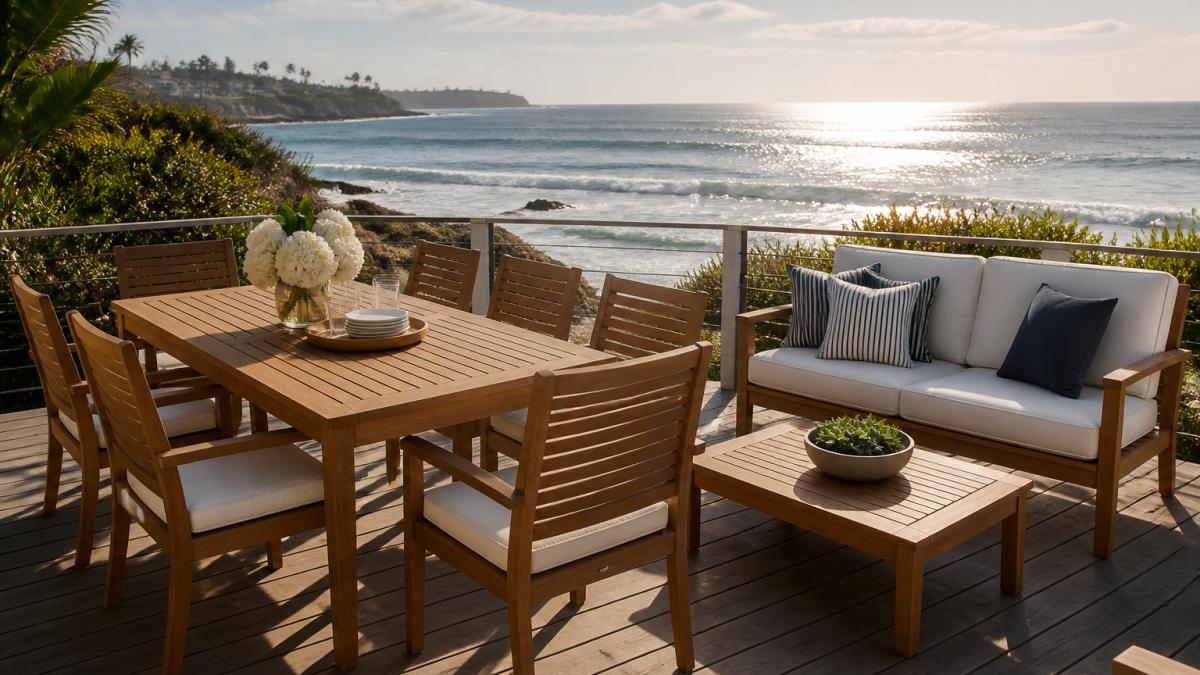
Teak delivers the best combination of durability, aesthetics, and low maintenance for coastal homes. Urban Man Caves specializes in premium teak pieces selected for quality and longevity.
Dining and Entertaining Collections
The SONOMA DINING CHAIR ($500) is built for residential and commercial use. The curved arched back supports lumbar comfort, and the sturdy four-leg base holds up to 400 pounds.
For a complete dining setup, pair multiple Sonoma chairs with the SMYRNA DINING CHAIR ($650). The Smyrna features modern design lines and includes batyline accents. No assembly required, it arrives ready to place on your patio.

Both chairs weather gracefully in salt air and require only occasional rinsing and annual oil treatment to maintain appearance.
Deep Seating and Lounge Options
The CORONADO DEEP SEATING LOVESEAT ($3,200) seats two people with spacious comfort. The 6-inch thick cushions use Sunbrella fabric, stain-resistant, weather-resistant, and mold-resistant. Zipper closures allow seasonal storage of covers, extending their lifespan.
For larger gatherings, the CORONADO DEEP SEATING SOFA ($4,150) seats three and provides a focal point for coastal entertainment spaces.
The RIVIERA MODULAR ARMCHAIR ($1,800) offers flexibility. Use it standalone or combine multiple pieces to create custom configurations. The 27-inch deep seat and 6-inch cushions deliver comfort for extended lounging.
Adirondack Chairs and Rockers
The ADIRONDACK WITH OTTOMAN ($1,080) combines the timeless Adirondack design with a matching ottoman. The deep curved seat and sloped back angle support relaxation. Kiln-dried teak construction prevents shrinking and cracking in coastal humidity.
The NAUTICAL ADIRONDACK ($1,100) features a higher profile with wider armrests. The 40-inch height and generous proportions make it ideal for taller users or those preferring elevated seating.
For movement and flexibility, the RIALTO ROCKING & SWIVEL ARMCHAIR ($1,000) offers 360-degree swivel motion and smooth rocking. The heavy-duty construction handles commercial use, making it durable for high-traffic coastal patios.
Flexible and Space-Saving Solutions
The CLASSIC FOLDING ARMCHAIR ($750) folds flat for storage or movement. At 35 pounds, it's manageable for one person yet sturdy enough to hold 220 pounds. Perfect for smaller coastal properties or those needing seasonal flexibility.
All pieces come with Anderson Teak manufacturer warranties. Urban Man Caves stands behind quality with verified warranty coverage, giving you confidence in your investment.
Frequently Asked Questions
What is the best material for coastal outdoor furniture?
Teak wood, aluminum with powder-coated finishes, HDPE poly lumber, and all-weather wicker all perform well in coastal environments. Teak naturally resists salt air and moisture due to its high oil content, while aluminum and poly materials won't rust or corrode. Your choice depends on your budget and aesthetic preference. Teak offers the longest lifespan (15-25+ years) but requires occasional maintenance, while aluminum and poly lumber need minimal upkeep.
How do you protect outdoor furniture from salt air?
Use powder-coated aluminum instead of bare metal, and choose corrosion-resistant materials such as teak or HDPE. Cover furniture during off-season or during severe weather. Rinse cushions and furniture regularly with fresh water to remove salt residue. Store cushions indoors and use performance fabrics like Sunbrella that resist mildew and UV damage. Keep furniture away from direct salt spray when possible.
Is teak a good choice for coastal outdoor furniture?
Yes, teak is an excellent choice for coastal homes. It naturally contains oils that resist rot, mildew, and insect damage, making it ideal for salt air and humid conditions. Teak weathers gracefully over time, developing a silvery-grey patina, or you can maintain its golden-brown color with occasional cleaning. A-grade teak from sustainable sources lasts 15-25 years or more with minimal maintenance, making it a sound long-term investment for beachside properties.
How do you maintain teak outdoor furniture?
Teak requires minimal maintenance. Clean it annually with mild soap and water using a soft brush, then rinse thoroughly. If you prefer to keep the honey-golden color, apply teak oil or sealer every 1-2 years. Otherwise, allow it to weather naturally into a patina grey. Avoid pressure washing, which can damage the wood grain. Store cushions indoors during winter or extended rain. Check for loose joints and tighten hardware as needed.
Does salt air damage outdoor furniture?
Salt air accelerates corrosion and deterioration in many materials. Uncoated metals rust quickly, and some woods rot or develop mildew. However, materials like teak, aluminum with powder-coated finishes, and HDPE are specifically resistant to salt spray and coastal humidity. Regular rinsing with fresh water removes salt residue and extends the life of any outdoor furniture. Choosing salt-resistant materials and maintaining protective coatings prevents most salt air damage.
Coastal living demands furniture built for salt air, humidity, and intense weather. Teak delivers unmatched durability, requiring minimal maintenance while weathering decades of exposure. Urban Man Caves curates premium teak pieces selected for quality construction and longevity. Shop all products and create the coastal gathering space you've envisioned, built to last through seasons of entertaining and relaxation.


