

Table of Contents
- Why Material Selection Defines Your Outdoor Kitchen Investment
- Best Outdoor Kitchen Cabinet Materials for Long-Term Performance
- Outdoor Kitchen Countertop Materials: Comparing Luxury Options
- Durability Essentials: Rust, Corrosion, and UV Resistance
- Luxury Outdoor Kitchen Cost: Investment and Total Cost of Ownership
- Material Coordination: Creating a Cohesive Luxury Kitchen
- Climate-Specific Material Performance and Selection
- Frequently Asked Questions
Last Updated: October 18, 2026
Why Material Selection Defines Your Outdoor Kitchen Investment
Your outdoor kitchen is only as durable as its weakest material. We've seen homeowners invest $15K to $20K in premium setups, only to watch stainless steel corrode, concrete crack, and wood warp within a few seasons. The difference between 5 years and 20 comes down to understanding what each material does in your climate.

At Urban Man Caves, we work with homeowners tired of replacing outdoor furniture and appliances. They want the best materials for luxury outdoor kitchens that handle sun, rain, salt spray, temperature swings, and humidity. This guide covers what performs, what to avoid, and how to coordinate it all.
A premium outdoor kitchen isn't just a grill; it's an outdoor living room meant to add home value and last decades. Material choice determines maintenance burden, longevity, aesthetics, and total cost of ownership.
Best Outdoor Kitchen Cabinet Materials for Long-Term Performance
Cabinet materials carry the heaviest load outdoors: they frame your cooking zone, protect equipment, and take the brunt of weather. The best outdoor kitchen cabinet materials are engineered for exterior use, not adapted from indoor designs.
304 and 316 Stainless Steel: The Industry Standard
304 stainless steel is the baseline for serious outdoor kitchens. It resists rust and corrosion far better than carbon steel and is affordable enough for an entire cabinet assembly. Its chromium content creates a passive oxide layer that protects the metal from oxidation.
316 stainless steel adds molybdenum, pushing corrosion resistance further. Near salt water or in harsh coastal climates, 316 is worth the premium; the difference matters most in marine environments with regular salt spray.
Both grades handle temperature swings without warping, don't absorb moisture, won't rot, and resist UV fading. The trade-off: stainless steel fingerprints easily and needs regular cleaning to keep its polish.
Our 30″ Commercial Style Griddle Head uses 304 stainless steel construction throughout, including the four welded burners and frame. This ensures your cooking surface stays stable through temperature extremes while resisting the corrosive effects of grease, moisture, and outdoor air.
High-Density Polyethylene (HDPE) and Polymer Cabinetry
HDPE and engineered polymer cabinetry skip metal entirely: no rust, no corrosion, and far less maintenance than stainless steel. They're lighter, easier to install, and often cheaper upfront.

The limitation is heat. Polymer works well for storage and prep away from direct heat, but next to a high-output grill it can warp or discolor. HDPE also lasts 10-15 years versus 20+ for maintained stainless steel.
Polymer excels in dry storage cabinets, tool drawers, and access panels in cooler zones, but it's not a full-kitchen solution for luxury builds.
Marine-Grade Stainless Steel for Extreme Climates
Marine-grade stainless steel is 316-series material for salt spray environments. Within 5 miles of ocean, or in regions with heavy snow and road salt, it's the right choice.
The premium is real: marine-grade runs 15-25% higher than 304. But in harsh climates, it's the difference between 20 years and cabinet replacement after 8-10. The molybdenum in 316 directly counters salt corrosion.
Outdoor Kitchen Countertop Materials: Comparing Luxury Options
Countertops take constant abuse: heat from grills, moisture from cleaning, UV exposure, and temperature cycling. Your countertop material choice affects both aesthetics and long-term maintenance.
| Material | Heat Resistance | Stain Resistance | Maintenance | Lifespan |
|---|---|---|---|---|
| Ultra-Compact Surfaces | Excellent (up to 400°F) | Excellent | Low | 20+ years |
| High-Performance Concrete | Good (up to 250°F) | Moderate | Moderate | 15-25 years |
| Natural Stone | Moderate (varies) | Moderate | High | 20-30 years |
Ultra-Compact Surfaces and Engineered Stone
Ultra-compact surfaces (engineered stone) are quartz or porcelain products that mimic natural stone with superior durability. They're non-porous, so they don't absorb moisture, stain easily, or harbor bacteria.
Quality ultra-compact surfaces handle up to 400°F without damage and won't crack from thermal shock like natural stone. The surface is uniform throughout, so chips don't expose porous substrate.
The aesthetic range beats concrete or natural stone: marble, granite, or slate looks without the maintenance burden. For luxury outdoor kitchens, it's the most popular countertop choice because it balances performance with visual appeal.
Maintenance is simple: wipe down after use, occasional deep cleaning with mild soap, no sealing. Over 20+ years, it costs less to maintain than natural stone despite the higher initial cost.
High-Performance Concrete and Masonry
Concrete offers design flexibility and a modern aesthetic. High-performance formulas add weather resistance, reduce porosity, and slow moisture penetration.
Concrete requires sealing every 1-3 years. Unsealed, it absorbs water, causing staining, efflorescence, and freeze-thaw damage in cold climates. Properly sealed, it lasts 15-25 years.
The trade-off: concrete is porous. Acidic foods (lemon, vinegar, wine) etch it, hot items discolor it, and it cracks over time from thermal expansion, especially where seasons swing.
For luxury kitchens, concrete works best as an accent paired with ultra-compact surfaces or natural stone for primary prep, adding character without the full maintenance burden.
Natural Stone: Beauty with Maintenance Trade-offs
Granite, marble, and slate deliver undeniable luxury aesthetics. Natural stone is durable and heat-resistant, but each type has specific vulnerabilities.
Granite is the hardest, most stain-resistant natural stone, handling heat and scratches well. But it's porous and needs sealing every 1-2 years; in coastal environments, iron minerals can oxidize into rust spots.
Marble is softer and more porous than granite, etches easily from acidic foods, and needs frequent sealing. It's beautiful but demands active maintenance outdoors.
Slate is less porous than marble but still needs sealing, is prone to edge flaking, and can be damaged by freeze-thaw cycles.
Natural stone works in mild, dry climates where maintenance is manageable. In humid, coastal, or freeze-thaw regions, the burden outweighs the aesthetic benefit.
30″ Commercial Style Griddle Head for Outdoor Kitchen →
Durability Essentials: Rust, Corrosion, and UV Resistance
Material performance in outdoor kitchens depends on how well each component resists specific environmental stressors.

Rust happens when iron oxidizes. Stainless steel resists it because chromium creates a self-healing oxide layer.
Corrosion is broader than rust: oxidation, pitting, and degradation from salt spray, acidic rain, and moisture. 304 resists general corrosion; 316 resists salt specifically. Polymers don't corrode but degrade from UV over time.
UV resistance matters for finishes and non-metal components. Stainless steel doesn't fade, but painted or powder-coated finishes can. For wood accents or painted panels, choose UV-stable exterior-rated finishes; most interior paints fail within 2-3 years outdoors.
Moisture resistance determines whether materials absorb water. Stainless steel and polymers shed it; concrete and natural stone absorb it unless sealed; wood absorbs and rots. In humid or rainy regions, it's as important as corrosion resistance.
Luxury Outdoor Kitchen Cost: Investment and Total Cost of Ownership
A full luxury outdoor kitchen, cabinetry, countertop, grill, griddle, refrigeration, and accessories, typically runs $15K to $30K installed. Material choice accounts for 30-40% of that total cost.
Stainless steel cabinetry costs more upfront than polymer, but over 20 years it's cheaper: minimal maintenance, rarely replaced.
Consider total cost of ownership, not purchase price: maintenance (sealing, cleaning, repairs), replacement cycles, and labor. Ultra-compact countertops cost more than concrete initially but less over time since they need no sealing.
Our Blaze Stainless Steel Enclosed Dry Storage Cabinet with Shelf carries a lifetime warranty and uses commercial-grade 304 stainless steel specifically because these materials justify the investment. You're not replacing this cabinet in 5 years.
Material Coordination: Creating a Cohesive Luxury Kitchen
The best materials for luxury outdoor kitchens don't work in isolation. Your grill, cabinetry, countertop, and accessories need to coordinate visually and functionally.
Stainless steel is the unifying element, pairing with virtually every countertop material and aesthetic, modern, traditional, or transitional.
Ultra-compact surfaces coordinate best with stainless steel cabinetry: both are contemporary, low-maintenance, and available in neutral tones that don't compete visually.
Concrete pairs well with stainless steel for industrial or modern aesthetics; natural stone, especially granite, coordinates for a more traditional luxury look.
Avoid mixing too many material types. Stainless steel + ultra-compact surface + natural stone accent is cohesive; stainless steel + concrete + marble + wood + polymer storage is visual chaos.
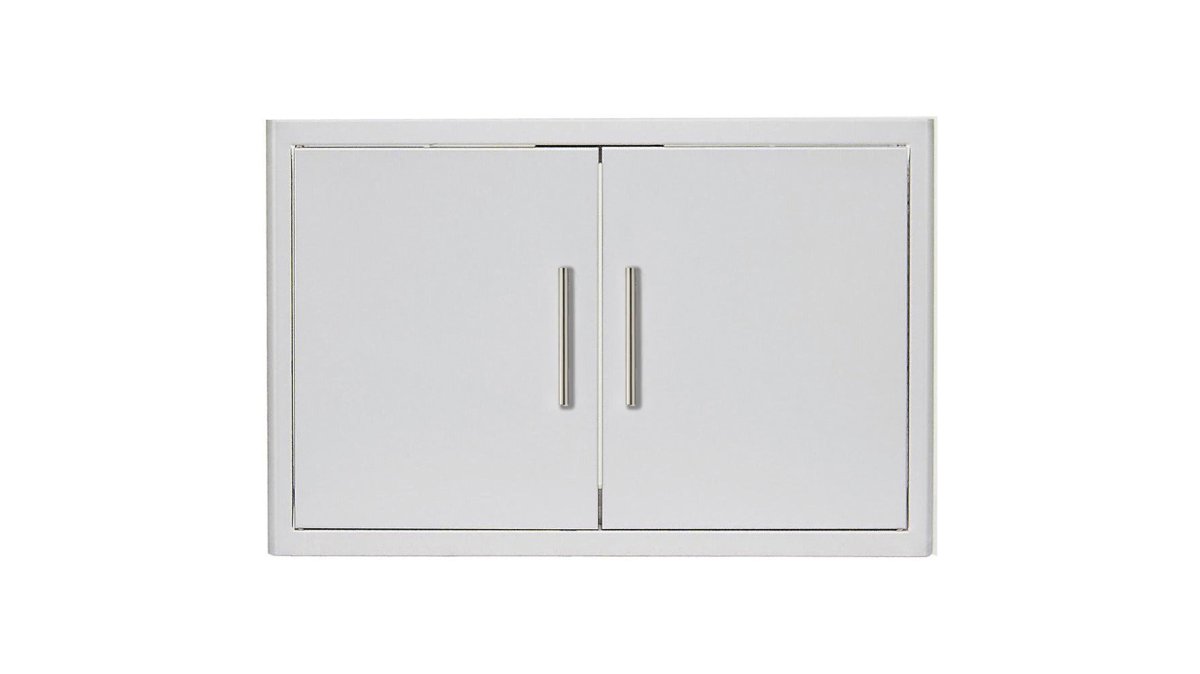
Our Blaze 32-Inch Access Door & Double Drawer Combo and Blaze 40-Inch Double Access Door with Paper Towel Holder both use 304 stainless steel with soft-close hinges and modern curved handles.
Climate-Specific Material Performance and Selection
Your climate determines which materials will actually perform long-term.
In hot, dry climates (Southwest, Southern California), UV resistance is critical. Stainless steel doesn't fade, but painted finishes will. Ultra-compact surfaces hold up well.
In humid, warm climates (Southeast, Gulf Coast), moisture and salt corrosion are constant threats. 316 or marine-grade stainless is worth the premium. Ultra-compact surfaces excel because they're non-porous.
In freeze-thaw climates (Northeast, Midwest, Mountain regions), thermal expansion stresses materials. Stainless steel handles it well.
In coastal environments (Atlantic, Pacific, Gulf Coast), salt spray is the enemy. 316 stainless is essential; 304 pits and corrodes within 3-5 years.
Research your climate zone before finalizing materials. What's durable in Arizona might fail in Florida. The best materials for luxury outdoor kitchens are engineered for YOUR environment.
Building a luxury outdoor kitchen that lasts requires thinking beyond aesthetics to material science and climate performance.
When you're investing $15K to $30K, material durability directly affects your return, in years of use and home value. Start with Urban Man Caves's curated selection of premium outdoor kitchen components, where every product is selected for durability and longevity. Our expert team can guide you through material coordination and climate-specific recommendations. Shop all products and build an outdoor kitchen that performs as beautifully as it looks.
Frequently Asked Questions
What is the best material for an outdoor kitchen?
304 stainless steel is the industry standard for outdoor kitchen cabinets and frames due to its superior corrosion resistance, durability, and low maintenance. For countertops, ultra-compact surfaces and high-performance concrete offer the best combination of aesthetics and weather resistance. The ideal material depends on your climate, budget, and maintenance preferences, stainless steel excels in wet or coastal environments, while HDPE polymers work well in moderate climates where cost matters.
How much does a luxury outdoor kitchen cost?
A luxury outdoor kitchen, including cabinetry, countertop, grill, griddle, refrigeration, and accessories, typically runs $15,000 to $30,000 installed. Material choice accounts for 30-40% of that total cost.
What outdoor kitchen cabinet materials require the least maintenance?
Stainless steel (304 and 316 grades) requires minimal maintenance, occasional wiping with mild soap and water keeps it looking new for decades. High-density polyethylene (HDPE) and resin-based polymers are also low-maintenance and resist fading and rot. Avoid natural wood and untreated materials in high-humidity climates, as they demand regular sealing and are prone to warping and rot. Marine-grade stainless steel (316) needs even less maintenance in coastal or salt-spray environments.
Which materials hold up best in humid and rainy climates?
Marine-grade 316 stainless steel and high-performance concrete with proper sealing are the top choices for humid, rainy climates. 316 stainless steel has added molybdenum for superior salt and moisture resistance. High-density polyethylene (HDPE) cabinetry resists moisture absorption and won't rot or warp. Avoid natural wood, standard pressure-treated lumber, and low-grade stainless steel in these environments. Ensure proper drainage and ventilation behind cabinet frames to prevent trapped moisture and mold.
What is the difference between 304 and 316 stainless steel for outdoor kitchens?
304 stainless steel is the standard choice for most outdoor kitchens, offering excellent corrosion resistance and durability at a lower cost. 316 stainless steel (marine-grade) contains added molybdenum and is superior in coastal, high-humidity, or salt-spray environments where 304 may develop pitting or surface corrosion over time. If you live near the ocean or in a region with high chloride exposure, 316 is worth the premium; otherwise, 304 performs reliably for 20+ years with minimal maintenance.


